Saturday, 19 January 2019

Shelley Fabares born 19 January 1944


Michele Ann Marie "Shelley" Fabares  born January 19, 1944) is an American actress and singer. She is best known for her roles as Donna Reed's daughter Mary Stone on The Donna Reed Show (1958–63) and as Hayden Fox's love interest (and eventual wife) Christine Armstrong on the sitcom Coach (1989–97). She was Elvis Presley's co-star in three films.

Shelley Fabares is one -- and maybe the best -- of a handful of young actresses/singers who emerged from the end of the 1950s through the mid-'60s, in an attempt to extend television stardom into action on the pop charts. Most didn't last, and none made the impact of their rivals, the singers who tried acting (Connie Francis, Sandy Stewart, Lulu, etc.), but Fabares did score a huge hit with "Johnny Angel."

The Donna Reed Show: (clockwise from bottom left) Paul Petersen, Donna Reed, Carl Betz, and Shelley Fabares, 1958
Shelley Fabares was born on January 19, 1944 in Santa Monica, California, to a family that already had a background performing (her aunt is Nanette Fabray, the actress best remembered for movies such as The Band Wagon), and she began working as a dancer and model while still a child. By the mid-'50s, she had appeared in such movies as Never Say Goodbye and Summer Love. In 1958, Fabares won the role of Mary Stone in the ABC television series The Donna Reed Show -- the show was a hit, 
and over the next five years, in tandem with former Mouseketeer Paul Petersen, who played her brother Jeff on the show, Fabares was one of the most visible and popular young performers on television, and the quintessential TV "daughter."

The series was produced by Columbia Pictures Television, and the two young performers were asked to try working with the studio's label, Colpix Records. Although the demos failed to impress the label's executives, Donna Reed Show producer Tony Owen (Reed's husband) insisted that they try and make a proper record, and even financed the recording session himself with producer Stu Phillips (The Monkees, Battlestar Galactica) at the helm.


Fabares' debut release, "Johnny Angel," reached number one on the Billboard Hot 100 in April 1962 and peaked at number 41 in the UK. It sold over one million copies and was certified gold. It is regarded today as a quintessential "girl group" record. She released an album, Shelley!. "I was stunned about that, to put it mildly," she later said. "After all, I never could sing." This was 
followed by a second album, The Things We Did Last Summer (album), which included two hit songs "Johnny Loves Me" (no. 21) and "The Things We Did Last Summer" (no. 46).

None of her subsequent records ever came close to her first hit, but Fabares recorded for the next three years, in between acting assignments that included movies with Elvis Presley (Girl Happy, Spinout, Clambake), releasing three modestly successful singles ("Johnny Loves Me," "The Things We Did Last Summer," "Ronnie, Call Me When You Get a Chance") and a pair of albums (Shelley, The Things We Did Last Summer). To Fabares, who never conceived
of a singing career for herself and wasn't entirely comfortable in that role, these recordings were all a lark, but they constituted little more than a footnote to her early career.

Despite her indifference to recording, Fabares' first husband was producer Lou Adler. She didn't remain in the music business, and even her acting career had stalled at the end of the '60s. 

During the '70s, she resumed her career as an adult performer, appearing as a regular on series such as Forever Fornwood and One Day at a Time. She married actor Mike Farrell (M*A*S*H) in 1984 and has since emerged as a major television star again, as Craig T. Nelson's wife in the hit series Coach.

After Coach ended in 1997, Fabares voiced the role of Martha "Ma" Kent on Superman. In October 2000, Fabares received a life-saving liver transplant after being diagnosed with autoimmune hepatitis.
From 2004-2011 she produced the Screen Actors Guild Awards.


She and Farrell have also been very visible as activists, raising money and the public's consciousness on behalf of numerous causes, most notably Alzheimer's disease.

(Edited from Wikipedia & bio by Bruce Eder @ AllMusic)

Wednesday, 16 January 2019

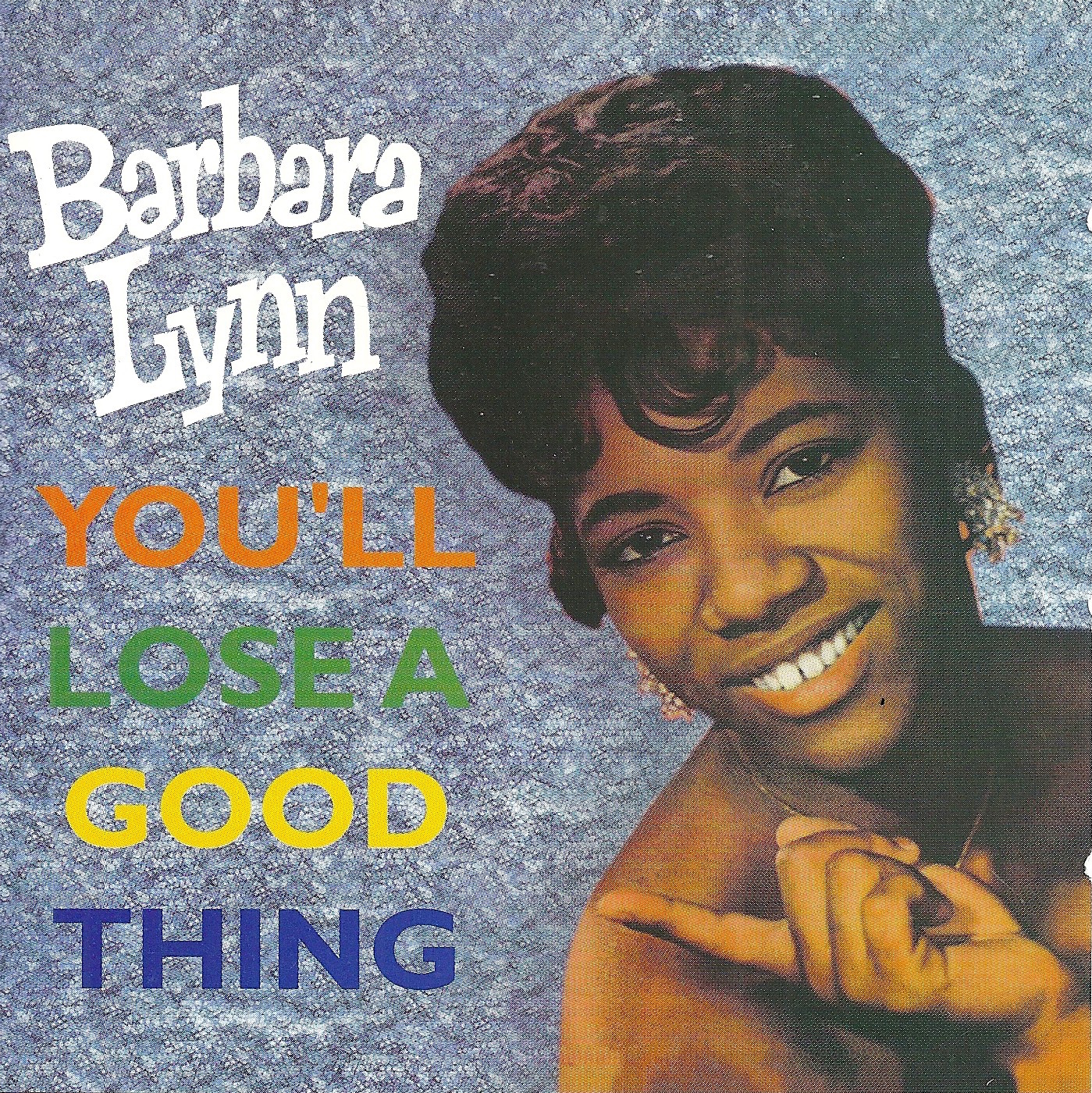
Barbara Lynn born 16 January 1942


Barbara Lynn (born Barbara Lynn Ozen, later Barbara Lynn Cumby 16 January 1942 in Beaumont, Texas) is an American rhythm and blues guitarist and singer. Affectionately known as The Empress Of Gulf Coast Soul.

Barbara was a rare commodity during her heyday. Not only was she a female instrumentalist (one of the very first to hit the charts), but she also played left-handed -- quite well at that -- and even wrote some of her own material. Lynn's music often straddled the line between blues and Southern R&B, and since much of her early work -- including the number one R&B hit "You'll Lose a Good Thing" -- was recorded in New Orleans, it bore the sonic imprint of the Crescent City. Lynn was born Barbara Lynn Ozen in Beaumont, TX, on January 16, 1942; she played the piano as a child before switching to guitar, inspired by Elvis Presley.

In junior high, Lynn formed her own band, Bobbie Lynn and the Idols; at this point, her musical role models veered between bluesmen (Guitar Slim, Jimmy Reed) and female pop singers (Brenda Lee, Connie Francis). After winning a few talent shows and playing some teen dances, the still-underage Lynn started working the local clubs and juke joints, risking getting kicked out of school if she had been discovered. Singer Joe Barry caught her live act and recommended her to his friend, producer/impresario Huey P. Meaux, aka the Crazy Cajun.

With her parents' consent, Meaux brought Lynn to New Orleans to record at the legendary Cosimo's studio. Lynn cut a few singles for the Jamie label with the understanding that if none hit, she was to attend college instead of pursuing music right off the bat.


In 1962, her self-penned ballad "You'll Lose a Good Thing" became a national hit, reaching the pop Top Ten and climbing all the way to number one on the R&B charts. Her first album (of the same name) was also released that year, featuring ten of her originals among its 12 tracks. Lynn continued to record for Jamie up through 1965,
 producing follow-up R&B hits like "You're Gonna Need Me" and "Oh Baby (We Got a Good Thing Goin')," the latter of which was recorded by the Rolling Stones in 1965.

In 1966, Lynn switched over to Meaux's Tribe label and cut "You Left the Water Running," which became something of an R&B standard and was covered by the likes of Otis Redding. In 1967, she signed with Atlantic and had another R&B hit with "This Is the Thanks I Get" early the following year; she also issued another album, Here Is Barbara Lynn, in 1968.

Lynn scored one last hit for Atlantic in 1972's "(Until Then) I'll Suffer," but by this point, she had several children to worry about raising; dissatisfied with her promotion anyway, she wound up effectively retiring from the music business for most of the '70s and '80s, though she did play the occasional low-key tour.

Lynn returned to music in the mid-'80s, touring Japan for the first time in 1984; she later cut a live album there, called You Don't Have to Go, which was eventually issued in the States by Ichiban. Lynn had managed to retain a cult following among connoisseurs of American soul and blues in several different pockets of the world, and toured internationally during the early '90s.
In 1994, Bullseye Blues issued her first full-fledged studio album in over two decades, So Good; Until Then I'll Suffer followed in 1996. Lynn later caught on with the respected blues label Antone's, 

The last new recording she made was "Blues and Soul Situation" in 2004. But with her distinctive guitar playing and her voice still sweet, Lynn has for years been a beloved draw on the oldies circuit nationally, with a particularly fervent following in east Texas.


She continues to reside in Beaumont, and was given a Pioneer Award by the Rhythm and Blues Foundation in 1999. Also in 2018 Lynn was honoured by the National Endowment for the Arts as an NEA National Heritage Fellow.  (Edited mainly from AllMusic by Steve Huey)

Monday, 14 January 2019

Jack Jones born 14 January 1938


John Allan Jones (January 14, 1938 - October 23, 2024) known professionally as Jack Jones, was an American actor and jazz and pop singer, popular during the 1960s. He was the son of actor/singer Allan Jones and actress Irene Hervey.

By many measures, Jack Jones was the most popular crooner to emerge between the heyday of Elvis Presley and the rise of the Beatles. In the span of two years, he snagged two Grammys for Pop Male Performance -- "Lollipops and Roses" in 1962 and "Wives and Loves" in 1964 -- which was enough to lay a foundation for a career that lasted well into the 21st century. Although his charting hits dried up in the early '70s -- prior to that, he was a fixture on the Adult Contemporary charts, racking up the number one hits "The Race Is On," "The Impossible Dream (The Quest,)" and "Lady" between 1965 and 1967 -- he continued to perform in Las Vegas and on the road, making the occasional foray into pop culture, like when he sang "The Love Boat Theme" in 1980.

The son of singing actors -- on the night of his birth, his father Allan Jones recorded his hit "The Donkey Serenade" -- Jack Jones was born and raised in Los Angeles, California. He made his first foray into performing professionally through his father's revue at the Thunderbird Hotel and Casino in Las Vegas. After that, he recorded demos for Don Raye which helped him land a contract with Capitol in 1959.

This Love of Mine, his 1959 debut for Capitol, went nowhere and the label dropped him. Jones headed up to San Francisco, where he was spotted by Pete King of Kapp Records. 


Signing Jones virtually on the spot, King had Jones' record and release "Lollipops and Roses" in 1962 and it turned into a major hit, eventually winning the Grammy for Pop Male Performance. "Wives and Lovers," a song written by Burt Bacharach and Hal David, was even bigger in 1964, reaching 14 on Billboard's Top 40 and winning another Grammy for Jones.

Jones' time on the pop charts didn't last long -- "Dear Heart" went to 30 in 1964, while his cover of George Jones' country classic "The Race Is On" went to 15 in 1965 -- but he continued to place in Billboard's Adult Contemporary charts through the '60s, notably hitting number one with 1966's "The Impossible Dream (The Quest)" and 1967's "Lady."

Jones moved from Kapp to RCA in 1967. His first album for the label was Without Her, named after a Harry Nilsson song he covered. This was a signal that his records for RCA would navigate the distance between the supper club and soft rock, a path that culminated in his 1972 tribute to Bread, Bread Winners. He'd 
continue to experiment with fads throughout the '70s, including dabbling in disco and covering Little Feat's "Dixie Chicken" in 1977, before he left RCA for MGM. Nobody Does It Better, his 1979 debut for the label, found Jones continuing to explore disco and it also contained "The Love Boat Theme," a proudly campy theme song for the romantic-comedy ABC anthology series.

I Am a Singer MGM folded after Jones released Don't Stop Now in 1980. Following this, he'd record sporadically -- he only released two additional albums in the '80s (1982's Jack Jones and 1987's I Am a Singer -- while concentrating on playing live shows at clubs across the world. He mounted a major-label comeback in 1992 with The Gershwin Album, but that was short-
lived: by 1997, he was signed to Honest, where he released the 
albums New Jack Swing and Paints a Tribute to Tony Bennett.

Over the next two decades, Jones kept up with his schedule of performing and occasionally recording, while also appearing on-stage and, on occasion, television. The mid-2010s saw him particularly active, as he had a cameo in David O. Russell's 2013 film American Hustle, did a voice-over for the Cartoon Network series Over the Garden Wall, and recorded the 2015 album Seriously Frank (Celebrating the 100th Birthday of Frank Sinatra). . The record was subsequently followed-up with a tour in Los Angeles and the United Kingdom in 2016. Jones commenced his 80th Birthday Celebration Tour in 2018.


Jones has been married six times. In the second half of the 1960s, Jones had a well-publicized relationship with actress Jill St. John and the two were briefly married. In the early 1970s, Jones married Gretchen Roberts. Subsequently, he was linked romantically to British actress Susan George. From 1976 to 1982, he was married to Kathy Simmons. From 1982 to 2005, he was married to British-born Kim Ely and they had a daughter, Nicole (born in 1991). The singer has another daughter, Crystal Thomas, from a former marriage to Lee Fuller. 


Jones lives with wife Eleonora in Indian Wells, in Riverside County, California. 

He continued to perform concerts around the world and remained popular in Las Vegas.   After a two year battle with leukemia, Jones died at Eisenhower Medical Center in Rancho Mirage, California, on October 23, 2024, at the age of 86. 

 (Edited from Wikipedia & AllMusic)

Sunday, 13 January 2019

Sophie Tucker born 13 January 1886


Sophie Tucker (January 13, 1886* – February 9, 1966) was a Ukrainian-born American singer, comedian, actress, and radio personality. Known for her powerful delivery of comical and risqué songs, she was one of the most popular entertainers in America during the first half of the 20th century. She was widely known by the nickname "The Last of the Red Hot Mamas".

She was born Sonia Kalish to a Jewish family in Tsarist Russia. Her family emigrated to the United States when she was an infant, and settled in Hartford, Connecticut. The family changed its name to Abuza, and her parents opened a restaurant.

She started singing for tips in her family's restaurant. In 1903, at the age of 17, she was briefly married to Louis Tuck, from which she decided to change her name to "Tucker." (She would marry twice more in her life, but neither marriage lasted more than five years.)

Tucker played piano and sang burlesque and vaudeville tunes, at first in blackface. She later said that this was at the insistence of theatre managers, who said she was "too fat and ugly" to be accepted by an audience in any other context. She even sang songs that acknowledged her heft, such as "Nobody Loves a Fat Girl, But Oh How a Fat Girl Can Love." Not content with performing in the simple minstrel traditions, Tucker hired some of the best African American singers of the time to give her lessons, and hired African American composers to write songs for her act.

Tucker made her first appearance in the Ziegfeld Follies in 1909, but didn't last long there because Florenz Ziegfeld's other female stars soon refused to share the spotlight with the popular Tucker. William Morris, the founder of the William Morris Agency booked Tucker fresh off her Follies debut at his new American Music Hall. At a 1909 appearance, the luggage containing Tucker's makeup kit was stolen shortly before the show, and she hastily went on stage without her customary blackface. Tucker was a bigger hit without her makeup than with it, and, at the advice of Morris, she never wore blackface again.

Tucker made several popular recordings. They included "Some of These Days," which came out in 1911 on Edison Records. The tune, written by Shelton Brooks, was a hit, and became Tucker's theme song. Later, it was the title of her 1945 autobiography.


In 1921, Tucker hired pianist and songwriter Ted Shapiro as her accompanist and musical director, a position he would keep throughout her career. Besides writing a number of songs for Tucker, Shapiro became part of her stage act, playing piano on 
stage while she sang, and exchanging banter and wisecracks with her in between numbers. Tucker remained a popular singer through the 1920s, and hired stars such as Mamie Smith and Ethel Waters to give her lessons.

In 1925, Jack Yellen wrote one of her most famous songs, "My Yiddish Momme". The song was performed in large American cities where there were sizable Jewish audiences. Tucker explained, "Even though I loved the song and it was a sensational hit every time I sang it, I was always careful to use it only when I knew the majority of the house would understand Yiddish. However, you didn't have to be a Jew 
to be moved by 'My Yiddish Momme.' 'Mother' in any language means the same thing." She also made the first of her many movie appearances in the 1929 sound picture Honky Tonk.

In the 1930s, Tucker brought elements of nostalgia for the early years of 20th century into her show. She was billed as The Last of the Red Hot Mamas, as her hearty sexual appetite was a frequent subject of her songs, unusual for female performers of the era. She made numerous popular film appearances, including Broadway Melody of 1938. In that film, Tucker sings a song during the big finale; even though she is playing a character and not herself, several neon lights displaying her real name light up in the background of the stage in tribute.

In the 1950s and early 1960s, she made television appearances on The Ed Sullivan Show, What's My Line, Person to Person, and The Tonight Show. Tucker died of lung cancer and kidney failure on February 9, 1966, aged 80, in New York City. She had continued working until the months before her death, playing shows at the Latin Quarter just weeks before. She is buried in Emanuel Cemetery, in Wethersfield, Connecticut, her home state. (Info edited from Wikipedia) (*other sources give birth year as 1884 or 1887)

Saturday, 12 January 2019

Tex Ritter born 12 January 1905


Tex Ritter (January 12, 1905 – January 2, 1974) was an American country music singer and actor popular from the mid-1930s into the 1960s, and the patriarch of the Ritter acting family (son John and grandsons Jason and Tyler). He is a member of the Country Music Hall of Fame.

Singing cowboy Tex Ritter stood as one of the biggest names in country music throughout the post-war era, thanks to a diverse career that led him everywhere from the Broadway stage to the political arena. He was born Maurice Woodward Ritter in Marvaul, Texas and grew up on a ranch in Beaumont. After graduating at the top of his high school class, he majored in law at the University of Texas. During college, however, he was bitten by the acting bug and moved to New York in 1928 to join a theatrical troupe. After a few years of struggle, he briefly returned to school, only to leave again to pursue stardom.

Ritter was playing cowboy songs on the radio when he returned to New York in 1931 to act in the Broadway production Green Grow the Lilacs; during scene changes, he also performed on his guitar. Thanks to his success on the stage, he began hosting radio programs like Tex Ritter's Campfire and Cowboy Tom's Roundup before entering the studio with producer Art Satherley in 1933, where his deep, lived-in voice graced songs like "Rye Whiskey."

In 1935, he signed with Decca Records, where he recorded his first original recordings, "Sam Hall" and "Whoopie Ti Yi Yo". He 
recorded 29 songs for Decca, the last in 1939 in Los Angeles as part of Tex Ritter and His Texans.

He caught the attention of Hollywood producer Edward Finney, who was searching for a cowboy singer in the mold of the highly successful Gene Autry and was tapped to star in the 1936 Western Song of the Gringo. Over the next two years, Ritter starred in a dozen films, including 1937's Trouble in Texas (co-starring a young Rita Hayworth), before Finney's studio, Grand National Pictures, folded. Ritter then switched to Monogram Studios, for whom he made some 20 Westerns, including 1940's Take Me Back to Oklahoma with co-star Bob Wills; work at Columbia and Universal followed, and by the time of his movie swan song, 1945's The Texas Rangers, he had appeared in a total of 85 films.


As Ritter's Hollywood career went into decline, his music career began to blossom, and in 1942, he became the first country artist signed to Capitol Records, where he recorded everything from traditional folk tunes to patriotic material to sentimental songs.
In 1944, Tex Ritter & His Texans topped the charts with the single "I'm Wastin' My Tears on You." The record's flip side, "There's a New Moon Over My Shoulder," peaked at number two, as did the follow-up "Jealous Heart." 1945's "You Two-Timed Me One Time Too Often" proved to be Ritter's greatest success, holding at number one for 11 consecutive weeks. Among his other successes in the 1940s were 1945's number one "You Will Have to Pay," 1948's "Rock and Rye," and 1950's "Daddy's Last Letter (Private First Class John H. McCormick)," based on the actual correspondence of a soldier slain during the Korean War.

Ritter first toured Europe in 1952, where his appearances included a starring role in the Texas Western Spectacle at London's Harringay Arena. That same year, Ritter recorded the movie title track "High Noon (Do Not Forsake Me Oh My Darlin')", which became a hit. At the first televised Academy Awards ceremony in 1953, he sang "High Noon", which received an Oscar for Best Song that year. The resulting single proved extremely successful with pop audiences, helping win him the job as the MC of the television program Town Hall Party, which he hosted between 1953 and 1960. In 1958, he issued his first full-length LP, Songs From the Western Screen, followed the next year by Psalms.

After leaving Town Hall Party, he released the LP Blood on the Saddle, a dark collection of cowboy narrative songs, and in 1961, he returned to the country charts after an 11-year absence with the Top Five hit "I Dreamed of a Hillbilly Heaven." In 1963 Ritter began a two-year tenure as the president of the Country Music Association, and in 1965 he moved to Nashville to join the Grand Ole Opry. After an unsuccessful bid for the U.S. Senate in 1970, Ritter died of a heart attack on January 2, 1974; his son John Ritter carried on the family name as a popular actor in TV sitcoms like Three's Company and Hooperman.

(Edited from Wikipedia & AllMusic bio by Jason Ankeny)

Friday, 11 January 2019

Goldie Hill born 11 January 1933


Goldie Hill (January 11, 1933 – February 24, 2005), born Argolda Voncile Hill, was an American country music singer. She was one of the first women in country music, and became one of the first women to reach the top of the country music charts with her No. 1 1953 hit, "I Let the Stars Get In My Eyes". Along with Kitty Wells, she helped set the standard for later women in country music.


She was the only daughter of a musical family in Karnes County, Texas. The radio was one way to block out the daily backbreaking work of picking cotton. Goldie soaked up the popular country music of the era and developed a talent for singing. Early on, Goldie's older brothers Tommy and Ken left a life of cotton picking, determined to make a name for themselves in country music. Within a few years Webb Pierce recruited Goldie and Tommy to his Nashville-based touring show where  they were backing up Hank Williams, Johnny Horton, and Webb Pierce. Goldie also auditioned as a solo artist for Decca.


Billed as "the Golden Hillbilly," she scored a number one hit in 1953 with her second single, "I Let the Stars Get in My Eyes," originally written by Tommy for Kitty Wells. Among her other charting tunes were several duets with either Ernest Tubb's son Justin Tubb. She was named "Best Female Artist" by the magazine Country Song Roundup.

Goldie performed regularly on US radio and television showcases, such as Louisiana Hayride, Ozark Jubilee and, crucially, the Grand Ole Opry. She also co-starred in the television series Country Tune Parade, with Ernest Tubb, and was well received on various tours. In 1957, during a Philip Morris package tour, she met top country star Carl Smith. Her musical career had plenty of life in it when she turned it all down when they married on 19 September the same year.

From 1957 through 1968, Goldie Hill pursued music to a much lesser extent, choosing instead to concentrate on raising a family. (She subsequently had three children, Carl Jnr., Larry and Lori). She gave almost no live performances after 1957, but continued to record sporadically. In 1959 she charted once on another duet with Red Sovine (“Yankee Go Home”), and in 1961 “Lonely Heartaches” was a minor hit. Every year or two during the early 1960s, Hill would release new recordings and in the late 1960s, she made stronger attempts at reviving her career. But as her husband Carl Smith’s long, illustrious career began to wind down both he and Hill became more involved in life on their 500-acre Tennessee ranch and horse farm south of Nashville.

In 1968, after some persuasion, and recording as Goldie Hill Smith, she recorded two albums for Epic and gained a minor chart hit with ‘Lovable Fool’, before once again retiring. In 1977, Smith still a major star, also retired and the couple became noted for raising horses on their ranch.
Many country fans regretted the fact that they never recorded an album together. Commenting years later about her retirement she replied ‘I was never that ambitious. I never missed it a bit. I was never hooked on it’.

On February 24, 2005, Hill died in Nashville’s Baptist Hospital of complications from cancer. She was 72 years old.

(Edited from Wikipedia, The Guardian, oldies.com and pastdweller blog)

Wednesday, 9 January 2019

Mary Kaye born 9 January 1924


Mary Kaye (January 9, 1924 Detroit, Michigan – February 17, 2007 Las Vegas, Nevada) was a guitarist and phenomenal singer who was active from the 1940s through 1960s. She was known as the “First Lady of Rock and Roll” for her guitar-driven, calypso-tinged, swing music.

Mary Kaye (born Malia Ka’aihue) descended from Hawaiian royalty in the line of Queen Liliuokalani, Hawaii’s last reigning monarch, and was born into a show business family. She & her brother Norman Kaaihue appeared with their father Johnny Kaaihue from the time when they were small children under various names until she & Frank Ross along with Jules Pursley formed “The Mary Kaaihue Trio”. 

When Norman was discharged & replaced Jules they renamed the partnership” The Mary Kaye Trio”.  When Jules returned from military service he & Mary were married & he became their stage manager. The band grew to popularity in the 40’s, 50’s, and 60’s, playing many shows.

The Mary Kaye Trio is credited with founding the Las Vegas “lounge” phenomenon at the Last Frontier in 1953, an all-night party atmosphere where stars and common folk rubbed elbows in a freewheeling environment.

The Trio became a favourite of the stars. On any given night, celebrities like Ella Fitzgerald, Judy Garland, Sammy Davis Jr., Betty Hutton, Milton Beryl, and Liberace rubbed shoulders with regulars at the groups show.” Elvis, Frank Sinatra, and Chuck 
Heston were among also fans. 

The group recorded 13 albums, 21 singles, made 22 appearances on television and played on four movie soundtracks, John Kaye said. The albums included "Night Life" (1966), "Our Hawaii" (1962), and "A Night in Las Vegas" (1952).  They recorded for Columbia, Capitol, M-G-M and RCA Victor, as well as Apollo, Decca, and would go on to Warner Bros. and 20th Century Fox.


George Schlatter producer of Laugh-In, at the 75th Anniversary celebration of Las Vegas Entertainment announced “The greatest act ever to play Vegas was The Mary Kaye Trio” As a Vegas booking agent in the1950s he recalls the Trios engagements at The 

Last Frontier “by the third night you can’t move. They’re the biggest hit on the Strip, because at that point there was no Rickles there was no Louis Prima and there was no Shecky Green. The Mary Kaye Trio changed the history of Las Vegas. They were all over the room, & they were hysterical. Anybody who ever saw the act realized this was the most sound you ever got out of three pieces. And goddamn, they were funny!”

After the Mary Kaye Trio dissolved in 1966, Mary worked solo, then with Frank & Norman’s blessing she tried starting another Trio. She later originated a line of Mary Kaye dolls & various business interests.


Mary was photographed with her partners Frank Ross & Norman Kaye of the Mary Kaye Trio, in a 1956 Fender promotional advertisement featuring a new Stratocaster electric guitar. It became known as “The Mary Kaye Strat” that she would become forever associated with. And while Kaye never actually owned the guitar, the photo wasn’t the only time she was seen using it. At the time, she actually favoured custom D’Angelicos

It wasn’t until 2003, Mary Kaye received the first officially recognized "Mary Kaye" American Stratocaster, gifted by the Fender Custom Shop. This instrument marks Fenders first official recognition of a "Mary Kaye" model. This instrument, serial MK 001, can be additionally noted by the instruments back plate reading "To Mary Kaye From Your Friends at Fender".

A limited Custom Shop series Mary Kaye Tribute Strat was issued in 2005.  In 2007 a 57 Reissue Mary Kaye Strat was released for the 50th anniversary of the Stratocaster.

Mary was inducted in the Musicians Hall of Fame, and with her incredible talent, she had no equal. She died in a Las Vegas hospital of pulmonary disease on February 17, 2007. 

Frank Ross passed away in Hermosa Beach, Ca. in 1995. Norman Kaye continued with the Norman Kaye Realty, and was active in Nevada ventures and continued as Nevada’s Poet Laureate until his death in 2012. Marys son Jay Kaye was also a musician, known as the ” Blue Messiah ” in Spain where he passed away in 2015. 

(Compiled and edited mainly from marykayetrio.com with additional info from Fender.com., Wikipedia, IMDb,  and Donkey Show Blog)