Showing posts with label Johnny Otis. Show all posts

Thursday, 3 November 2022

Mel Walker born 3 November 1929

Mel Wallker (November 3, 1929 – April 23, 1964) was an American R&B singer best known for his recordings in the early 1950s as lead male singer with the Johnny Otis Orchestra. 

Born Malvin Lightsey in Texas and moving to Los Angeles as a boy, he first gained recognition as a football star at Jefferson High School where his classmate was fellow Texas transplant, singer/pianist Floyd Dixon. Mel and his five brothers also sang together as the Lightsey Brothes. 

Changing his name to Mel Walker he drew Johnny Otis’s attention at The Barrelhouse Club amateur contest and was quickly drafted into the band’s growing stable of talent where he soon established himself as the principle male vocal lead after a succession of singers had failed to make much of an impression in that role. 

With Walker’s good looks, athletic physique and late night bedroom voice and dreamy delivery he gave Otis’s crew an effective way to off-set the band’s rousing instrumental performances while providing an ideal male counterpart to Little Esther on duets. Though he made his first appearance on record after her initial breakthrough, it was actually Walker who would go on to score more hits than his more famous vocal partner, with eleven nationally charted hits in just over two years including two sharing #1 smashes with Esther. Walker was credited as lead singer on many of Otis' earliest and biggest R&B hits, including "Mistrustin' Blues" and "Cupid’s Boogie", both of which reached #1 on the Billboard R&B chart in 1950, and "Rockin' Blues", an R&B #2 hit in 1951. 


The loss of Esther to Federal Record wound up hurting both of their careers as each tried recording with other partners (though both still backed by Otis’s band) without the same success, Walker scored his final hit with a cover of his former classmate Dixon’s song, “Call Operator 210” in 1952. That same year, Walker declared bankruptcy, which was discharged on May 29. 

More responsible for their respective commercial slides however was their increasing drug use as Walker was arrested for possession while on tour with Otis in Baltimore. By the fall of 1953, Mel was replaced by Junior Ryder after which he recorded some more singles for Mercury with a band led by Melba Liston.. 

On January 23, 1954, Mel and Floyd Dixon appeared at the Elks Hall in Long Beach, California. On February 21, Mel was part of a "Battle Of Singers" at the Elks Hall, featuring the Flairs,  Lamplighters, and Linda Hayes. Also that year in April, Mercury issued the last Mel Walker record.

With rock facing increased scrutiny as it crossed over into the white teen mainstream and with his ballad-heavy laid-back style not as appealing to this new audience, Walker’s run as a star was over by the time he was 25 and he sank further into drug use over the next decade. Though his voice might’ve been ideal for the uptown soul style that became one of rock’s commercial cornerstones in the early 1960’s, Walker wasn’t in any condition to make a comeback and in early 1964 he died of an overdose, his body found in an alley in Los Angeles, the city he once helped to define musically when there were few singers who captivated listeners as he did.

(Edited from Spontaneous Lunacy, Wikipedia. With thanks to Marv Goldberg for photos.)

Monday, 28 December 2015

Johnny Otis born 28 December 1921


Johnny Otis (born Ioannis Alexandres Veliotes; December 28, 1921 – January 17, 2012) was an American singer, musician, composer, arranger, bandleader, talent scout, disc jockey, record producer, television show host, artist, author, journalist, minister, and impresario. A seminal influence on American R&B and rock and roll, Otis discovered artists such as Little Esther, Big Mama Thornton, Jackie Wilson, Little Willie John and Hank Ballard and Etta James. Known as the original "King of Rock & Roll", he is commonly referred to as the "Godfather of Rhythm and Blues".
Otis was born in Vallejo, California, to Greek immigrants Alexander J. Veliotes, a Mare Island longshoreman and grocery store owner, and his wife, the former Irene Kiskakes, a painter. He grew up in a predominantly black neighbourhood in Berkeley, California, where his father owned a neighbourhood grocery store.
Otis began playing drums as a teenager, when he purchased a set by forging his father's signature on a credit slip. Soon after he dropped out of Berkeley High School during his junior year, Otis joined a local band with pianist friend 'Count' Otis Matthews called the West Oakland Houserockers. By 1939, they were performing at many of the local functions, primarily in and around the Oakland and Berkeley area, and became quite popular among their peers.
Otis played in a variety of swing orchestras, including Lloyd Hunter's Serenaders, and Harlan Leonard's Rockets, until he founded his own band in 1945 and had one of the most enduring hits of the big band era, "Harlem Nocturne", an Earle Hagen composition.
His band included Wynonie Harris, Charles Brown, and Illinois Jacquet, to name a few. In 1947, he and Bardu Ali opened the Barrelhouse Club in the Watts district of Los Angeles. He reduced the size of his band and hired singers Mel Walker, Little Esther Phillips and the Robins (who later became the Coasters). He discovered the teenaged Phillips when she won one of the Barrelhouse Club's talent shows. With this band, which toured extensively throughout the United States as the California Rhythm and Blues Caravan, he had a long string of rhythm and blues hits through 1950.


Otis discovered tenor saxophonist Big Jay McNeely, who then performed on his uptempo "Barrelhouse Stomp". He began recording Little Esther and Mel Walker for the Newark, New Jersey-based Savoy label in 1949, and began releasing a stream of hit records, including "Double Crossing Blues", "Mistrustin' Blues" and "Cupid Boogie"; all three reached no. 1 on the Billboard R&B chart. In 1950, Otis was presented the R&B Artist of the Year trophy by Billboard. He also began featuring himself on vibraphone on many of his recordings.
In 1951, Otis released "Mambo Boogie" featuring congas, maracas, claves, and mambo saxophone guajeos in a blues progression. This was to be the very first R&B mambo ever recorded.
Around the time Otis moved to the Mercury label in 1951, he discovered vocalist Etta James, who was only 13 at the time, at one
Johnny Otis, center, with Mel Walker and Esther Phillips
of his talent shows. He produced and co-wrote her first hit, "The Wallflower (Roll With Me, Henry)".
Otis produced the original recording of " Hound Dog" written by Jerry Leiber and Mike Stoller with vocal by Big Mama Thornton, and was given a writing credit on all six of the 1953 releases of the song. As an artist and repertory man for King Records he also discovered Jackie Wilson, Hank Ballard, and Little Willie John, among others. He also became an influential disk jockey in Los Angeles.


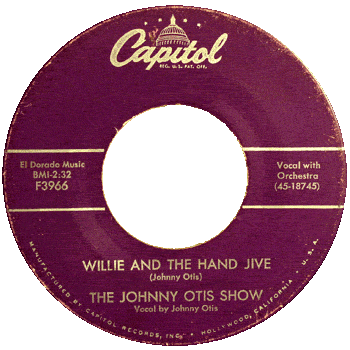
However, he continued to perform, and in April 1958, he recorded his best-known recording "Willie and the Hand Jive", which went on to be a huge hit in the summer of 1958. His most famous composition is "Every Beat of My Heart", first recorded by The Royals in the 1952 but which became a huge hit for Gladys Knight.

In the 1960s he entered journalism and politics, losing a campaign for a seat in the California Assembly (one reason for the loss may be that he ran under his much less well known real name). He then became chief of staff for Democratic Congressman Mervyn M. Dymally. He was also was the pastor of Landmark Community Church. In 1969 he recorded an album of sexually explicit material under the name Snatch and the Poontangs. In 1970 he played at the legendary Monterey Jazz Festival with Little Esther Phillips and Eddie "Cleanhead" Vinson.
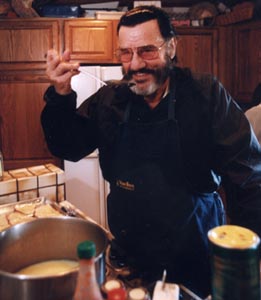
In the 1990s Otis bought a farm near Sebastopol, California, north of San Francisco. For a time he ran a coffee shop / grocery store / blues club, where one of the featured singers was the Georgia-born singer Jackie Payne. Around this time Otis also founded and pastored a new church, Landmark Community Gospel Church, which held weekly rehearsals in the tiny town of Forestville, California and Sunday services in Santa Rosa, California. Landmark's worship services centered on Otis' preaching and the traditional-style performances of a gospel choir and a male gospel quartet, backed by a rocking band that featured Otis' son Nicky Otis and Shuggie's son, Lucky Otis. The church closed its doors in the mid 1990s.
Otis continued performing through the 1990s and headlined the San Francisco Blues Festival in 1990 and 2000, although because of his many other interests he went through long periods where he did not perform. He was elected to the Rock and Roll Hall of Fame in 1994. 
He had a popular radio show on KPFA, called The Johnny Otis Show. This show was aired every Saturday Morning, live from the Powerhouse Brewery in Sebastopol. Listeners were invited to stop in for breakfast and enjoy the show live. Alas, the show's frequency deteriorated along with Johnny's health. When Otis moved to Los Angeles, the show stuttered, then stopped completely and now even the Powerhouse has closed its doors. The last real show was August 19, 2006 when Otis and his wife relocated back to Los Angeles.

Otis died of natural causes on January 17, 2012, in the Altadena area of Los Angeles just three days before Etta James, whom he had discovered in the early 1950s. (Info from Wikipedia)