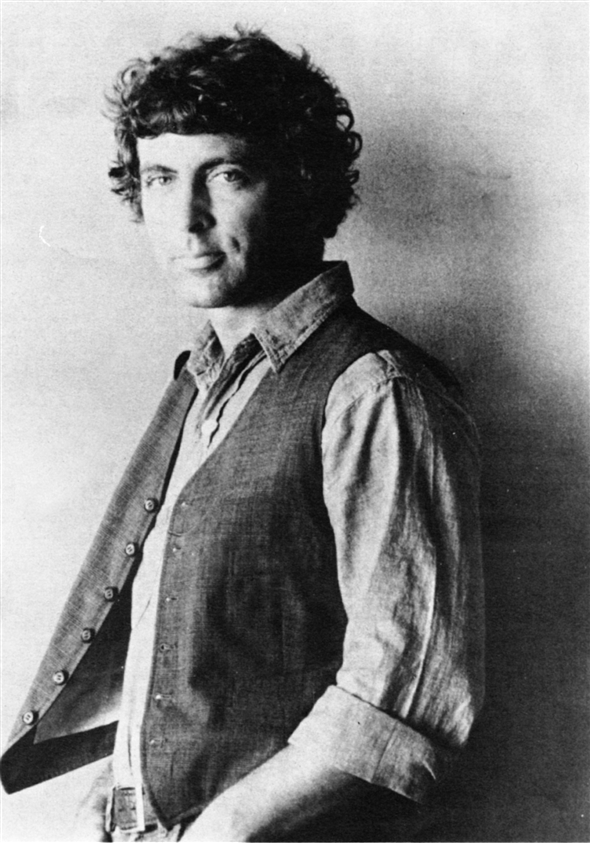
David Thomas Ackles (February 20, 1937 – March 2, 1999)
was an American singer-songwriter, pianist, and child actor. He recorded four
albums between 1968 and 1973.
Born into a show-business family, David Thomas Ackles
became involved in performance at an early age. He started out in vaudeville as
young as four, and then took the role of Tuck Worden in four Rusty films for
Columbia Pictures (My Dog Rusty, 1948; Rusty Leads the Way, 1948; Rusty's
Birthday, 1949; Rusty Saves a Life, 1949).
 Having studied English literature at Edinburgh
University, Ackles took a degree in Film Studies at the University of Southern
California before working in musical comedy, theatre, film and scriptwriting
for television. By the late Sixties, he was writing songs that were of great
delicacy and Elektra, on the basis of his "Blue Ribbons", employed
him as a songwriter.
Having studied English literature at Edinburgh
University, Ackles took a degree in Film Studies at the University of Southern
California before working in musical comedy, theatre, film and scriptwriting
for television. By the late Sixties, he was writing songs that were of great
delicacy and Elektra, on the basis of his "Blue Ribbons", employed
him as a songwriter.
On August 25th 1970 at the Troubadour in Hollywood, Elton
John was being introduced to the world.
 He was scheduled to be the opening act
for a man named David Ackles. But a record exec switched the order and Ackles
opened for John, which he did without a murmur.
He was scheduled to be the opening act
for a man named David Ackles. But a record exec switched the order and Ackles
opened for John, which he did without a murmur.

His persuasiveness led to a more elaborate contract,
which resulted in three highly praised albums - David Ackles (1969, later
reissued as Road to Cairo), Subway to the Country (1970), American Gothic
(1972). Ackles had a richly textured, but unusual, voice for rock music. Whilst
he had a tender approach to ballads, the vocal tone could develop into an angry
rasp or a scornful snarl, depending on the subject matter.

He shared with Harry Chapin and Randy Newman the ability
to write in character and to construct stories around an individual. He was the
prisoner returning home to find his love had not waited for him ("Down
River") and the drifter who couldn't face returning to
 his family
("Road to Cairo"). But he drew the line at singing in the first
person about the wounded soldier who sought to damage children's minds by
slipping them pornography ("Candy Man").
his family
("Road to Cairo"). But he drew the line at singing in the first
person about the wounded soldier who sought to damage children's minds by
slipping them pornography ("Candy Man").

Many of Ackles's songs related to the downtrodden or to
those who had created difficult situations for themselves. His music ranged
from simple melodies to complex arrangements that could have come from the pen
of Bernstein or Gershwin.

The title track of American Gothic said in four minutes
what it took David Lynch a complete television series to describe. He then went
on to produce a series of vignettes that summed up life in his home country in
the late 20th century. Interestingly, the album was made from the perspective
of living in England.
 Despite critical acclaim, his unusual voice and eclectic
style were not to the taste of the general public. Something of an artist's artist,
Ackles had a number of songs covered by others; and, although he reached a
critical apogee with American Gothic, he was dropped by Elektra.
Despite critical acclaim, his unusual voice and eclectic
style were not to the taste of the general public. Something of an artist's artist,
Ackles had a number of songs covered by others; and, although he reached a
critical apogee with American Gothic, he was dropped by Elektra.
A switch to Columbia for his fourth album, D.T. Ackles:
Five & Dime (1973), didn't assist his musical career. Perhaps Columbia was
looking to promote him as another Leonard Cohen, but the result was a good
album that few people bought. The contract was terminated and nothing more was
heard of David Ackles until Elektra re-released their three albums on CD in the
mid-Nineties.

Ackles completed the score for a musical about Aimee
Semple McPherson, Sister Aimee, in the early Nineties. He settled on a six-acre
horse farm near Los Angeles and worked as a professor of theatre for USC. He
was involved in student theatre production and had a success with Kurt Weill
and Bertolt Brecht's Threepenny Opera in 1997. A practising Christian, Ackles
had a strong commitment to help others, both directly and through his writing.


Ackles died of lung cancer on March 2, 1999, in Tujunga,
California at the age of 62.
(Edited mainly from obit by Brian Mathieson @ The
Independent)
Here’s some very rare footage of the singer-songwriter,
made for Norwegian TV in 1968. Four
songs and an interview:- 0:00 Down River; 3:31 The Lotus Man; 6:02 Blue
Ribbons; 9:58 interview; 12:32 His Name is Andrew. Ackles was an acclaimed and influential
songwriter, influencing Elton John, Elvis Costello and many others. His 'Road
to Cairo' was covered by Julie Driscoll & Brian Auger, and he was also
covered by Elton John, Elvis Costello, The Hollies, Spooky Tooth, Howard Jones
and Martin Carthy.
Bernie Taupin said of Ackles's style: "There was
nothing quite like it. It's been said so many times, but his stuff was sort of
[like] Brecht and Weill, and theatrical. It was very different than what the
other singer-songwriters of the time were doing. There was also a darkness to
it, which I really, really loved, because that was the kind of material that I
was drawn to." Taupin went on to produce his 'American Gothic' album. Broadcast December 20 1968. These songs were on his
first, eponymous album from 1968.