
Enoch Henry Light (18 August 1905, in Canton, Ohio – 31
July 1978, in New York City) was a classically trained violinist, dance band
leader, and recording engineer.
 Enoch Light was born and raised in Canton, Ohio. He began
as a light classical violinist after graduating from Johns Hopkins University
and was the leader of various dance
bands that recorded as early as March 1927. Light and his band primarily worked in various
hotels in New York. For a time in 1928 he also led a band in Paris. In the
1930s Light also studied conducting with the French conductor Maurice Frigara
in Paris.
Enoch Light was born and raised in Canton, Ohio. He began
as a light classical violinist after graduating from Johns Hopkins University
and was the leader of various dance
bands that recorded as early as March 1927. Light and his band primarily worked in various
hotels in New York. For a time in 1928 he also led a band in Paris. In the
1930s Light also studied conducting with the French conductor Maurice Frigara
in Paris.
Throughout the 1930s, Light and his outfits were steadily
employed in the generally more upscale hotel restaurants and ballrooms in New
York that catered to providing polite ambiance for dining and functional dance
music of current popular songs rather than out and out jazz.
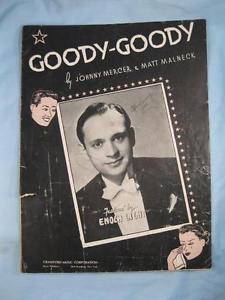 After a near-fatal car accident in 1940 and World War II
interrupted his classical career, he organized his own dance band, "The
Light Brigade," and worked in clubs and hotels around the Northeast,
including the Grill Room of the Hotel Taft. It was a conservative band, what
was known as a "sweet band," specializing in music for middle-aged dancers.
He recorded with this band for RCA and Columbia.
After a near-fatal car accident in 1940 and World War II
interrupted his classical career, he organized his own dance band, "The
Light Brigade," and worked in clubs and hotels around the Northeast,
including the Grill Room of the Hotel Taft. It was a conservative band, what
was known as a "sweet band," specializing in music for middle-aged dancers.
He recorded with this band for RCA and Columbia.
He broke up the band toward the end of the 1940s and went
into management, working for several record companies before becoming president
of Waldorf Music Hall Records in 1954. He founded his own label, Grand Award,
in 1956 and had several successes with Dixieland and honky-tonk piano albums by
such anonymous groups as the "Charleston City All-Stars" and
"Knuckles O'Toole" (aka Dick Hyman). Grand Award
 featured some of the
worst covers and presentations ever put
out--which was remarkable, considering Light's next venture: Command Records.
featured some of the
worst covers and presentations ever put
out--which was remarkable, considering Light's next venture: Command Records.
Light sold Grand Award to ABC Records and formed Command
in 1959 with the specific aim of capitalizing on the emerging market of stereo
fanatics. He wanted his recordings to take maximum advantage of left-right
channelization without stooping to tricks like "ping-pong" effects.
He was a meticulous engineer and put as much effort into the quality of his
recording equipment and production systems as into the music itself. Finally, he set Command LPs apart on the store
racks with bold abstract designs, the first few by the artist Josef Albers.

The first Command LP, "Persuasive Percussion,"
was a huge hit. It was unlike anything before it because its sales came almost
exclusively from retail exposure--its numbers received relatively little
airplay on the mono AM radio.
 Light produced a steady stream of Command releases,
under a variety of names, sometimes featuring musicians such as Tony Mottola or
Dick Hyman, sometimes under anonymous groups like "Los Admiradores."
He also followed his love of classical music by releasing a series of
recordings by William Steinberg and the Pittsburgh Symphony Orchestra that are
considered among the finest of the early stereo era.
Light produced a steady stream of Command releases,
under a variety of names, sometimes featuring musicians such as Tony Mottola or
Dick Hyman, sometimes under anonymous groups like "Los Admiradores."
He also followed his love of classical music by releasing a series of
recordings by William Steinberg and the Pittsburgh Symphony Orchestra that are
considered among the finest of the early stereo era.

 He continued to experiment with techniques, becoming one
of the first to use 35mm film to record instead of magnetic tape. One big
advantage of film over tape was that distortions due to the drag of the
original tape across the recording head ("wow" and
"flutter") were reduced dramatically.
He continued to experiment with techniques, becoming one
of the first to use 35mm film to record instead of magnetic tape. One big
advantage of film over tape was that distortions due to the drag of the
original tape across the recording head ("wow" and
"flutter") were reduced dramatically.
Light launched a new label called Project 3 and continued
recording, but did not concentrate so heavily on stereo effects. Light recorded
several successful big band albums with an ace-group of New York studio
musicians, many of whom were veterans of the greatest bands of the Swing Era
who were still regularly working in New York's television and recording
studios.
 Released as Enoch Light And The Light Brigade, the arrangements used
on the recordings were transcribed note-for-note from some of what were the
hallmark recordings by many of the best bands of the swing era.
Released as Enoch Light And The Light Brigade, the arrangements used
on the recordings were transcribed note-for-note from some of what were the
hallmark recordings by many of the best bands of the swing era.
The arranging reconstructions of these now "classic" arrangements were completely reconstructed by arrangers Dick Lieb, Dick Hyman, Tony Mottola and Jeff Hest. Many of the musicians employed for this series of "recreations" had been members of the original bands that made the original records decades earlier.
 Released as Enoch Light And The Light Brigade, the arrangements used
on the recordings were transcribed note-for-note from some of what were the
hallmark recordings by many of the best bands of the swing era.
Released as Enoch Light And The Light Brigade, the arrangements used
on the recordings were transcribed note-for-note from some of what were the
hallmark recordings by many of the best bands of the swing era. The arranging reconstructions of these now "classic" arrangements were completely reconstructed by arrangers Dick Lieb, Dick Hyman, Tony Mottola and Jeff Hest. Many of the musicians employed for this series of "recreations" had been members of the original bands that made the original records decades earlier.
 Light released 25 albums over 12 years (1959–71), with
two of them reaching number one on the U.S. Billboard album chart. He holds the
record for having the most charting LPs without having a Top 40 single, as
reported by Casey Kasem on the American Top 40 broadcast of October 14, 1978.
Light released 25 albums over 12 years (1959–71), with
two of them reaching number one on the U.S. Billboard album chart. He holds the
record for having the most charting LPs without having a Top 40 single, as
reported by Casey Kasem on the American Top 40 broadcast of October 14, 1978.
Light retired from music entirely in 1974. When he died
in 1978, just before what would have been his 73rd birthday, he left behind a
distinct and notable legacy. He was buried at the Umpawaug Burial Ground,
Redding, Connecticut.
(Edited from Wikipedia & Space Age Pop)

