
Wilson Pickett (March 18, 1941 – January 19, 2006) was an
American R&B, soul and rock and roll singer and songwriter. A major figure
in the development of American soul music, Pickett recorded over 50 songs which
made the US R&B charts, many of which crossed over to the Billboard Hot
100. Among his best-known hits are "In the Midnight Hour" (which he
co-wrote), "Land of 1,000 Dances", "Mustang Sally", and
"Funky Broadway". 

Born in Prattville, Ala., Mr. Pickett was one of 11
children; he told interviewers that he had suffered an abusive childhood. As a
teenager he moved to Detroit, where he formed a gospel band, the Violinaires
that performed in local churches. But his chance at pop fame emerged in 1961,
when he was invited to join the Falcons, an R & B act that had already
scored a Top 20 hit, "You're So Fine."
While the Falcons enjoyed modest success, Mr. Pickett
struck out on his own, recording the song "If You Need Me." His
performance hit the market at roughly the same time the soul singer Solomon
Burke released his own version. Still, both treatments sold well, and Mr.
Pickett soon had a contract with Atlantic Records who sent him to record at
Stax in Memphis in 1965.

One early result was "In the Midnight Hour," whose
chugging horn line, loping funky beats, and impassioned vocals combined into a
key transitional performance that brought R&B into the soul age. It was an
R&B chart-topper and a substantial pop hit (number 21),  though its
influence was stronger than that respectable position might indicate: thousands
of bands, black and white, covered "In the Midnight Hour" on-stage
and record in the 1960s.
though its
influence was stronger than that respectable position might indicate: thousands
of bands, black and white, covered "In the Midnight Hour" on-stage
and record in the 1960s.
 though its
influence was stronger than that respectable position might indicate: thousands
of bands, black and white, covered "In the Midnight Hour" on-stage
and record in the 1960s.
though its
influence was stronger than that respectable position might indicate: thousands
of bands, black and white, covered "In the Midnight Hour" on-stage
and record in the 1960s.
Most of his songs were recorded in Memphis or Muscle
Shoals, Ala., which at the time were the hotbeds of soul recording activity in
the South. His sidemen included Southern musicians like the guitarist Steve
Cropper (who co-wrote "Midnight Hour" and other
songs with Mr.
Pickett) and, later, the guitarist Duane Allman of the Allman Brothers.
He soon found himself with the nickname "Wicked
Pickett" --  which has been described as a reference both to his screaming
delivery and to his offstage behaviour.
which has been described as a reference both to his screaming
delivery and to his offstage behaviour.
 which has been described as a reference both to his screaming
delivery and to his offstage behaviour.
which has been described as a reference both to his screaming
delivery and to his offstage behaviour.
Pickett had a flurry of other galvanizing soul hits over
the next few years, including "634-5789," "Mustang Sally,"
and "Funky Broadway," all of which, like "In the Midnight
Hour," were frequently adapted by other bands as dance-ready numbers. The
king of that hill, though, had to be "Land of 1000 Dances," Pickett's
biggest pop hit (number six), a soul anthem of sorts with its roll call of
popular dances, and covered by almost as many acts as "Midnight Hour"
was. He also earned a reputation as one of music's most compelling live
performers, delivering stage shows in which he mixed gospel-tinged solemnity
with funk stylings that evoked James Brown.
 Pickett didn't confine himself to the environs of Stax
for long; soon he was also cutting tracks at Muscle Shoals. He recorded several
early songs by Bobby Womack. He used Duane Allman as a session guitarist on a
hit cover of the Beatles' "Hey Jude." He cut some hits in
Philadelphia with Gamble & Huff productions in the early '70s. He even did
a hit version of the Archies' "Sugar, Sugar." The hits kept rolling
through the early '70s, including "Don't Knock My Love" and "Get
Me Back on Time, Engine Number 9."
Pickett didn't confine himself to the environs of Stax
for long; soon he was also cutting tracks at Muscle Shoals. He recorded several
early songs by Bobby Womack. He used Duane Allman as a session guitarist on a
hit cover of the Beatles' "Hey Jude." He cut some hits in
Philadelphia with Gamble & Huff productions in the early '70s. He even did
a hit version of the Archies' "Sugar, Sugar." The hits kept rolling
through the early '70s, including "Don't Knock My Love" and "Get
Me Back on Time, Engine Number 9."
One of the corollaries of '60s soul is that if a
performer rose to fame with Motown or Atlantic, he or she would produce little
of note  after leaving the label. Pickett, unfortunately, did not prove an
exception to the rule. His last big hit was "Fire and Water," in
1972. He continued to be active on the tour circuit; his most essential music,
all from the 1960s and early '70s, was assembled for the superb Rhino double-CD
anthology A Man and a Half. Pickett was inducted into the Rock and Roll Hall of
Fame in 1991, in recognition of his impact on song writing and recording.
after leaving the label. Pickett, unfortunately, did not prove an
exception to the rule. His last big hit was "Fire and Water," in
1972. He continued to be active on the tour circuit; his most essential music,
all from the 1960s and early '70s, was assembled for the superb Rhino double-CD
anthology A Man and a Half. Pickett was inducted into the Rock and Roll Hall of
Fame in 1991, in recognition of his impact on song writing and recording.
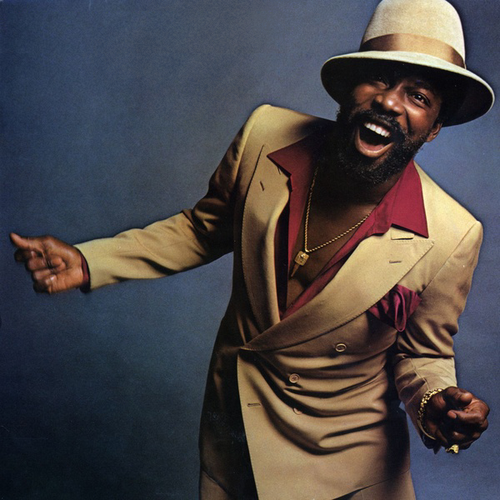 after leaving the label. Pickett, unfortunately, did not prove an
exception to the rule. His last big hit was "Fire and Water," in
1972. He continued to be active on the tour circuit; his most essential music,
all from the 1960s and early '70s, was assembled for the superb Rhino double-CD
anthology A Man and a Half. Pickett was inducted into the Rock and Roll Hall of
Fame in 1991, in recognition of his impact on song writing and recording.
after leaving the label. Pickett, unfortunately, did not prove an
exception to the rule. His last big hit was "Fire and Water," in
1972. He continued to be active on the tour circuit; his most essential music,
all from the 1960s and early '70s, was assembled for the superb Rhino double-CD
anthology A Man and a Half. Pickett was inducted into the Rock and Roll Hall of
Fame in 1991, in recognition of his impact on song writing and recording.
His first album in more than a decade -- 1999's
"It's Harder Now" --  was honoured with a Grammy nomination for best
traditional rhythm and blues vocal performance. In 2000, he picked up three W.
C. Handy Awards from the Blues Foundation, including one for comeback album of
the year.
was honoured with a Grammy nomination for best
traditional rhythm and blues vocal performance. In 2000, he picked up three W.
C. Handy Awards from the Blues Foundation, including one for comeback album of
the year.
 was honoured with a Grammy nomination for best
traditional rhythm and blues vocal performance. In 2000, he picked up three W.
C. Handy Awards from the Blues Foundation, including one for comeback album of
the year.
was honoured with a Grammy nomination for best
traditional rhythm and blues vocal performance. In 2000, he picked up three W.
C. Handy Awards from the Blues Foundation, including one for comeback album of
the year.
Pickett spent the early part of the 2000s performing,
before retiring in late 2004 due to ill health. He passed away on January 19,
2006, following a heart attack. (Info edited mainly from All Music & NY
Times)

