Friday, 16 August 2019

Al Hibbler born 16 August 1915


Albert George "Al" Hibbler (August 16, 1915 – April 24, 2001) was an American baritone vocalist, who sang with Duke Ellington's orchestra before having several pop hits as a solo artist. Some of Hibbler's singing is classified as rhythm and blues, but he is best seen as a bridge between R&B and traditional pop music.
According to one authority, "Hibbler cannot be regarded as a jazz singer but as an exceptionally good interpreter of twentieth-century popular songs who happened to work with some of the best jazz musicians of the time."


Hibbler was born in Tyro, Mississippi, United States, and was blind from birth. Some sources give his birth name as Andrew George Hibbler. At the age of 12 he moved to Little Rock, Arkansas, where he attended Arkansas School for the Blind, joining the school choir. After winning an amateur talent contest in Memphis, Tennessee, he began working as a blues singer in local bands.
Blessed with perfect pitch, he became the first black singer to have a radio program in Little Rock (1935–1936) on KGHI. In 1935, he landed a gig with a band called Yellow Jackets. In 1935 he failed his first audition for Duke Ellington.He left Little Rock with Dub Jenkins & His Playmates in 1936, staying with them almost two years. He then spent another two years with Boots and His Buddies out of San Antonio, Texas. In 1942, he joined Jay McShann and his Orchestra and stayed with them for eighteen months. In 1935 he joined Ellington's orchestra, replacing Herb Jeffries.


He stayed with Ellington for almost eight years, and featured on a range of Ellington standards, including "Do Nothin' Til You Hear From Me", the words for which were written specifically for him and which reached # 6 on the Billboard pop chart (and # 1 for eight weeks on the "Harlem Hit Parade") in 1944, "I Ain't Got Nothin' But the Blues," and "I'm Just a Lucky So-and-So". 
Although Hibbler's style was described as "mannered", "over-stated", and "full of idiosyncrasies" and "bizarre vocal pyrotechnics", he was also considered "undoubtedly the best" of Ellington's male vocalists.While with Ellington, Hibbler won the Esquire New Star Award in 1947 and the Down Beat award for Best Band Vocalist in 1949.

Toward the end of time with Ellington, Mr. Hibbler's specialties became songs like ''Trees'' and ''Danny Boy'' -- oddments in an Ellington show but indicative of the singer's future career as a ballads-and-standards singer. All told, he made eighty-two recordings with the Duke Ellington Orchestra before he left to launch a solo career in 1951 after a dispute over his wages. He then recorded with various bands including those of Johnny Hodges and Count Basie, and for various labels including Mercury and Norgran, a subsidiary of Verve Records, for whom he released an LP, Al Hibbler Favorites, in 1953. In 1954 he released a more successful album, Al Hibbler Sings Duke Ellington, and in 1955, he started recording with Decca Records, with immediate success.

His rendition of 'Unchained Melody' was featured in the film 'Unchained' (1955) and was his biggest hit reaching # 3 on the US pop chart. It sold over one million copies, and was awarded a gold disc. Hibbler's version also reached # 2 in the United Kingdom, becoming his only British chart success. Its success led to network appearances, including a live jazz club remote on NBC's Monitor. Other hits were "He" (1955), "11th Hour Melody" and "Never Turn Back" (both in 1956). "After the Lights Go Down Low" (also in 1956) was his last top ten hit.

In the late 1950s and 1960s, Hibbler became a civil rights activist, marching with protestors and getting arrested in 1959 in New Jersey and in 1963 in Alabama. The notoriety of this activism discouraged major record labels from carrying his work, but Frank Sinatra supported him and signed him to a contract with his label, Reprise Records.

In 1971, Hibbler sang two songs at Louis Armstrong's funeral. In
1972 he made an album, A Meeting of the Times, with another fiercely independent blind musician, the multi-instrumentalist Rahsaan Roland Kirk. Hibbler made very few recordings after that, occasionally doing live appearances through the 1990s. His last public appearance was in January 1999, at a Jazz at Lincoln Centre evening of Ellington alumni, when he performed at a late-evening party. Seated, and using a vibrato as over-the-top as ever, he sang ''Time After Time.''

He died at Holy Cross Hospital in Chicago in 2001, at the age of 85. He is buried at Lincoln Cemetery in Blue Island, Illinois. He has a star on the Hollywood Walk of Fame for Recording at 1650 Vine Street.

(Edited mainly from Wikipedia)

Thursday, 15 August 2019

Rose Maddox born 15 August 1925


Roselea Arbana "Rose" Maddox (August 15, 1925 – April 15, 1998) was an American country singer-songwriter and fiddle player, who was the lead singer with the Maddox Brothers and Rose before a successful solo career.
Her musical styles straddled hillbilly music, rockabilly and gospel. She was noted for her "reputation as a lusty firebrand", and her "colourful Western costumes"; she was one of the earliest clients of Hollywood tailor Nathan Turk.

She was born in Boaz, Alabama, and travelled west at the age of seven with her family, who had been sharecroppers. After her father eventually found work, the family ended up in Modesto, California. Rose first performed with her brothers in amateur shows at the age of 11, and while in her teens began performing with them on local radio station KTRB. 
The station offered her brothers a regular slot on condition that Rose sing with them, despite the opposition of their mother, who managed the group. After the brothers had served in World War II, Rose first recorded with them, for Four Star Records, in 1947.

The band electrified their instruments as well as their wardrobe, hiring the Hollywood tailor Nathan Turk to dress them in an outrageous version of the singing-cowboy style: spangles, embroidered satin shirts, bell-bottom pants, short Eisenhower jackets and personalized cowboy boots. They were billed as ''The Most Colourful Hillbilly Band in America.'' ''Their costumes,'' said Tennessee Ernie Ford, ''made Liberace look like a plucked chicken.''

The group began to be successful in the late 1940s, and she and her brothers moved to live in Hollywood. They toured widely, and appeared regularly on the Louisiana Hayride radio show. Rose became noted for her colourful performances, once shocking a Grand Ole Opry audience by appearing with a bare midriff. She also recorded as a duo, Rosie and Rita, with her sister-in-law. Her first marriage was to E.B. Hale during the Second World War, when she was 16. She married club owner Jim Brogdon in the late 1950s; they separated after six years.


After the Maddox Brothers group broke up in 1957, Rose initially performed with her brother Cal and then started a solo career. She had 14 hits on the Billboard country singles chart between 1959 and 1964, including several duets with Buck Owens, and also
recorded with Bill Monroe. Her biggest hit, "Sing a Little Song of Heartache," reached no.3 on the country chart at the end of 1962. She then began to specialize in bluegrass recordings, recording the commercially successful and influential album Rose Maddox Sings Bluegrass for Capitol Records. After her contract with the company ended in 1965, she began to concentrate on tours, performing with her brothers Cal and Henry and son Donnie - who died in 1982 - in the UK, Europe and elsewhere. She also performed regularly with bluegrass musician Vern Williams.

She suffered stomach ulcers, several heart attacks and kidney trouble from the late 1960s onwards, but continued to perform and record, for several labels. In 1996, she was nominated for a Grammy award for her Arhoolie bluegrass album, $35 and a Dream.

In later years she lived in Ashland, Oregon, near where her brother Don Maddox had bought a ranch in 1958. Maddox spent most of the '90s relatively quietly, performing at a few festivals and recording an occasional album, including The Moon Is Rising in 1996. She performed up until the summer of 1997 and  died in Ashland of kidney failure in 1998, at the age of 72.

Maddox also acted in movies including The Hi-Lo Country (1998), and the documentaries The Women of Country (1993) and Woody Guthrie: Hard Travelin' (1984).

Emmylou Harris believes Maddox has never received the recognition she deserves, in part because of what Harris calls reluctance in American society to celebrate the value of white country and roots music. Dolly Parton also credits Maddox as an early influence. Laura Cantrell's song "California Rose" was written in memory of Maddox.


Her life story and that of the band were told in the biography, Ramblin' Rose: The Life and Career of Rose Maddox by Jonny Whiteside. The book won an award for excellence in 1998 from the Association for Recorded Sound Collections (ARSC).

(Edited from Wikipedia & NY Times)

Wednesday, 14 August 2019

Stuff Smith born 14 August 1909


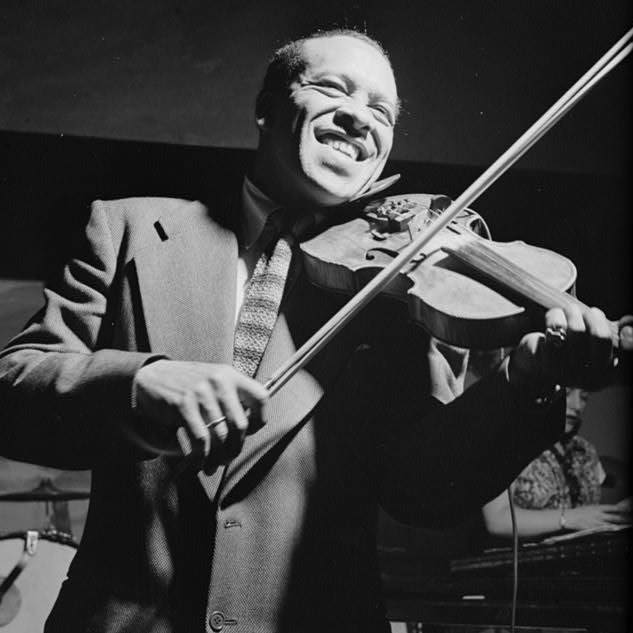
Hezekiah Leroy Gordon Smith (August 14, 1909 - September 25, 1967), better known as Stuff Smith, was one of the preeminent jazz violinists of the swing era. He was also a hard drinking character, often wearing a tattered top hat and a stuffed parrot during his performances. He is fondly remembered as “the cat that took the apron-strings off the fiddle.”

Stuff Smith was born in Portsmouth, Ohio, but grew up in Cleveland. His father taught him to play the violin and encouraged him to study classical music. Smith took some music lessons but switched to jazz after hearing Louis Armstrong play the trumpet; Armstrong influenced Smith's own style at a fundamental level. Although he had received a scholarship to study at Johnson C. Smith University, Smith opted for a musical life instead. At age 15 he joined a touring minstrel show, the Aunt Jemima Revue.

In 1926 Smith joined the Dallas-based band of Alphonso Trent; this was one of the so-called “territory” bands that grew from the improvisatory and bluesy roots of jazz rather than moving toward the more composed and arranged style of the eastern seaboard. He stayed with Trent for four years, moving briefly to the band of Ferdinand “Jelly Roll” Morton but returning after becoming frustrated that his violin could not be heard over the dense sound of Morton's group. In 1930 Smith formed his own band in Buffalo, New York.

During his Buffalo years Smith cast one eye on New York, and he got there in late 1935 and 1936 after he composed a scat-like novelty song called “I'se a Muggin'” (the words seem to have no specific meaning). The song caught on, and musician-impresario Dick Stabile booked Smith and his band, which now included drummer “Cozy” Cole, into the Onyx Club on 52nd Street. Rechristened Stuff Smith and His Onyx Club Boys, the band was a successful fixture of the New York scene for several years. The main attraction was Smith himself, attired in a worn-out top hat and sometimes sporting a parrot on his shoulder.


Smith and his band also recorded several sides for the Vocalion label in 1936. “I'se a Muggin'” became a moderate hit, but another recording of that year turned out to have longer-lasting resonances--”You'se a Viper,” was covered by vocalist “Fats” Waller in 1943 and enjoyed renewed popularity in the counterculture of the ‘60s and ‘70s.

In musical terms, Smith's Onyx Club years were historically significant; he pioneered the use of the amplified violin, and he developed a bluesy, speech-inflected style that was quite distinct from the European-influenced approaches of Swing Era violinists Joe Venuti, Stephane Grappelli, and Eddie South.

In 1938 Smith appeared in the film ‘Swing Street,’ taking a hiatus from live performing. That took the momentum out of his New York career, and he dissolved his band after a series of disagreements with players and other industry figures. Smith bounced back with a trio that performed in New 

York (sometimes at the Onyx) and Chicago in the 1940s, and he briefly took over Fats Waller's band after Waller's death in 1943. A series of trio recordings was made in 1943 and 1944.
By 1945. Smith was a heavy drinker and found himself at odds with club owners, musicians, bookers and managers which had a major impact on his career. In 1950 he appeared regularly on broadcasts by Chicago DJ Al Benson but he was fired for getting into a fist fight with his host on the air. In 1951 he toured with Dizzy Gillespie and in 1953 made a recording with Herman Poole Blount who would later be known as Sun Ra. In 1956 he joined Nat King Cole on his hit album "After Midnight".

Smith was still much admired by his fellow musicians, and he moved to California and continued to perform on what was said to be a centuries-old Guarneri violin. Among his fans was big-time jazz producer Norman Granz, who teamed Smith with bebop trumpeter Dizzy Gillespie and pianist Oscar Peterson for a recording on the Verve label in 1957. It was a measure of the originality of Smith's style that his playing fit as well with this new generation of players as it had with the swing bands of the 1930s. Smith made several albums for Verve and continued to record until shortly before his death.

Touring widely in the 1960s, Smith, like so many other jazz musicians, found that European audiences were especially appreciative of his music. He settled in Copenhagen, Denmark, in 1965 and made several recordings in Europe. Smith fell seriously ill on tour in Paris. Doctors placed him on the critical list; but Smith recovered and continued to perform, but with half of his liver and stomach already removed as a consequence of his heavy drinking he would only last another two years before his death in Munich at the age of 58 on September 25, 1967.  

(edited  mainly from allaboutjazz.com)


Tuesday, 13 August 2019

Jack Fina born 13 August 1913


Jack Fina (August 13, 1913 – May 14, 1970) was a bandleader, songwriter, and pianist. His were once called “the ten most talented fingers in radio.”

Fina was born in Passaic, New Jersey, and educated at the New York College of Music and was a student of August Fraemcke and Elsa Nicilini. He started out playing piano in Clyde McCoy's band sometime in the 1930s, but it wasn't until he joined Freddy Martin’s band in 1936 that he gained real fame. When Martin began in 1941 heavily featuring his big band adaptations of classical compositions, the lion’s share of the solos went to Fina. Such pieces as Tonight We Love, the Grieg Piano Concerto, Warsaw Concerto, Rachmaninoff Piano Concerto #2, and Bumble Boogie all showcased Fina at the keyboard.


After leaving Martin in 1946, Fina formed his own 16-piece band. His first appearance was at the Claremont Hotel. The vocals were handled by Harry Prime and Gil Lewis. With good air time and good recordings, Fina became a national figure. Because of this, Fina appeared at some of the top venues in the country, including Elitch’s Gardens in Denver, the Chase Hotel in St. Louis,  the Waldorf-Astoria, the Aragon Ballroom, and the famous illegal gambling casino/night club in Galveston, the Balinese Room. Though well-received, he never quite reached the level of fame to which some other leaders had risen during the height of the big bands. 


Fina made two dozen sides for Mercury in 1946-47 (the first were just his piano with rhythm accompaniment), then he switched to MGM in 1947, for whom he recorded with 14 to 16-piece ensembles into 1954. Actress Debbie Reynolds made one record with his orchestra, Oops!, on October 29, 1951. By reducing the size of his group as the '50s went on, Fina continued to find steady employment.

He also appeared in several films, including Melody Time (sequence Bumble Boogie, 1948) and Disc Jockey (1951). A noted songwriter, his credits included Dream Sonata (his theme song), Chango and Piano Portraits. He also operated a talent agency called the Concerto Music & Entertainment Agency with his manager Al King.  From 1960 - 1968 Fina led a small band in the Persian Room of the Beverly Hills Hotel in California, which included Nick Pelico on drums. It was also around the same time that he appeared as a solo act on Dick Sinclair’s television show. 

Between 1960 and 1966,  Fina did four albums for Dot Records, “Jack Fina Plays Boogie Woogie” , “Kitten On the Keys” , “Great Hits in Boogie Woogie” , and “More Great Hits in Boogie Woogie” .  As expressed by the album titles, his material ranged from boogie and perennial piano favourites to, on the last LP, newer pop songs such as The Shadow of Your Smile, Spanish Eyes, King of the Road, and Cast Your Fate to the Wind.

In the spring of 1970, Fina died aged 56, from a heart attack during an engagement at the Beverly Hills Hotel, Sherman Oaks, California. He is buried at Forest Lawn Cemetery, Hollywood Hills.
(Edited from Wikipedia & bigbandlibrary.com)

Monday, 12 August 2019

Buck Owens born 12 August 1929


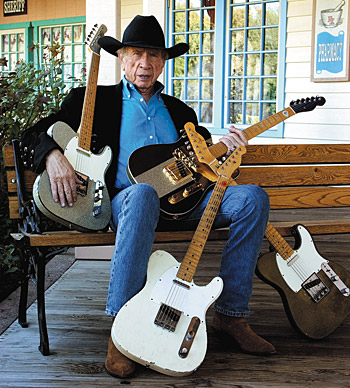
Alvis Edgar Owens Jr. (August 12, 1929 – March 25, 2006), professionally known as Buck Owens, was an American musician, singer, songwriter and band leader who had 21 No. 1 hits on the Billboard country music charts with his band the Buckaroos. They pioneered what came to be called the Bakersfield sound, named after Bakersfield, California, the city Owens called home and from which he drew inspiration for what he preferred to call American music.

Growing up in Arizona, Buck picked cotton and learned to play the mandolin, the guitar and horns. He had his first radio program at age 16 and a year later, worked with the Mac's Skillet Lickers, whose lead singer was Bonnie Campbell. Bonnie soon became the first Mrs. Buck Owens; together, they had a son, Buddy. Buck and his young family moved to Bakersfield, California, in the early 1950s, where he worked as a session guitarist and played for a band called the Orange Blossom Playboys. Buck played back-up for Tennessee Ernie Ford, Wanda Jackson, Tommy Collins, Tommy Duncan, and many others. After a few years of recording rockabilly songs (as "Corky Jones"), Buck signed a contract with Capitol Records in 1957.

His first recordings floundered, and it wasn't until the spring of 1959 when he hit with "Second Fiddle." That song only reached No. 24 on Billboard magazine's country singles chart, but it was the follow-up, "Under Your Spell Again" (which reached No. 4 in the fall of 1959) that Buck's future in country music was assured--and was it ever. After several top-five songs that flirted with the No. 1 spot (among them, "Above and Beyond," "Under the Influence of Love" and "Foolin' Around"), he finally hit the top of the charts in June 1963 with "Act Naturally." That song's four-week stay at No. 1 paled in comparison, though, to his incredible 16-week stay that fall with "Love's Gonna Live Here." 


Eighteen more No. 1 hits, all in the Bakersfield tradition, followed during the next nine years. Many of them featured Buck's chief guitarist, right-hand man and close confidant, Don Rich. Together, Owens and Rich (the leader of Buck's backing band, the 
Buckaroos) polished their sound, which graced AM radio throughout the 1960s and early 1970s.


Buck parlayed his popularity on two country music TV shows: the syndicated "Buck Owens Ranch Show" and CBS' (and later syndicated) Hee Haw (1969). Through it all, he was an astute businessman, keeping control of his publishing rights and master tapes, purchasing several radio stations and forming a booking agency among them. He also recorded a live album in 1969 in London. Then, in 1974, Rich was killed in a motorcycle accident and Buck's life faltered. 
He recorded for Warner Bros. for a time in the mid- to late-1970s, but only one song, 1979's "Play Together Again, Again" (a duet with Emmylou Harris) was a substantial hit.

Buck left Hee Haw in 1986 because he felt the show ruined his credibility as a musician and he was no longer taken seriously in the music industry. He spent the next few years re-building his credibility. Then, in 1988, he found renewed popularity when new country star Dwight Yoakam (whose own Bakersfield Sound was strongly influenced by Owens) asked him to duet on "Streets of Bakersfield," which soared to No. 1.


He had varied business enterprises concentrated in Bakersfield and Arizona...from real estate, television and radio stations to his Bakersfield's jewel, a nightclub called "Buck Owens' Crystal Palace" where he performed regularly. His three trips to the altar all ended in divorce. His health began to wain after being diagnosed with cancer in 1993, pneumonia in 1997 and a stroke in 2004. He continued to perform at his Bakersfield nightclub, restaurant and museum. His last performance completed, Buck Owens would retire to his North Bakersfield ranch and pass away peacefully in his sleep from a heart attack on March 25, 2006.

A public wake was held at the Crystal Palace then some 2,000 family, friends, fans and fellow performers gathered at the Valley Baptist Church in Bakersfield to bid farewell to Owens. He was interred in an elaborate above ground mausoleum at Greenlawn Cemetery, Bakersfield.

He was elected to both the Country Music Hall of Fame and the Nashville Songwriters Hall of fame in 1996. U.S. Highway 82 which passes through Sherman, Texas, his hometown, was named "Buck Owens Freeway" in his honour. Owens left behind a media empire worth millions of dollars and a priceless musical legacy that spans generations and genres.


In his own words, Owens wanted "just [to] be remembered as a guy that came along and did his music, and did his best and showed up on time, clean and ready to do the job, wrote a few songs, and had a hell of a time".  (Edited from mainly from IMDb & Wikipedia)

Sunday, 11 August 2019

Lucho Gatica born 11 August 1928


Luis Enrique Gatica Silva (11 August 1928 – 13 November 2018), better known as Lucho Gatica was a Chilean bolero singer, film actor, and television host known as "the King of Bolero." He toured a vast portion of the world, having performed in concerts in Europe, the Middle East and Asia. He was the uncle of the record producer Humberto Gatica.

Luis Enrique Gatica Silva was born on Aug. 11, 1928, in Rancagua, Chile, roughly 50 miles south of Santiago. His father, José Agustín Gatica Silva, a rancher, died when Lucho, as he was called, was 3, and his seven siblings banded together to support their mother, Juana, who moved into the town center and became a seamstress.

Juana played the harp at home and encouraged all her children to sing. Lucho was at first shy of the stage, but his older brother, Arturo, achieved some renown in Chile as a baritone singer, and he recognized Lucho’s talent. Lucho’s first public performance was in a duo with Arturo on a Rancagua radio program when he was 13. They became a team and recorded four folkloric songs for Odeon Records in 1949.

Lucho moved to Santiago at 18 to attend college, where he studied to become a dental technician while continuing to work in music. He soon began recording as a solo artist for Odeon, insisting that the producers allow him to sing romantic songs rather than folk music. His gifts as a pathos-laden balladeer showed themselves immediately.

“Me Importas Tú,” which Mr. Gatica recorded in 1951, became a smash hit throughout Latin America, jump-starting his career. He embarked on an international tour in 1954, supported by the Roberto Ingles Orchestra, and received a hero’s welcome in Argentina, Brazil and Uruguay. He then traveled to London, where he performed on BBC Radio.


Soon after, he began performing regularly in Mexico and Cuba, centres of Latin American show business. He appeared in his first film, “No Me Platiques Más” (“Don’t Tell Me Anymore”), in 1956. Two years later, Mr. Gatica settled permanently in Mexico. In 1959, he travelled to Spain for the first time and received an enthusiastic reception, and by the mid-1960s he had sold more than 22 million records worldwide.

Mr. Gatica gave a bravura performance at Carnegie Hall in 1962 accompanied by Lalo Schifrin’s orchestra; he later sang at the Hollywood Bowl, where he was presented by Nat King Cole. But it was a trip that year to the Philippines, where tens of thousands of fans greeted him, that made Mr. Gatica aware of how broadly his fame had spread.

Until almost the end of his life he continued to perform in a classic bolero style throughout the world, sometimes singing in Portuguese and English as well as in Spanish. He released his final album, “Historia de un Amor,” at 85, joined by guests like Michael Bublé and Nelly Furtado.

All told, Mr. Gatica, whose style was marked by a semi-operatic flair and languorous phrasing, recorded more than 800 songs, including the international hits “El Reloj,” “Contigo en la Distancia” and an authoritative rendition of “Bésame Mucho.” He counted Frank Sinatra, Ava Gardner and Nat King Cole as friends and fans.

In 2001, Gatica was inducted into the International Latin Music Hall of Fame. In the same year, his renditions of "La Barca" and "El Reloj" were inducted into the Latin Grammy Hall of Fame. Gatica himself was one of the recipients of the Latin Grammy Lifetime Achievement Award in 2007. He also received a star on the Hollywood Walk of Fame for Recording in 2008. 


Gatica died in Mexico on 13 November 2018 from pneumonia. President Sebastián Piñera of Chile ordered flags lowered to half-staff and declared Nov. 15 a national day of mourning.
(Edited from The New York Times  with help from Wikipedia)