Tuesday, 8 January 2019

Little Anthony born 8 January 1940


"Little Anthony" (born Jerome Anthony Gourdine, 8 January 1940 Brooklyn, New York) is better known as the lead singer with The Imperials and noted for his high-pitched voice.
Gourdines’ parents were musicians and his three brothers were also involved in music. His mother sang gospel with her sisters as the Nazareth Baptist singers. His father played saxophone (tenor, alto) 
and performed with the Sinclair Orchestra and the Buddy Johnson Orchestra. He also worked as an electrician at the Brooklyn Navy yard during the Second World War. They all lived in the Fort Green Project Complex run by the United States Government for its Navy yard workers.

Gourdine attended his formal years in school at Public School 67 Elementary School. This is where he became acquainted Ethel Mannix, who was his music and arts teacher from the 6th through the 8th grade. She was very influential in his knowledge of all forms of music. Gourdine first recorded in 1956 as a member of the Duponts, but was then asked by his friends to be lead of a singing group called The Chesters.

Formed in Brooklyn, New York, USA, in 1957, the group comprised ‘Little’ Anthony Gourdine, Ernest Wright Jnr. (b. 24 August 1941, Brooklyn, New York, USA), Clarence Collins (b. 17 March 1941, Brooklyn, New York, USA), Tracy Lord and Glouster Rogers (b. 1940). They signed a recording contract with Gone and End records. The president was George Goldner and his A&R man was Richard Barrett. Richard had already introduced groups like Frankie Lyman and The Teenagers, The Chantels, The Dubs, and The Flamingos. The ‘Little Anthony’ prefix was subsequently added at the suggestion of the influential disc jockey Alan Freed.


The group was renamed The Imperials and their first hit, the haunting Al Lewis-penned ‘Tears On My Pillow’ (1958), encapsulated the essence of street-corner harmony. Further success came with ‘So Much’ (1959) and ‘Shimmy Shimmy Ko-Ko-Bop’ (1960), before Gourdine was persuaded to embark on an ill-fated solo career.

In 1964, he formed‘new’ Imperials around Wright, Collins and Sammy Strain (b. 9 December 1940). Their first hit, ‘I’m On The Outside (Looking In)’, showcased Gourdine’s dazzling falsetto, a style continued on ‘Goin’ Out Of My Head’ and ‘Hurt So Bad’ (both of which reached the US pop Top 10). Complementing these graceful releases were such up-tempo offerings as ‘Better Use Your Head’ and ‘Gonna Fix You Good’ (both 1966).

At the height of their career, the group made two appearances on The Ed Sullivan Show, at the time television's top talent showcase, on March 28, 1965, and again on January 25, 1970. They also performed on many other popular television variety shows during 

the sixties, including Shindig!, Hullabaloo, Perry Como's Kraft Music Hall, Soul Train, Dick Clark's American Bandstand, and NBC's The Midnight Special, and The Tonight Show.

In 1969, Ernest Wright left the group to pursue his own career, followed by Sammy Strain in 1972. They were replaced by Bobby Wade and Harold Jenkins until 1975 when Gourdine left for another stab at a solo career.. Two years later, Collins formed his own ‘Imperials’, touring Britain on the strength of two hit singles, a reissued ‘Better Use Your Head’, and a new recording, ‘Who’s Gonna Love Me’.

In 1978 Gourdine became a Born Again Christian and in 1n 1979 he recorded 'Daylight,’ which was released on the religious outlet Songbird.       

In 1992, Collins, Wright, Strain, and Gourdine reunited for a concert at Madison Square Garden. This reunion proved to be a success. When the decision was made for the foursome to tour
together again, Wade relinquished the Imperials name, with his 
group becoming "Bobby Wade's Emperors" when they became the house band at Caesars Palace in Las Vegas. 

At this point, Strain left the
O'Jays, and permanently returned to the Imperials. 1992, the year of the group's reformation, was also the 40th anniversary of Dick Clark's American Bandstand, and he invited the Imperials to appear as part of the televised special celebration.

Gourdine, Collins, Wright, and Strain continued touring as "Little Anthony and the Imperials" until Strain retired in 2004 and Jenkins,for the second time,returned to take his place. In 2010, Jenkins also retired, and was replaced by Robert DeBlanc. As of 2012, the Imperials were (along with the Dells), one of the few
1950s-era R&B groups still touring with the great majority of their original members (Gourdine, Collins, and Wright). 

As of 2018, The Imperials are still performing. Imperials founder Collins, now retired, has been replaced by Johnny Britt. De Blanc and original members Wright and Gourdine round out the group. When the group is not touring, Gourdine does stage plays and currently also has a one-man show, which he is currently doing to support his recently released biography, and to celebrate his 55-plus years as a performer.


They were inducted into the Rock and Roll Hall of Fame on April 4, 2009, 23 years after the group's first year of eligibility for induction. (Edited from AllMusic, algomes.com & Wikipedia)

Monday, 7 January 2019

Emilio Pericoli born 7 January 1928


Emilio Pericoli (Cesenatico, 7 January 1928 – Savignano sul Rubicone, 9 April 2013) was an Italian pop singer, guitarist and pianist, popular in the early 1960's.

This sailor’s son was born in Cesenatico, a small town in north-eastern Italy. After completing his studies in piano and guitar, he began his professional career as a singer in the Maestro Enzo Ceragioli's orchestra with whom he performed in Italy and all abroad for a few years. 

In 1954, he participated in the radio contest "Dieci canzoni da lanciare". The following year, he appeared on 
stage with Isa Barzizza's company in the love story "Valentina". He then made his debut as film actor in the film "Il motivo in maschera" by Stefano Canzio. The part was based on a radio game presented by Mike Bongiorno where Pericoli participated as a contestant,.but this did not lead to a full-time acting career.

1959, he signed a recording contract with Dischi Ricordi's label and began his most successful period. He reinterpreted classic Italian songs of the 30s and 40s. These songs were collected on two albums, "Amori d'altri tempi" (1961) and "Amori dei nostri anni ruggenti" which were released the following year with arrangements by Iller Pattacini.


His biggest hit, however, turned out to be a cover version of the Betty Curtis/Luciano Tajoli number "Al Di La", 1961 winner at the San Remo Festival. "Al Di La" was subsequently used by Hollywood as the leitmotif for the Warner Brothers movie Rome Adventure (1962), starring Suzanne Pleshette and Troy Donahue.

Regis & Pericoli
Pericoli performed the song with a small combo in a suitably romantic nightclub setting. Resulting airplay in the U.S. moved the song up to sixth in the Billboard’s Hot 100 and 3 on the Adult Contemporary chart along with number 30 in the U.K. It sold over one million copies, and was awarded a gold disc.

In 1962, Pericoli entered the San Remo Festival in collaboration with songwriter Tony Renis and achieved additional fame with his rendition of "Quando, Quando, Quando," featured in the movie The Easy Life. While they didn’t win, his recording went on to become one of his best known. The song would go on to include a songwriting credit for Pat Boone for the English version which was later recorded by Englebert Humperdinck and Michael Buble.

In 1963, Pericoli returned to San Remo with Renis again, with the song "Uno per tutte". He placed among the winners, and won a spot in the 1963 Eurovision Song Contest, where he placed third, behind the winners Grethe and Jorgen Ingmann and runner-up Esther Ofarim.

After recording for a few years with Dischi Ricordi's label, he was put under contract by Warner Bros in the 1960s, where he recorded several singles and albums. He had no further hits in English-speaking territories but Pericoli was still able to rely on ‘Al Di La’ as leverage to gain a New York cabaret season in 1965 as a brief tangent to a career as a television actor. But he continued to record in Italy and appear on Italian TV shows, then faded from the scene.


Pericoli, who lived in Gambettola 4, died of natural causes in a hospice at Savignano sul Rubicone  on April 9, 2013.

(Edited from Wikipedia,Noise11.com, IMDb, AllMusic & Ruggero @ FindAGrave)

Sunday, 6 January 2019

Bruno Henriksen born 6 January 1910


Bruno Romanoff Alexander Henriksen (January 6, 1910 in Copenhagen - February 27, 1984 at Frederiksberg) was a Danish pianist, organizer and orchestra leader.


Henriksen, son of actress Gerda Tarnow, is remembered as one of many prominent performers in the Danish Jazz Golden Age. He graduated in the trade industry, but his main passion was music. When he was 16 he had composed a melody and dedicated it to the conductor Dajos Bella as a tribute. 


He played professionally from June 9, 1935. The following years he had various jobs in Valencia, Adlon, Olympia and Munich, where he played with Konstantin Hansen in 1935, Tage Hem Petersen 1935-36, Robert Radford 1936-37, Konstantin Hansen 1938-39 and with Richard Stangerup 's orchestra 1939-40.


Bruno Henriksen was married on 5 September 1936 in Holmen's Church in Copenhagen to Margrethe Rosenfeldt. In 1939 he came to Arena where in 1940 he played with Carlo Thomsen's quintet. He became best known when he joined the swing group Harlem Kiddies in 1940 with Kai Timmermann and the brothers Jimmy and Johnny Campbell. Then from 1941-53 he had his own orchestras, which mainly played in the Arena (until the attack in 1944), Ambassadeur, Valencia and in the Danset in Tivoli after its opening in 1948. A big favourite at this venue was The Tivoli Boogie-Woogie.


Bruno Henriksen's orchestra always had good song soloists such as. Ingelise Rune , Raquel Rastenni and Birthe Wilke . From 1952 his  main occupation was in the gramophone industry as a producer and recording manager at the record company Philips. Bruno Henriksen composed the English waltz "I Love You" and Knud Pheiffer wrote the text.

Ingelise Rune with Bruno Henriksen's Arena Orkester 1942


(Very scarce information regarding Bruno, but what I found was mainly edited from Det Kongelige Bibliotek)

Saturday, 5 January 2019

Big Bill Lister born 5 January 1923

"Big Bill" Lister (January 5, 1923 – December 1, 2009) was an American honky-tonk country music singer. Born Weldon E. Lister, he was nicknamed "Radio's Tallest Singing Cowboy."

Weldon E. "Big Bill" Lister, age 86, was born in Kenedy, Texas.  Lister grew up listening to his idol Jimmie Rodgers.  Lister began his musical career in 1938 on KNEL radio in Brady, Texas playing a Sears Roebuck $3.98 guitar. Later during the '40s, he worked in and around San Antonio where he did numerous live radio and stage shows, including the very first San Antonio Livestock Show & Rodeo.

Lister made some transcriptions for XEG, in Mexico, before moving to WOAI and then KMAC in San Antonio.  After World War II, Lister moved to KTSA and hired Tommy Hill to accompany him on guitar.  With Tommy and Kenny Hill, Lister formed Bill Lister and the Texas Hillbillies.  
Lister was hosting two shows each day on the powerful 50,000 watt station and sponsored by Luck Optical.  At 6 foot 7 1/2 inches, Lister was tagged with “Radio’s Tallest Singing Cowboy” during this time.

Lister made his first recording for the Everstate Label based in San Antonio.  His release of “This Time Sweetheart” and “Local Yokel” became regional hits in Texas. Lister moved to Nashville in January of 1951 where Tex Ritter told Capitol A & R leader Dee Kilpatrick to sign Lister to a recording contract.  With a contract in his hand, Lister went to the Grand Ole Opry and approached Jim Denny about appearing on the historic show.  Denny teamed Lister with Hank Williams as a front man.  He joined the Drifting Cowboys organization in February of 1951.


As a regular performer on the Grand Ole Opry, Lister worked with most of the stars of the day, including Little Jimmy Dickens, String Bean, Minnie Pearl, Del Wood, The Carter Family, and others. He was also a recording artist for both Everstate and Capitol Records. 

Hank Williams, Minnie Pearl & Big Bill
In the 1960's Bill retired from the music business when his son was born and took up gun engraving, a profession that had fascinated him since childhood. He did well, but we always kept a foot in, kept the old door cracked. "I never did completely quit playing misc. I was always gigging around with somebody, you know… I just wasn't fighting it full time, all the time, no more." His beautiful designs and artistic work placed him in the forefront of the field, his work in private collections the world over.

Never far from music, his career was revived in the late 1980's when his wife discovered the only known copy of Hank Williams "There's A Tear in My Beer," stored in his attic. Lister recorded the song in the 1950s, after Williams gave him a demo recording. 
Lister gave the demo recording to Williams' son, Hank Williams, Jr. Junior went on to record an overdubbed version of the song in 1988, in which (late) father and son sang together, some 40 years apart. That recording won a Grammy Award and a Country Music Association (CMA) Award in 1989. This brought a substantial amount of publicity for Lister.  He appeared on radio stations throughout the country and even was given a gold record on Nashville Now with Ralph Emery.

Big Bill Lister's return to commercial recording came in 1983 with the album "Sho' 'Nuff Country Stuff! (The Second Time Around)," produced for Slim Richey's Tex-Grass label by D. Lee Thomas and Michael H. Price, with accompaniment by the Salt Lick Foundation, a Texas string band that includes Lister's nephew, Harris Kirby. Lister also performed with Price and Richey's jazz ensemble, Diddy Wah Diddy.

Bill continued to record and perform throughout his lifetime. He made his final recording for Heart of Texas Records in 1999, with “Big Bill Lister Remembering Hank Williams Through Story and Song.” It was a live project that mixed Lister’s memories of his years with Williams.  It also featured him performing some of Williams’ hits and songs that Williams wrote for Lister.

His last performance was shared with hundreds of traditional country music fans on a Carnival Caribbean cruise during October 2008. Big Bill entertained 310 people on a seven day cruise out of Galveston, Texas, for Country Cruisin’ 2009,”   “He received a standing ovation every night.  He became ill after the cruise and remained in ICU for thirty days with a severe lung infection. 


During his 86th birthday party, Lister performed with his son and grandson and, most recently, had come to enjoy playing at the Rainbow Senior Centre. When people would clap, Lister would say, "Thank you, lovers of the fine arts," his son said. Big Bill Lister died  December 1st, 2009, in San Antonio, (age 86.)

(Edited mainly from Wikipedia & ahankwilliamsjournal blog)

Here's Big Bill and his guitar in his home outside San Antonio, Texas 1975.

Thursday, 3 January 2019

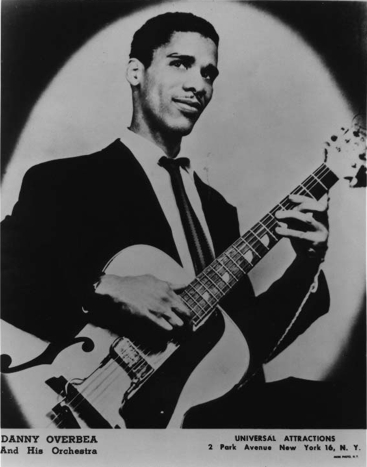
Danny Overbea born 3 January 1926


Daniel Dorsey "Danny" Overbea (January 3, 1926 – May 11, 1994) was an American rhythm and blues singer, guitarist and songwriter and was one of the earliest pioneers of rock ‘n’ roll. He was best known for his songs "Train, Train, Train" and "Forty Cups of Coffee", which he wrote and recorded in the early 1950s.

Daniel Dorsey Overbea was born 3d January 1926 at Philadelphia, the son of Sylvester Overbea and Irene Dorsey, a musical family who played regularly in their local church and around. His parents went to live to Chicago when the young Danny was seven and he was musically educated at the Du Sable High School where he formed a band, playing several instruments, composing, arranging and singing a lot of Bing Crosby's tunes, his first idol.

After his service in Europe during the war, Danny came back in the Windy City, was in 1946 a member of the musicians union and began to play it professionally in the year, initially with the Three Earls in Cleveland, Ohio, before launching a solo career. After returning to Chicago he made his first recording in 1950, as guest vocalist on saxophonist Eddie Chamblee's "Every Shut Eye Ain't Sleep".

He signed as a solo artist to Premium Records, and released his first single, "Contrary Mary", in early 1951.He became a popular club performer, noted for his guitar skills while performing splits, playing behind his back, and with his teeth, many such moves emulating T-Bone Walker (and later adopted by Jimi Hendrix).

In 1952, he was spotted by radio DJ Al Benson, who arranged for him to be signed by Chess Records. His first and most successful record for the company, "Train, Train, Train", his own composition, was issued on the Checker subsidiary label in early 1953 and reached number 7 on the Billboard R&B chart. The song was covered by Buddy Morrow, whose version on RCA Victor reached number 28 on the pop chart.


 Several strong numbers followed (Stop time, 40 cups of coffee... this one being covered by Bill Haley) waxed with the no-nonsense King Kolax Orchestra. According to Allmusic, Overbea's first two Checker records were "essentially rock ‘n’ roll songs before the concept of ‘rock ‘n’ roll’ had even emerged."

During a few years, Overbea was very busy, touring nationally with Top R&B acts like Count Basie, Dinah Washington, Cootie Williams or The Moonglows and being featured several time on the famous Rock'n'Roll TV shows by Alan Freed.

His later records for Checker were less successful, and he interspersed his rockier recordings with ballads in the style of Billy Eckstine, such as "Sorrento", which he sang in Italian, "You're Mine" (also recorded by The Flamingos), and "A Toast to Lovers". He continued to tour, with Dinah Washington and others, and performed on Alan Freed's shows including the week-long Easter Jubilee of Stars in Brooklyn 
in April 1955. After several singles on Checker, Overbea moved in 1956 to the Argo label, another Chess subsidiary specifically established to market pop music. However, his Argo recordings were not commercially successful, and he left in 1957.

He then recorded for Federal Records in Cincinnati, until 1959, but again with little success. His last known recordings were for the Apex label in Chicago. For some years, until the end of the 60's, Overbea was still playing in clubs and venues from Chicago to Florida, living on his reputation.

The good things didn't last and around 1969, Overbea had to give up music and make a living on several menial jobs. A powerful, imaginative guitarist and composer but probably too hard to categorize, Danny Overbea died on 11 May 1994 at his Chicago's home, largely forgotten, aged 68.

(Edited from Wikipoedia and an article by Gérard Herzhaft @ Blue Eye  Blog.)

Wednesday, 2 January 2019

Harold Bradley born 2 January 1926


Harold Bradley (born January 2, 1926), also known as Harold Ray Bradley, is an American country and pop guitarist and entrepreneur. He was part of the original "A Team" of Nashville superpickers,

Guitarist Harold Ray Bradley grew up in Nashville. At first, he was interested in the banjo (which he eventually learned to play), but his older brother Owen suggested that Harold concentrate on guitar. Harold was playing amplified jazz guitar by 1943, and Owen got him a summer job that year playing lead guitar with Ernest Tubb’s Texas Troubadours. After serving in the navy from 1944 to 1946, Harold enrolled at George Peabody College in Nashville, where he studied music. To enhance his income, however, Harold played on the Opry with Eddy Arnold and Bradley Kincaid

His first country recording session came in 1946, when he recorded with Pee Wee King’s Golden West Cowboys in Chicago. As recording activity increased in Nashville, Bradley’s studio workload grew. For instance, his acoustic rhythm guitar opened 
Red Foley’s 1950 smash hit “Chattanoogie Shoe Shine Boy,” which went to #1 on both the country and pop charts.

Harold recorded three albums as a pop guitarist on Columbia Records, "Misty Guitar", "Guitar for Lovers Only", and "Bossa Nova Goes to Nashville" in the 1960s. Though he is a capable lead guitarist, Bradley’s studio specialty has been rhythm work. On many sessions, he was part of a studio-guitar triumvirate with lead specialists Hank Garland and Grady Martin. Garland excelled in jazzy licks, Martin in funkier leads. In the aftermath of Garland’s disabling 1961 car accident, Bradley often took Garland’s place, and Ray Edenton played rhythm guitar.


Bradley’s rhythm playing wasn’t always apparent when listening to recordings, although his parts were essential contributions, as in Roy Orbison’s #2 pop hit “Crying” (1961). Occasionally Bradley did play lead parts that stood out. For example, he played the opening banjo notes on Johnny Horton’s 1959 hit “The Battle of 
New Orleans.” Bradley’s electric bass guitar work can be heard on hits such as Patsy Cline’s “Crazy.”

Over the years Bradley played on literally hundreds of hit recordings, including Eddy Arnold’s “Make the World Go Away,” Don Gibson’s “Oh Lonesome Me,” Brenda Lee’s “I’m Sorry,” and Roger Miller’s “King of the Road.” Other hits to which he contributed are Ray Price’s “Danny Boy,” Jeannie C. Riley’s “Harper Valley P.T.A.,” Bobby Vinton’s “Blue Velvet,” Burl Ives’s “Holly Jolly Christmas,” Faron Young’s “Hello Walls,” Tammy Wynette’s “Stand by Your Man,” and Conway Twitty’s “Hello Darlin.’”

After operating two small Nashville recording studios in the early 1950s, Harold and Owen opened Bradley Film and Recording on Sixteenth Avenue South in 1955. Soon they added a second studio, using a military Quonset hut. Along with RCA Studio B, which opened in 1957, the Bradley Studios helped give birth to the pop-influenced Nashville Sound. The Bradley studios also served as a workshop in which hard-country singers retooled their music for an evolving marketplace where country competed with rock & roll and pop. For that matter, the Bradley Studios yielded their share of pop and rock hits. After Columbia purchased the Bradley studio in 1962, Owen and his son Jerry opened Bradley’s Barn east of Nashville in tiny Mt. Juliet, Tennessee.

In addition to his studio achievements, Harold Bradley was the first president of Nashville’s chapter of the National Academy of Recording Arts and Sciences (NARAS). In the 1980s he toured with Floyd Cramer and served as bandleader for Slim Whitman. He also produced Irish country singer Sandy Kelly and Eddy Arnold’s later RCA albums. In 1991 Bradley began his long service as president of Nashville’s chapter of the American Federation of Musicians (AF of M) and later became that organization’s international vice president. Shortly before the announcement of his 2006 induction 
into the Country Music Hall of Fame, Bradley received the AF of M’s prestigious Lifetime Achievement Award. In 2010 Harold was one recipient of the Trustees Award at the 52nd Grammy Awards

Harold Bradley received the 2016 Cecil Scaife Visionary Award during a gala event at the Musicians Hall of Fame.. The award, founded in the name of the music industry pioneer and veteran, Cecil Scaife, is given annually to an individual whose life and work have made it possible for future generations to realize careers in the music industry.


Among the cinematic soundtracks boasting Bradley's touch are ''Kissin' Cousins," "Clambake," "Stay Away Joe," "The Fastest Guitar Alive," "Sugarland Express," "A Walk In the Spring Rain," "Tick, Tick, Tick,""Breathless," "Smokey & The Bandit II," "Coal Miner's Daughter," "Six-pack," "Missing" and "Sweet Dreams. Bradley also appeared briefly In Robert Altman's award-winning movie "Nashville."

(Adapted mainly from the Country Music Hall of Fame® and Museum’s Encyclopedia of Country Music).

Tuesday, 1 January 2019

Esco Hankins born 1 January 1914


Esco Hankins (1 Jan 1914* – 18 Nov 1990) was an American Country and Gospel singer.

Hankins is generally described as a Roy Acuff sound-alike. Whether it was intentional or not, the similarity is irrefutable but may, in part, be explained by the fact that Hankins and Acuff 
 were both born in Maynardville, Tennessee

William Esco Hankins, like Acuff, became interested in music while recovering from an illness. He learned to play guitar and began his professional career in the late 30’s on WROL Knoxville, Tennessee. Roy Acuff  was one of the most popular acts at the station and he had just left Knoxville to go to Nashville to be part of the Grand Ole Opry on WSM. Hankins attempted to fill the void left by Acuff, and did it with a voice and sound which very much sounded like Acuff. Hankins even called his band The Crazy Tennesseans, the original name of Acuff’s band, and had Roy’s cousins Charlie and Gayle in his band.


The public responded well to Hankins and he brcame one of the biggest acts in the area until he was drafted. He served in the US Army Air Corps during World War II and on discharge, he
returned  to WROL. In 1947, at the label owner’s request, he recorded an album of songs associated with Acuff for King Records. (Acuff’s biography states ‘The best Acuff imitator is Esco Hankins. His records even fooled Roy’s mother’). Further King recordings included his own ‘Mother Left Me Her Bible’.

In the early 50s, Hankins relocated to Lexington, Kentucky, where he starred on various popular shows including the Kentucky Barn Dance and Happy Valley Barn Dance. He also became noted as a disc jockey. He recorded four sides for Mercury Records in Nashville, in 1951, but suffered when the label omitted his name on one single and named him Roscoe Hankins on the other. In 1954, he married Jackie Tincher who began to sing harmony with him and together they opened a record shop in Lexington.

In the early 60s, Hankins made further recordings for Columbia Records and a gospel album for Rem. In 1964, they moved to the WWVA Wheeling Jamboree, where they were featured artists until the late 60s. By this time his singing was almost completely confined to gospel music and he recorded albums of the genre for Jewel.

In the 80s, he and Jackie sang at one or two special events, including a popular appearance at the 1982 World’s Fair in Knoxville. By the mid-80s, worsening health forced him to retire. He died following a stroke in 1990.


(Edited from AllMusic & Warped Records liner notes.)
 N.B. *Some sources give 1924 as birth year.