Friday, 20 July 2018

Buddy Knox born 20 July 1933


Buddy Wayne Knox (July 20, 1933 - February 14, 1999) was an American singer and songwriter best known for his 1957 rockabilly hit song, "Party Doll".

Knox was born in the tiny farming community of Happy, Texas, and learned to play the guitar in his youth. In his teens, he and some high school friends formed a band called the "Rhythm Orchids". After they performed on the same 1956 radio show as fellow Texan Roy Orbison and his "Teen Kings" band, Orbison suggested that Knox go to record producer Norman Petty, who had a recording studio in Clovis, New Mexico, the same studio where Buddy Holly recorded several of his early hits, including "That'll Be the Day".


Knox recorded "Party Doll". "Party Doll" was released on the Roulette record label and went to No.1 on the Cash Box record chart in 1957 (after being picked from the tiny Triple-D label). It sold over one million copies, and was awarded a gold disc by the
RIAA. This success was followed by "Rock Your Little Baby To Sleep", a No.17 hit, and "Hula Love", a No.9 hit. While he never achieved the same level of artistic success as Holly or Orbison, Knox outlived both and enjoyed a long career in music. For his pioneering contribution, Knox was elected to the Rockabilly Hall of Fame. "Party Doll" was voted one of The Rock and Roll Hall of Fame's 500 Songs that Shaped Rock and Roll.

Buddy was in the army and stationed with Elvis so the two had become good friends. When Buddy would be in California recording for Liberty records in the early 60’s he would call Elvis
and would always be invited to visit him at his home. Buddy released several more mainstream pop records, featuring string arrangements and backing vocalists. "Lovey Dovey" and "Ling-Ting-Tong" were the most notable recordings from this era. The sound captured on these recordings was a distinct departure from his earlier rockabilly work for Roulette. Liberty and principal record producer Snuff Garrett successfully employed the same production techniques for their other mainstream pop artists of the time, which included Johnny Burnette and Bobby Vee.

In 1968, Knox, who had been living in semi-retirement in Macon, Georgia while running his publishing company, moved to Nashville, Tennessee and signed a new recording contract with United Artists Records. Working with producer Bob Montgomery (songwriter), Knox honed his traditional rockabilly style more toward the modern country sound of the day. His first album on United Artists earned him the nickname by which he would be known for the remainder of his life. The title song of the album, "Gypsy Man", written by Sonny Curtis and featuring Curtis' acoustic guitar work, received airplay on country music radio stations.

Several singles recorded by Knox between 1968 and 1974 were notable for his experimenting with a variety of sounds and styles and, from a creative and critical standpoint, may have been his most productive era. His version of Delaney Bramlett's "God Knows I Love You", along with his self-penned "Salt Lake City", placed Knox firmly in the midst of the new pop music genre, being populated by artists such as Delaney & Bonnie, Eric Clapton, and others who were on the leading edge of the developing Southern rock style.

He also reached out to the new generation of songwriters who would become prominent during Nashville's "Outlaw Era" of the 1970s, as he was one of the first artists to record Mickey Newbury's "I'm Only Rockin'". Several other major country music artists later recorded this song, but under the alternate title of "T. Total Tommy". Knox also recorded songs by Alex Harvey, John D. Loudermilk and Gary Paxton. On several of these recordings, Knox experimented with multi-tracking, something few artists had done up to that time.

Throughout the 1970s, '80s, and early '90s he was based out of Manitoba, Canada and toured primarily in Western Canada and upper Mid-West US with occasional European appearances. In 1981, he starred in an independent Canadian movie "Sweet Country Road".

He said the fame took a toll on his family life. Travelling 250 days a year for 35 years, he was voted "the most travelling entertainer in the world" by Billboard magazine, but he said it cost three marriages for him.
In 1992, he divorced and moved to British Columbia and was involved in several business ventures including a partnership in a local British Columbia nightclub.

Moving to Port Orchard, WA in 1997 to be with his fiancée, he experienced a fall and injured his hip. The doctor informed Buddy (who was a long-time smoker) at that time that he had terminal lung cancer. Knox scheduled a farewell show but died just a few weeks later on February 14, 1999, in Bremerton, Washington. He is interred in Dreamland Cemetery, in Canyon, Texas. (Edited from Wikipedia)

Tuesday, 17 July 2018

Red Sovine born 17 July 1917


Woodrow Wilson "Red" Sovine (July 7, 1917 – April 4, 1980) was an American country music singer and songwriter associated with truck driving songs, particularly those recited as narratives, but set to music. The most noted examples are his 1965 number one hit "Giddyup Go" and his 1976 number one hit "Teddy Bear".

Sovine was born as Woodrow Wilson Sovine in 1917 in Charleston,
West Virginia, earning the nickname "Red" because of his reddish-brown hair. He had two brothers and two sisters. Sovine  was taught to play guitar by his mother. His first venture into music was with his childhood friend Johnnie Bailes, with whom he performed as "Smiley and Red, the Singing Sailors" in the country music revue Jim Pike's Carolina Tar Heels on WWVA in Wheeling, West Virginia. Faced with limited success, Bailes left to perform as part of The Bailes Brothers. Sovine got married, and continued to sing on Charleston radio, while holding down a job as a supervisor of a hosiery factory. With the encouragement of Bailes, Sovine formed The Echo Valley Boys.

After a year of performing in West Virginia, Sovine moved to
Shreveport, Louisiana, where the Bailes Brothers were performing on KWKH. Sovine's own early morning show wasn't very popular, but he gained greater exposure performing on the famed KWKH radio program, "The Louisiana Hayride". One of his co-stars was Hank Williams, who steered Sovine toward a better time slot at WFSA in Montgomery, Alabama, and toward a contract with MGM Records in 1949. In that same year, Red replaced Williams on Louisiana Hayride when Williams jumped to the Grand Ole Opry. Over the next four years he recorded 28 singles, mostly following in Williams' honky tonk footsteps, that didn't make much of a dent on the charts but did
establish him as a solid performer.

Another "Louisiana Hayride" co-star that helped Sovine along was country music legend Webb Pierce. Pierce convinced Sovine to lead his Wondering Boys band and helped him along toward a contract with Decca in 1954. The following year Sovine cut a duet with Goldie Hill, "Are You Mine?", which peaked in the Top 15, and in 1956 he had his first number one hit when he duetted with Pierce on a cover of George Jones' "Why Baby Why".


Sovine had two other Top Five singles that year and joined the cast of the Grand Ole Opry. After recording close to 50 sides with Decca by 1959, Sovine signed to Starday Records and began
touring the club circuit as a solo act.

In 1963, Sovine passed on the helping hand given him by older performers when he heard the singing of African-American minor league baseball player Charley Pride and suggested that he move to Nashville, Tennessee . Sovine opened doors for Pride at Pierce's Cedarwood Publishing, but his own career had stalled-- "Dream House for Sale", which reached number 22 in 1964, came nearly eight years after his last hit.

In 1965, however, Sovine at last found his niche when he recorded "Giddy-Up Go", which, like most of his other trucker hits, was co-written by himself with Tommy Hill.
It is spoken, rather than sung, as the words of an older long-distance truck driver who rediscovers his long-lost son driving another truck on the same highway. The song spent six weeks atop the country charts and even crossed over to the pop charts. Other truck-driving hits followed, including Teddy Bear.  He was given the title of “King Of The Narrations” due to these spoken hit recordings.

On 4 April, 1980, Red Sovine suffered a heart attack while driving his Dodge van in the city of Nashville, Tennessee which caused him to crash. The injuries sustained from the wreck and Sovine's heart attack were fatal.


For many years after his death, his Greatest Hits collection ("The Best Of Red Sovine") was advertised on television; exposing his music to a new generation of fans who would not have otherwise heard of him. In 2007, many of his songs were played in Washington, DC and Richmond, Virginia on the "Elliot in the Morning" Show, exposing Sovine's music to a generation that may have never heard of him without Elliot's help. (edited from Wikipedia)

A tear-jerker from the undisputed King of Country Tear Jerk Songs, Red Sovine. Red was a guest on Porter Wagoner's TV Show in 1961 and sang his new song.

Monday, 16 July 2018

Mindy Carson born 16 July 1927


Mindy Carson (born July 16, 1927) is an American former traditional pop vocalist. She was heard often on radio during the 1940s and 1950s.

Carson was born in New York City and grew up in the Bronx, graduating from James Monroe High School. After graduation, she took a position as typist and stenographer, and she worked at a candy company.  In 1946, while still in her teens, Carson won an audition to the radio program Stairway to the Stars. This gave her a chance to perform for eight months in 1947 with Paul Whiteman's band and singer Martha Tilton, stars of the program. She joined the singing bandleader Harry Cool that year and made a number of recordings with him, one of which, "Rumours Are Flying", made the charts.

Although she failed to score a chart hit recording during the next four years, she did receive much radio exposure. She was heard on Guy Lombardo's syndicated program in the late 1940s and her own variety program which began on the CBS Network in 1949. She also had her own thrice-weekly program, sponsored by the U.S. Army, in 1950. She was widely promoted as one of the guests on the November 5, 1950 premiere of NBC's The Big Show, hosted by Tallulah BankheaD.

1949 was a big year for Carson. She became the youngest performer to receive top billing at New York City's Copacabana nightclub. She also performed at clubs in New Orleans, Baltimore, and other cities. Also  Carson was a regular for two years on Florian Zabach's NBC television variety program. She married music publisher Eddie Joy in September (They had three daughters, Jenny, Jody and Cathy), and she signed with RCA's record label, RCA Victor Records.

Although her initial recordings for RCA failed to excite record-buyers, the success of Eileen Barton's novelty hit "If I Knew You Were Coming I'd've Baked a Cake" prompted the company to try a similar recording for Mindy Carson. Her recording of "Candy and Cake" was backed with "My Foolish Heart" and both sides became a two-sided hit. However, after a number of unsuccessful follow-up recordings, RCA dropped her in 1952. On December 30, 1952 she began the Mindy Carson Show, sponsored by Embassy cigarettes, on NBC.

When Carson moved to Columbia Records, her duet with Guy
Mitchell, "Cause I Love You That's-A-Why", climbed on the charts to the top 25. All the Time and Everywhere", was a big hit in the United Kingdom for Dickie Valentine, but it went nowhere for Carson and other U.S. recording artists. A cover of The Gaylords' big hit "Tell Me You're Mine" charted at #22, and a few others made the top 30 in 1952, 1953 and 1954. Her song "Memories Are Made of This" with the Ray Conniff Orchestra was issued in 1955.

Carson performed in Britain in the mid 1950s and while in London she was invited by Lew Grade to star in an hour long television special for ATV called "The Palladium". During this time she was one of the busiest "supper club" entertainers in America.


In August 1955 she scored a hit when her recording of "Wake the
Town and Tell the People" reached #13, despite the fact that the trends in popular music were moving to Rock 'n' Roll and she was not generally a rock singer. Carson had a minor hit with "The Fish", the single prior to "Wake The Town...", which was a mild rocker based on a proposed dance craze. The record appeared in both the Cashbox and Music Vendor retail surveys. Two years later she covered Ivory Joe Hunter's "Since I Met You Baby" for another hit, and a Columbia LP named Baby, Baby, Baby followed one year later. She never reached the charts again, and slowly faded from view amidst the rise of a younger generation of pop music

After the hits stopped Mindy switched career to theatre work. When "South Pacific" was revived on Broadway, Richard Rodgers hired Mindy to play Nellie Forbush and she went on to star in another musical, "The Body Beautiful" (1958). From then on there were few records but plenty of musicals and even straight acting. Mindy last appeared on stage in 1967 in the play "Dinner At Eight". When that closed she retired, and lives happily on in Florida.

(Edited mainly from Wikipedia)

Sunday, 15 July 2018

Billy Kyle born 14 July 1914


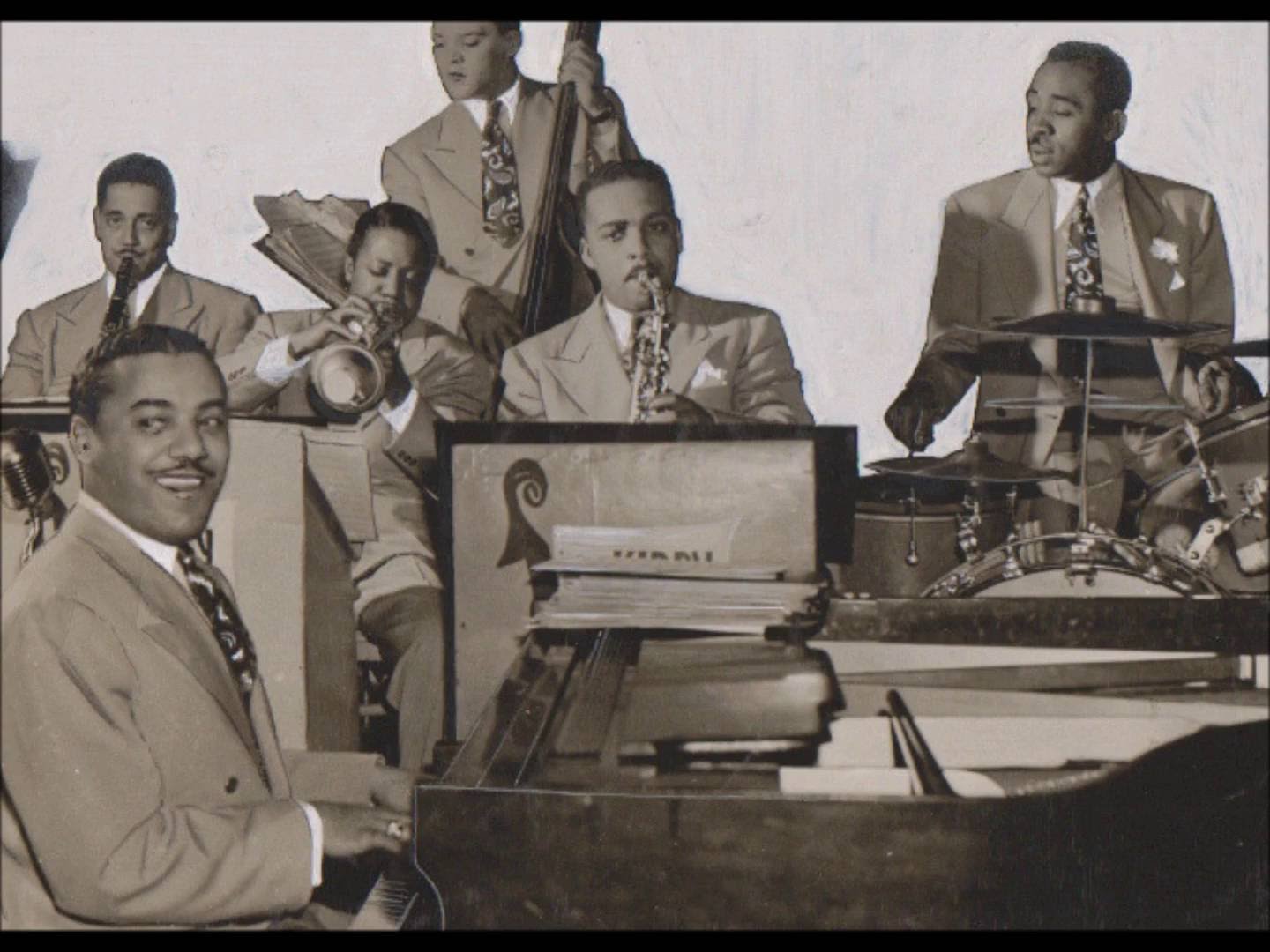
William Osborne Kyle (July 14, 1914 - February 23, 1966) was an American jazz pianist.

Kyle was born in Philadelphia, Pennsylvania. He began gigging with local bands while in his teens. In the early 1930's, he free-lanced in New York, then was resident pianist at the Memphis Club in Philadelphia. He first came to prominence as accompanist for vocalist Bon Bon Tunnell on radio station KYW.

After a stint with the band of Lucky Millinder (1936-38), Kyle joined the John Kirby Sextet, which included among its personnel such illustrious jazz musicians as Russell Procope, Buster Bailey and Charlie Shavers. Kyle remained with 'The Biggest Little Band in the Land' until called up for military.     


Like so many of his generation, Kyle was drafted into the army in 1942. He joined the legendary 93rd Infantry Division of the army, but also got to keep his piano chops up, performing with the 368th Infantry Battalion Band.

Upon discharge, Kyle rejoined Kirby for a short bit but also started making records under his own name, including four for the Hot Record Society label with future All Stars Trummy Young and Buster Bailey. On April 11, 1946, Kyle, backed by Kirby and guitarist Jimmy Shirley, recorded a showpiece version of the then in-vogue "All the Things You Are," a favourite of the up and coming boppers. But instead of going the more modern route, Kyle instead finds some connections between Jerome Kern's tune and the classical music Kyle grew up playing in Philadelphia.

Kyle also left Kirby in 1946, joining Sy Oliver's Orchestra for a few years. Kyle never was at a loss for work but after 1946 he never led another session under his own name, a true shame. However, his name was still big enough to be featured on the labels of some records made by some of the best singers of the day. including Ella Fitzgerald.

Kyle obviously impressed both Milt Gabler at Decca and his then-boss, Sy Oliver, as he became a regular pianist on many Decca dates of the late 1940s and 1950's including those featuring Louis Armstrong.

Kyle wasn't going anywhere, just yet. In 1950, the smash hit Guys and Dolls opened on Broadway with none other than Billy Kyle on piano. It was the very beginning of black musicians being allowed to play in Broadway pit bands, Kyle being joined for this show by trumpeter Joe Wilder and trombonist Benny Morton. Kyle was content, working six days a week in New York and picking up session work whenever available. 

In late 1953 Billy replaced Marty Napoleon in Louis Aemstrong’s All Stars's. Joe Glaser usually did the hiring and firing of Armstrong's musicians but one can imagine that Armstrong had a say in hiring Kyle.  With Kyle, Louis finally had the ideal pianistfor the group. His features always impressed audiences and was much more of a team player being a rock solid accompanist. And with three years playing the exact same things night after night on Broadway, eight shows a week, he had no troubles playing many of the same songs--and solos--night after night with the All Stars. In fact, once Kyle hit upon a set solo or introduction, he never wavered, remaining more tied to his "set" excursions than even Armstrong. Kyle can be glimpsed in the musical High Society (1956).

Kyle with Ben Webster
Kyle was truly the ideal pianist for the All Stars but his only problem was he was quite the drinker and loved to party. It never seemingly affected his playing but it did affect his health. He broke down multiple times during his 13 years with the All Stars, his health problems always due to his drinking. In the early 1960s. He supplanted the drinking with eating and gradually began to gain weight as the decade progressed. By the winter of early 1966, he was at his heaviest, with the band still grinding out one-nighters, often in a bus with heat that didn't often work.

At his last performance in Ohio band members had to help him up the stairs to the stage. He was out of breath and couldn't hardly make it, but he played everything he knew. It was just magnificent playing. The band knew something was wrong when Kyle didn't come out of his room the following morning. He had been suffering from liver failure. He was kept alive for a week, but died on February 23, 1966. Youngstown, Ohio. He was 52 years old.

(Compiled and edited mainly from Hoosick History.com & IMDB)


"Now You Has Jazz" written by Cole Porter for the 1956 film High Society. In the clip are Edmond Hall, Louis Armstrong, Trummy Young, Billy Kyle, Arvell Shaw and Barrett Deems from The All Stars. Bing Crosby on vocals.

Tuesday, 10 July 2018

Johnny Johnston born 10 July 1919


Johnny Johnston (10 July 1919 - 10 June 1998, London), was a singer, songwriter and jingle composer, known as “The King of the Jingles.”

Johnston was born John Reine in 1919, but little has been published about his early life. A tall man (6ft 2in) he served as an army major during the Second World War, afterwards forming Michael Reine Music with his partner, Mickey Michaels. He composed a number of well- remembered songs including "Don't Ringa Da Bell" and "The Wedding of Lilli Marlene" for the 1953 film of the same title, starring Liza Daniely.

By the mid-Forties, Johnston was regularly employed by BBC Radio's light music department both as a singer and an arranger. His first big success was to write and perform, with his vocal quartet The Keynotes, the theme to the successful comedy series Take It From Here in 1948. The Keynotes comprised of Johnston, Alan Dean, plus two girl singers, Terry Devon and Irene King and remained a popular singing group in the United Kingdom throughout the 1950s, winning several awards but having no hit records.
Terry Devon left to marry the bandleader Tito Burns, and was replaced by Cliff Adams. Then he joined the Stargazers, a similar group, and was replaced by Pearl Carr, who would in turn marry the singer Teddy Johnson and form a double act with him. 

The Keynotes made their first recording in April 1948, less than a month after their first broadcast. They were the back-up group to the veteran crooner Sam Browne on his Decca recording of "Heartbreaker", which became a huge hit with its cheery, driving beat. The Keynotes would remain with Decca for eight years, usually backing such top of the pops singers as Denny Dennis, Anne Shelton, Joy Nichols, Joan Regan, Dickie Valentine and Dave King, the comic turned crooner. They even recorded with the Johnston Brothers, which must have been tricky as Johnny Johnston not only formed but led that group, too. 


The Johnston Brothers were originally Johnston, Alan Dean and Denny Vaughan and from 1949 they too were recording for Decca. Their first disc, the theme tune from the Hollywood movie A Portrait of Jennie, was the start of a parade of hits: "That Lucky Old Sun", "Tennessee Waltz", "Blowing Wild". They had a #1 hit in the UK Singles Chart in 1955 with their cover version of "Hernando's Hideaway". Soon, they too were backing major singing stars. They supported Reggie Goff, Lita Roza, Suzi Miller and Lorrae Desmond.  Johnny was usually spotted about town with his pet boxer dog “Windsor.”

By 1950, the Keynotes' composition changed again. Despite these many changes, the Keynotes were voted the country's top vocal group several times, but destiny in the form of rock 'n' roll would shortly cause their collapse. Meanwhile, however, they had made a handful of successful television appearances, from singing with Patricia Dare in Lady Luck to guesting on the ex-bandleader Jack Payne's series Off the Record.


Clearly a glutton for work, Johnston now formed a third group, an all- male outfit called the King's Men, and they backed Pearl Carr in "Be My Life's Companion" (1952).

The opening of commercial television in Britain in 1956 brought a total change of life to Johnston. Honing in on the brand new market of advertising jingles, in the first year he composed, arranged and produced 30-second sing-along’s for Kleenex Tissues, New Zealand Butter, Stork Margarine and "Rael-Brook Toplin, the shirts you don't iron", his first huge success which contained no other words than those of the company's slogan.

Within two years, he had established himself as Johnny Johnston Jingles Ltd, and from his own studio, Cine-Tele Sound, had written and recorded over 500 commercials. By the time he retired, his record totalled some 4,500 jingles, including one famous first, the first ever colour commercial. It featured Birdseye Frozen Peas and Johnston wrote the music. It went out at five past ten on the morning of 15 November 1969. 
 
If one were to pick one jingle to stand as an undying tribute to the man's talent, how about this one which was such a hit it was published as a popular song; Keep going well, keep going Shell. You can be sure of Shell.

 
After battling with illness for a long time Johnny Johnston died in London 10 June 1998. 

(Edited mainly from an article by Denis Gifford for the Independent)