Sunday, 6 December 2020

Dave Brubeck born 6 December 1920


David Warren Brubeck (December 6, 1920.—December 5, 2012), was an American jazz pianist and composer, considered one of the foremost exponents of cool jazz. 
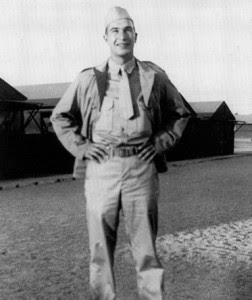
Brubeck was taught piano by his mother from the age of four—and for a period of time he deceived her by memorizing songs rather than learning to read music. He worked as a pianist with local jazz groups from 1933 and studied music at the College of the Pacific (1938–42) in Stockton, California, where he formed and led a 12-piece orchestra. During World War II, Brubeck enlisted in the Army and conducted a service band in the army of Gen. George S. Patton. 

After the war, he studied composition at Mills College in Oakland, California, under the French composer Darius Milhaud. During this period, Brubeck also studied with Arnold Schoenberg, the inventor of the 12-tone system of composition. 

Dave & Iola Brubeck
He formed the Dave Brubeck Octet in 1946, employing fellow classmates as band members. The group made several recordings (released in 1951) that reflected Brubeck’s studies in polyrhythms and polytonality (respectively, two time signatures or two keys played simultaneously).Brubeck next led a trio that proved popular in the San Francisco area, but he was forced to disband it in 1951 after he was incapacitated for many months by a back injury. 

In late 1951 Brubeck reformed the trio, which soon became a quartet with the addition of alto saxophonist Paul Desmond. Within several months they attained a measure of national fame, largely by word of mouth among West Coast critics who championed the group’s innovations. 

Also during this time, Brubeck became one of the first jazz musicians to regularly tour and conduct seminars at college campuses; several albums recorded at college concerts are among Brubeck’s most highly regarded. For much of the decade, Brubeck and Desmond remained the only constants in the group; permanent members Joe Morello (drums) and Eugene Wright (bass) joined in 1956 and ’58, respectively. 

Brubeck’s fame was such during this period that he was featured on the cover of Time magazine in 1954—although he began to encounter critical backlash about the same time. Brubeck was a major figure in the West Coast jazz movement, which grew somewhat independently of New York-based bebop. Critics grew to prefer the East Coast’s adherence to the jazz traditions of swing and emotionalism more than the cooler, more intellectual approach of the West Coasters, which many found to be gratuitously academic. There was never any dispute, however, as to the superb musicianship of the Brubeck group. 

Brubeck himself received the most acclaim for his work as a composer; his best-known tunes include “The Duke,” “In Your Own Sweet Way,” and “Blue Rondo a la Turk.” The group flirted with what for jazz of that period were abstruse metres and Brubeck’s compositions showed the influence of his classical training through his employment of atonality, fugue, and counterpoint. 


The quartet achieved their greatest commercial success in 1960 with the Desmond composition “Take Five,” a widely acknowledged jazz classic and the best-selling jazz single of all time. A perennial crowd-pleaser, “Take Five” became de rigueur in the group’s concert performances, during which band members would leave the stage one at a time after their respective solos until only drummer Morello was left. 

The Dave Brubeck Quartet disbanded in 1967, although they were to have several reunions before Paul Desmond’s death in 1977. Afterward Brubeck led a variety of small groups. By the 1980s Brubeck was a respected jazz icon. Although his peak period of commercial popularity had long passed, his work of the 1980s and ’90s has been among his most praised.  His A Dave Brubeck Christmas (1996) was also heralded as the best-ever jazz album of Christmas music. Brubeck also recorded a few albums of solo piano music, revealing the depth of his harmonic insight on such recordings as One Alone (2000), a set of standards that demonstrates Brubeck’s adaptability in a variety of styles from stride to modern.

His awards included several honorary degrees, the BMI Jazz Pioneer Award, the 1988 American Eagle Award which was presented by the National Music Council, and a lifetime achievement award from the Grammys. Brubeck was named a Kennedy Centre honouree in 2009 for his contributions to American jazz.

Brubeck died of heart failure on December 5, 2012, in Norwalk, Connecticut, one day before his 92nd birthday. He was on his way to a cardiology appointment, accompanied by his son Darius. A birthday party concert had been planned for him with family and famous guests. A memorial tribute was held in May 2013. (Edited mainly from Britannica.com & Wikipedia)

Saturday, 5 December 2020

Little Richard born 5 December 1932


Richard Wayne Penniman (December 5, 1932 – May 9, 2020), known as Little Richard, was an American musician, singer, and songwriter. He was an influential figure in popular music and culture for seven decades. 

Richard Wayne Penniman was born in Macon, Georgia, during the Great Depression, one of 12 children. He was ostracized because he was effeminate and suffered a small deformity: his right leg was shorter than his left. The family was religious, and Richard sang in local churches with a group called the Tiny Tots. The tug-of-war between his upbringing and rock ‘n’ roll excess tormented Penniman throughout his career. Penniman was performing with bands by the age of 14, but there were problems at home over his sexual orientation. His father beat the boy and derided him as “half a son.” 

Richard left home to join a minstrel show run by a man known as Sugarloaf Sam, occasionally appearing in drag. He performed in medicine shows - with “miracle cures” promoted between entertainment acts – before hitching to Atlanta, where he signed to RCA Records in 1951, using the name Little Richard. He recorded several undistinguished singles for them, including Every Hour, but none had much impact. His optimism undimmed but his style still unformed, he tried the independent Peacock label in Houston, recording sides on which he began to reveal a delicate, elaborately filigreed vocal style that would resurface years later on slow gospel numbers. 


These Peacock sides brought no success, and at the beginning of 1955 – the year that was to end in triumph for him – he returned to Macon and to washing dishes. He sent a demo to another indie label, Specialty, whose owner, Art Rupe, soon became so sure that Little Richard defined the future that he rejected Sam Cooke as too pallid. 

Brought to New Orleans in September and given almost the same band as Fats Domino, Penniman went into the studio with the producer Bumps Blackwell, and came out with Tutti Frutti. The single was a hit with black and white audiences and sold 500,000 copies – despite the popularity of Pat Boone’s cover version released shortly afterwards – and reached 17 in the US pop charts and No 2 on the R&B list. 

Little Richard went Hollywood with an appearance in “Don’t Knock the Rock.” But his wild lifestyle remained at odds with his faith, and a conflicted Richard quit the business in 1957 to enrol in a theological school and get married. Richard remained on the charts when his label released previously recorded material. And he recorded a gospel record, returning to his roots. A 1962 arrest for a homosexual encounter in a bus station restroom led to his divorce and return to performing. He mounted three tours of England between 1962 and 1964, with the Beatles and the Rolling Stones serving as opening acts. Back in the States, he put together a band that included guitarist Jimi Hendrix He later fired Hendrix when he was late for a bus. 

In 1968, Richard hit Las Vegas and relaunched his career. Within two years, he had another hit single and made the cover of Rolling Stone. By the mid-1970s, Richard was battling a $1,000-a-day cocaine problem and once again abandoned his musical career. He returned to religion, selling Bibles and renouncing homosexuality. For more than a decade, he vanished. “If God can save an old homosexual like me, he can save anybody,” Richard said. 

But he returned, in 1986, in spectacular fashion. Little Richard was inducted into the Rock and Roll Hall of Fame, and appeared in the movie “Down and Out in Beverly Hills.” A Little Richard song from the soundtrack, “Great Gosh A’Mighty,” even put him back on the charts for the first time in more than 15 years. Little Richard was back to stay, enjoying another dose of celebrity that he fully embraced. 

Throughout the first decade of the new millennium, Richard kept up a stringent touring schedule, performing primarily in the United States and Europe. Macon, Georgia, named a street after its favourite son. And Little Richard was given a star on the Hollywood Walk of Fame. In August 2002, he announced his retirement from live performing. But he continued to appear frequently on television. However, sciatic nerve pain in his left leg and then replacement of the involved hip began affecting the frequency of his performances by 2010. Despite his health problems, Richard continued to perform to receptive audiences and critics. 

In a 2013 interview with Rolling Stone, Richard announced he was retiring, and despite occasional public appearances, he became reclusive and rarely spoke to the media, though he did grant a brief interview in 2017 after the death of Chuck Berry to honour the man he called “one of my best friends in music." In June 2015, Richard appeared before a benefit concert audience, clad in sparkly boots and a brightly collared jacket at the Wildhorse Saloon in Nashville to receive the Rhapsody & Rhythm Award from and raise funds for the National Museum of African American Music. 

On May 9, 2020, Richard died at the age of 87 at his home in Tullahoma, Tennessee, from a cause related to bone cancer, after a two-month illness.   (WNEP, The Guardian & AllMusic)

Friday, 4 December 2020

Jim Hall born 4 December 1930


James Stanley Hall (December 4, 1930 – December 10, 2013) was an American jazz guitarist, composer and arranger.

Born in Buffalo, New York, Jim Hall was raised in Cleveland. After taking up the guitar at the age of 10, he was playing professionally as a teenager. Although influenced by Benny Goodman's pioneering young guitar star Charlie Christian, he listened to saxophonists as much as guitarists, for their rounded voice-like tone and their conception of melody.

Hall studied theory and piano at the Cleveland Institute of Music in the early 1950s (guitars were not on the programme), as well as classical guitar in Los Angeles, and worked with the the drummer Chico Hamilton's quintet – a significant presence in the reserved new "cool jazz" movement – in 1955-56. 

He made Jazz Guitar, his first album as a leader, in 1957, and worked until 1959 in a trio with the sophisticated reeds player and composer Giuffre – an experience Hall later credited with training him to keep flawless time without drums. He also taught at the forward-thinking Lenox School of Jazz in Massachusetts, and performed with Rollins, Desmond, Evans, Fitzgerald, Lee Konitz and Ben Webster during a busy freelance period in the 1960s. 


Hall married Jane Hall (née Jane Herbert) on September 9, 1965. Jane, a psychoanalyst by profession, was also an occasional composer and singer. Hall recorded several of her compositions. 

He moved to New York, where he performed as a sideman, co-led a group with the trumpeter Art Farmer and formed a trio including the pianist Tommy Flanagan. He briefly joined a talented studio band for Merv Griffin's TV show in 1965, began his remarkable run of duo explorations with Evans (1966) and Ron Carter (1972), and showed how punchy, affectingly bluesy and melodically succinct his calm improvisations could be, on the album Jim Hall Live! (1975). 

In 1981, Hall recorded with both the swing piano star George Shearing and the classical violinist Itzhak Perlman, and throughout the 1980s and 90s he continued to lead sympathetic bands featuring acclaimed younger partners such as the keyboardists Gil Goldstein and Larry Goldings, the saxophonist Chris Potter and the drummer Bill Stewart. In 1986, he partnered the saxophonist Wayne Shorter and the pianist Michel Petrucciani for gigs at the Montreux Jazz festival and the Village Vanguard in New York. Four years later he hosted a guitar concert at the JVC Jazz festival in New York, at which he performed with John Scofield, Pat Metheny and John Abercrombie. 

In 1991, Hall and Metheny played four duo concerts and later co-led a quartet with the saxophonist Joe Lovano. Hall also began to give unaccompanied shows, aided by electronics that allowed him to play contrapuntally, but without ever blurring the motivic logic and discreet pungency of phrasing that always shaped his signature. 

For the 1995 album Dialogues, Hall wrote almost all the music, designed to steer intimate conversations with partners including Lovano and the guitarists Bill Frisell and Mike Stern. For Textures, in 1996, he moved closer to classically inflected chamber music. His jazz quartet was augmented by strings on the album Jazzpar Quartet + 4 (1998), which was recorded to celebrate the guitarist's receipt of Denmark's prestigioushis receiving the Danish Jazzpar prize and which included Hall's classical piece Thesis and a version of Jimi Hendrix's Purple Haze. 

Composition and teaching played significant parts in Hall's later career. He taught at the New School for Social Research, in New York (1990-95), and wrote the instructional book Exploring Jazz Guitar (1991). Transcriptions of his playing have guided aspiring guitarists everywhere. 

In his 70s, Hall seemed to get even better as a performer. The live albums Grand Slam: Live at the Regattabar (2000) and Magic Meeting (2004) found him sometimes sounding more animated and carefree than he had in his circumspect youth. In 2004 he received a Jazz Masters award from the National Endowment for the Arts, and though health issues troubled him later in the decade, he continued to compose and perform. In 2013 he began releasing new live recordings through ArtistShare, a platform financed by fans' contributions. 

In the summer of 2013 Hall returned to the Newport Jazz festival to play with the 25-year-old guitarist Julian Lage, a musician of comparable melodic grace and fertility of ideas. He continued to play at festivals and clubs until the end, appearing three weeks before his death at the Lincoln Center, New York andwas planning a tour of Japan with Ron Carter in January. 

Hall died in his sleep of heart failure in his Manhattan, New York apartment on December 10, 2013, six days after his 83rd birthday. After the announcement of Hall's death, Rollins declared: "I don't know anybody who didn't love him, including myself. He was the consummate musician, and it was a privilege to work with him." 

(Edited from John Fordham @ The Guardian & Wikipedia) 

Thursday, 3 December 2020

Paul Lingle born 3 December 1902


Paul Lingle (December 3, 1902, Denver, Colorado - October 30, 1963 Honolulu, Hawaii) was an American jazz pianist and a local legend in San Francisco during the 40’s. Terry Waldo, in "This is Ragtime", described Lingle as "an extremely important figure in the history of ragtime" for his "interpretations of the music were possibly the finest that have ever been done." 

He was born Paul Curtis Lingle in Denver, Colorado, December 3, 1902, studied piano from the age of 5, and at 12 accompanied his father, Curt Lingle, cornetist, on the Chautauqua circuit for two years. It was at the World's Fair of 1915 in San Francisco that Paul first became interested in ragtime piano. He heard Mike Bernard and Jay Roberts among others. Toward the end of the Fair he heard Jelly Roll Morton, who was working on the Barbary Coast. From then on he studied ragtime diligently, particularly the works of composers Scott Joplin, James Scott and Morton. For Paul, Morton is the greatest of them all, although he tempers this opinion by adding there are several he hasn't heard. 

Paul with band at the Club Hangover

During 1919, following the nation-wide impact of the Original Dixieland Jazz Band, Paul became a 'jazz' musician, playing with small Dixieland groups in the mining and oil towns of central California. In 1920 he worked at the Del Mar club in San Francisco, at the same time King Oliver's band was playing the Pergola Ballroom on Market Street. All Paul's spare moments were spent listening and absorbing the first real New Orleans band he'd had a chance to hear. Oliver's was his favorite band then, and still is. 

Paul worked steadily as a band pianist during the Roaring Twenties. A few highlights of those years: in 1925 he had his own band at Lyman's Tent in Los Angeles, with Larry Shields on clarinet. In '26, he worked in Jimmy Grier's band in Balboa with the late Glenn Miller. He had his own band at Fior D’Italia in San Francisco in '28. He was pianist for Al Jolson's Sonny Boy and Mammy at Warner Brothers in 1929. During these years he also fitted in several voyages as a ship's musician. 

At last, in the Thirties, he settled down in San Francisco as staff pianist at KPO. In the mid-Thirties he played with Al Zohn's jazz band in San Francisco. Zohn, a trumpet player, was one of the first group of San Francisco musicians (Lingle, Lu Watters, Bob Helm, Turk Murphy, etc.) who were to be largely responsible for the world-wide Great Jazz Revival of the Forties, and who fathered what has since become known as "the San Francisco style.” 

Although Paul enjoyed playing with a band, he worked mainly as a soloist in various nightclubs of the Bay Area since the late '30s. During these years his legend began to take shape among San Francisco jazz musicians. For all of them without exception, Turk Murphy, Wally Rose, Bob Scobey, Lu Watters, he is "the fabulous Lingle.” When Leadbelly heard him at Dugan's Cafe, he asked Paul to become his accompanist. When Bunk Johnson came to San Francisco in ’43, he became extremely friendly with Paul, and taught him many of the old New Orleans tunes. 


Paul's dynamic range was also extraordinary, as he could play at a whisper one moment then break strings or hammers the next (it's a good thing he was a piano technician!). His repertoire, while full of ragtime and Jelly Roll Morton selections, was also very deep, and he could usually fulfill requests while attaching his own unique brand to each performance. 

Paul with Turk Murphy and band

Although Lingle had often been hard to find by his fans, given the scattered pattern of his appearances, he found steady gigs for fairly long periods at the Jug Club in Oakland and, in 1949, the Paper Doll club on Union Street in San Francisco, a place that he said catered to "all three sexes." The combination of his drinking habits and time away from home to play an hour or two away late into the night likely put some strain on his marriage. So it is not a surprise that at some point in the early 1950s Paul and his wife of some twenty years, Betty were divorced. 

Although Paul's original intent was to resume life as a piano tuner, he moved to Honolulu, got married, opened a small piano instruction studio, and eventually worked with bands entertaining tourists in Honolulu throughout the rest of the 1950s. Years of alcohol consumption, reportedly heavy at times, finally caught up with the dynamic pianist. Paul Lingle died just short of his 60th birthday in 1962. 

Unfortunately, he was reluctant to record throughout his career and his only studio session resulted in just eight songs cut for Good Time Jazz in 1952. However, three and a half albums of private tapes from 1951-1952 were released posthumously on the Euphonic label that allow listeners to get a fuller picture of Paul Lingle's talent. 

(Edited from Stanford Libraries & AllMusic) 

Wednesday, 2 December 2020

Dick St. John born 2 December 1940


Dick St John (December 2, 1940* - December 27, 2003) was the male half of the duo, Dick and Dee Dee. 

Richard St John Gosting was born in Santa Monica, California and he was singing and writing songs in high school. He was impressed with another student, Mary Sperling; they worked out their harmonies and wrote songs together, notably "I Want Someone", which became the B-side to "The Mountain's High". 

They recorded a demonstration record of "The Mountain's High" for $15, but Rona Records would only accept it if it was reworked as a cha-cha. Undeterred, St John (who dropped his surname) went to Lama Records and they recorded it with production by the Wilder brothers. St John took the melody and Sperling added some bizarre harmonies, with St John overdubbing high falsetto to complete the record. Their producer Don Ralke changed Mary’s name to Dee Dee as it was his wife’s nickname and it was catchier than Dick & Mary. 


It was released under the name of Dick and Dee Dee and reissued under the banner of Liberty Records as they had national distribution. They performed it on the television show American Bandstand, and it soared to No 2 on the US charts. In the UK, Dick and Dee Dee competed with local cover versions of their song from the Mudlarks and Ronnie Carroll. When David Jacobs offered Dick and Dee Dee's record for the panel's opinion on Juke Box Jury, the mechanism went wrong and it took four attempts to play it. It only scraped into the UK Top Forty. 

Dick and Dee Dee had further success in the US with "Tell Me" and then, moving to Warner Brothers, entered the charts with "Young and in Love" as well as two tunes they did not write, the folksong "Turn Around" and John D. Loudermilk's "Thou Shalt Not Steal", on which they emulated the frenzy of "The Mountain's High". 

They toured with the Beach Boys and the Rolling Stones in the US, and they recorded versions of Jagger and Richards's "Blue Turns to Grey" and "Some Things Just Stick in Your Mind", both produced by the Stones' manager, Andrew Loog Oldham. Their success worked against them, however, as several other college duos became popular - Paul and Paula, Dale and Grace, and Nino Tempo and April Stevens - and so created competition, where none had existed. The duo came on promotional visits to the UK, but, despite their efforts, "Use What You Got" (1965) failed to make the charts. They were regulars on Jack Good's US TV show Shindig, but none of their later songs captured their early success.

In 1969 they split up, shortly after recording "We'll Sing in the Sunshine". They married different partners, and Dick revived the duo, this time with his wife, Sandy. Together they wrote The Rock & Roll Cookbook (1993) with Pamela Des Barres, which featured recipes from such unlikely cooks as Iggy Pop, Michael Jackson and Little Richard. St. John wrote songs that were recorded by Lesley Gore, Jan and Dean and Frankie Valli and the Four Seasons; he also contributed music to many television shows. Dick was also a film producer, known for An American Rhapsody (2001), Mahalia (1975) and Génies en herbe (1973). 


St. John continued to record and perform regularly until his death. He accidently fell from the roof of his Pacific Palisades home and died from his injuries at at the UCLA Medical Centre on December 27, 2003. He was 63. 

(Edited mainly from Spencer Leigh @ The Independent) 

*(other sources give 1941, 1942 & 1944 as birth year)

Tuesday, 1 December 2020

Linda Keene born 1 December 1911


Linda Keene (1 December 1911 - 23 October 1981) was a jazz and blues nightclub singer who unfortunately never reached her full potential to be a star vocalist. 


Linda was born Florence McCory in Taylorsville, Mississippi. When her mother died shortly before 1920 the family moved to Poplarville, then Shreveport, Louisiana where her father remarried. Not happy with this relationship Florence left home at the age of 16. By 1932 she had married a singer named Spurgeon Suttle, but the union soon soured.  Linda’s dream was to become a professional singer and when her husband became a recluse she went to Chicago Her first advertised singing engagement under her married name on the 9th May 1936 at the Book Cadillac Hotel in Detroit.

A separation agreement from her husband came in 1937.She wasted no time looking for a stage name and opted to call herself Linda Keene, named after Ginger Roger’s character in the film “Shall We Dance.” Keen moved up from one-night stands to a seven week residence at the Statler in Boston with the Nye Mayhew Band.

Linda with Red Norvo

She was seen by Glenn Miller which lead to a short engagement in Atlantic City, from there she joined Bobby Hackett’s band with whom she recorded her first record “Blue and Disillusioned” on the 4th November 1938. The grueling one-nighter circuit was not a way of life that Keene enjoyed very much. She worked with the Will Farmer and Lennie Hayton bands during the latter part of the 30’s.It was with the Hayton band she recorded some more sides in December 1939 & February 1940. During the summer of 1940 she joined Red Norvo for a 6 month tour of the Midwest and southern states. She also found gigs with Red Nicholls and Mugsy Spannier in 1941. That year she was divorced from Suttle. 


Upon moving to New York Keene decided to go solo with piano accompaniment and found work at the prestigious Famous door Club where she met Helen Humes who would have a profound influence on Keene’s work. At this time Keene was recording for the Black & White label which hardly promoted her, but her Famous door appearances finally attracted New York’s top critics which led to her return to RCA Victor Records with the Henry Levine Band.

Keene made at least three soundies at NBC with the Levine band during 1942. After which she returned to club work on West 52nd Street. During November 1944 Keene recorded with the Joe Marsala Band and some more sides with the Black & white label with Charlie Shavers and his outfit. Again lack of publicity and slow record production did nothing to bolster her career. When the War ended, many clubs were forced to close leading to a shortage of work. Keene had to accept whatever she could get.

In 1947 Keene married radio announcer Burleigh Smith in Shreveport, Louisiana and settled down in Los Angeles, but the marriage only lasted a year. Throughout the 50’s she worked at many clubs mainly on the East Coast. 

Her last advertised engagement was at the Tic-Toc Club in Los Angeles during 1958. After which her trail ends until the last media notice for Linda Keene which was her very small obituary in Billboard magazine. She died from cancer in a Santa Monica hospital on October 23, 1981. 

(Edited mainly from Doctor Jazz Magazine and a big thank you to  Scott Henderson for the introduction)