Saturday, 24 May 2025

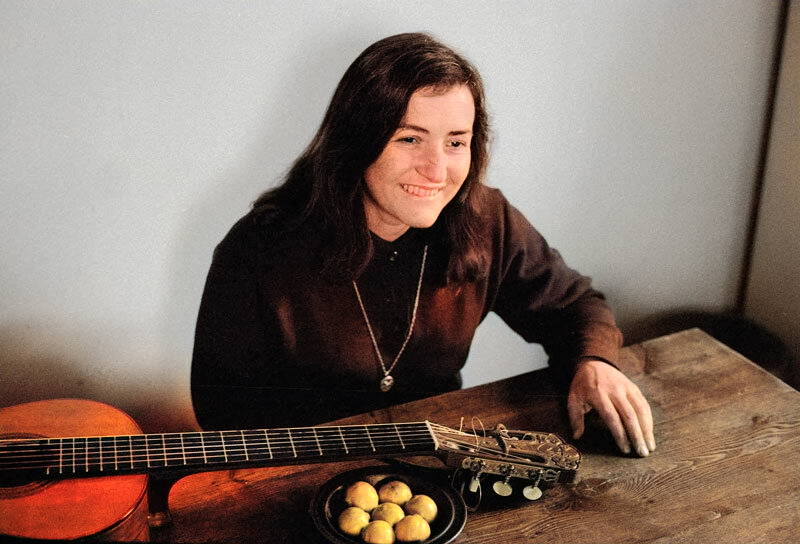
Terry Callier born 24 May 1945

Terrence Orlando "Terry" Callier (May 24, 1945 – October 27, 2012) was an American soul, folk and jazz guitarist and singer-songwriter. 

Callier was born in the North Side of Chicago, Illinois, and was raised in the Cabrini–Green housing area. He learned piano, was a childhood friend of Curtis Mayfield, Major Lance and Jerry Butler, and began singing in doo-wop groups in his teens. In 1962, he took an audition at Chess Records, where he recorded his debut single, "Look at Me Now". At the same time as attending college, he then began performing in folk clubs and coffee houses in Chicago, becoming strongly influenced by the music of John Coltrane. During this period, he briefly performed in a duo with David Crosby in Chicago and New York City. 

He met Samuel Charters of Prestige Records in 1964; the following year, they recorded his debut album. Charters then took the tapes away with him into the Mexican desert, and the album was eventually released in 1968 as The New Folk Sound of Terry Callier. Two of Callier's songs, "Spin, Spin, Spin" and "It's About Time", were recorded by the psychedelic rock band H. P. Lovecraft in 1968, as part of their H. P. Lovecraft II album. H. P. Lovecraft featured fellow Chicago folk club stalwart George Edwards, who would go on to co-produce several tracks for Callier in 1969. 

He continued to perform in Chicago; in 1970, he joined the Chicago Songwriters Workshop set up by Jerry Butler. He and partner Larry Wade wrote material for Chess and its subsidiary Cadet label, including The Dells' 1972 hit "The Love We Had Stays on My Mind", as a result of which he was awarded his own recording contract with Cadet as a singer-songwriter. 


Three critically acclaimed but commercially unsuccessful albums followed, produced by Charles Stepney: Occasional Rain (1972), What Color Is Love (1972), and I Just Can't Help Myself (1973). These demonstrated that Callier's influences included soul, jazz, funk, psychedelia, and classical music. Subsequently, he toured with George Benson, Gil Scott-Heron and others. Cadet and its parent label Chess were sold in 1976 and Callier was then dropped from the label. The Songwriters Workshop closed in 1976. 

The following year, Don Mizell signed him to a new contract with his Jazz Fusion Division at Elektra Records, resulting in the R&B-oriented Fire On Ice (1977) and Turn You to Love (1978). The opening track of the latter album, "Sign Of The Times", was used as the theme tune of radio DJ Frankie Crocker and became Callier's only US chart success, reaching No. 78 on the R&B chart in 1979. The single prompted his appearance at the Montreux Jazz Festival,where Mizell presented him in the Elektra Jazz Fusion Night showcase alongside Grover Washington, Dee Dee Bridgewater and Lee Ritenour. When Mizell moved on to work with Stevie Wonder in 1980, Callier was dropped from the label. 

Callier continued to perform and tour until 1983, when he gained custody of his daughter and retired from music to take classes in computer programming, landing a job at the University of Chicago and returning to college during the evenings to pursue a degree in sociology. He re-emerged from obscurity in the late 1980s, when British DJs discovered his old recordings and began to play his songs in clubs. Acid Jazz Records head Eddie Piller reissued a little-known Callier recording from 1983, "I Don't Want to See Myself (Without You)", and brought him to play clubs in Britain. From 1991 he began to make regular trips to play gigs during his vacation time from work. 

In the late 1990s, Callier began his comeback to recorded music, collaborating with Urban Species on their 1997 EP Religion and Politics and contributed to Beth Orton's Best Bit EP in 1997 before releasing the album Timepeace in 1998, which won the United Nations' Time For Peace award for outstanding artistic achievement contributing to world peace. His colleagues at the University of Chicago did not know of Callier's life as a musician, but after the award the news of his work as a musician became widely known and subsequently led to his dismissal by the University. 

As well as touring internationally, Callier continued his recording career, releasing five albums after Timepeace, including Lifetime (1999), Alive (2001), Speak Your Peace (2002), featuring Paul Weller on the single "Brother to Brother", Golden Apples of the Sun (2003), featuring the words of W. B. Yeats' poem The Song of the Wandering Aengus, and Lookin' Out (2004). He sang vocals on Massive Attack's single Live With Me, which was released in 2006.May 2009 saw his album Hidden Conversations featuring Massive Attack released on Mr Bongo records. 

Callier died from throat cancer in a Chicago hospital on October 27, 2012, aged 67.

(Edited mainly from Wikipedia)


Friday, 23 May 2025

Bea Booze born 23 May 1920

Bea Booze (March 23, 1912 – November 11, 1986), often credited as Wee Bea Booze, was an American R&B and jazz singer most popular in the 1940s. She was one of the few female blues guitarists of that time. 

She was born Beatrice Booze in Baltimore, the daughter of Phillip and Lydia Booze. She made her name as a singer in Harlem clubs in New York. She was signed by Decca in 1942, on Lionel Hampton's recommendation; the company apparently was looking for a blues singer to compete with Lil Green on Victor. 

Her opportunities to record were limited, because of the ban that hit on August 1 of that year, but she did have time to lay down a memorable performance of "See See Rider" with Sammy Price on piano. It reached number 1 on the US Billboard R&B chart, after which she was billed as the "See See Rider Blues Girl". Many experts consider this version to be the definitive version of the song. In addition to singing, she played guitar in performance and on many of her recordings. 


After the war, she recorded for Decca again on January 3, 1946 as a jazz vocalist with the Andy Kirk band, which featured the trumpeter Fats Navarro, and also with a jazz quartet that included the saxophonist George Kelly and the organist Larry Johnson. Otherwise, she cut four sides for Apollo in May 1950. It was another 12 years before she entered the recording studio to cut two sides with Sammy Price for the Stardust label.in 1962. 

Retired from the scene for many years, Bea Booze later moved from Baltimore to Scottsville, New York where she died on November11, 1986. 

Post Script - The ongoing confusion with Muriel Nichols.

For reasons that remain undocumented, the producer J. Mayo Williams, knew Bea Booze from his days at Decca, and obviously would have liked to get her to record for him, but apparently she was unavailable or uninterested (there is much doubt that Decca had signed her to a multiyear contract). So he had Muriel Nichols (born in Philadelphia in 1908 who despite her heavier voice could do a very good impression of Bea Booze) to do a knockoff of Booze's "See See Rider" which was released on the Harlem Records label in 1945. Where the Decca's near-funereal tempo harked back to the 1920s, Williams brought in a Swing combo (with a somewhat lumbering tenor saxophonist, a steel guitar soloist, piano, bass, and drums) for accompaniment at a somewhat brighter pace. If Muriel Nichols made anything else at the session, it is thought to have been lost. Though Nichols was a different singer, this led to the false belief, reported in many sources, that Bea Booze's real name was Muriel Nichols.

(Edited from Wikipedia & Robert Campbell notes @ campber.people.clemson.edu/ebony.html)

Thursday, 22 May 2025

Sun Ra born 22 May 1914

Le Sony'r Ra (May 22, 1914 – May 30, 1993), better known as Sun Ra, was an American jazz composer, bandleader, piano and synthesizer player, and poet known for his experimental music, "cosmic" philosophy, prolific output, and theatrical performances. For much of his career, Ra led The Arkestra, an ensemble with an ever-changing name and flexible line-up. 

Born Herman Sonny Blount in Birmingham, Alabama although he claimed he was from Saturn. As a child, Ra was a skilled pianist. By the age of 11 or 12, he was composing and sight reading music. Birmingham was an important stop for touring musicians and he saw prominent musicians such as Fletcher Henderson, Duke Ellington, and Fats Waller, and other less well known performers. In his teenage years, Ra demonstrated prodigious musical talent: many times, according to acquaintances, he went to big band performances and then produced full transcriptions of the bands' songs from memory. By his mid-teens, he was performing semi-professionally as a solo pianist, or as a member of various ad hoc jazz and R&B groups. 

Ra led his own band for the first time in 1934. He freelanced at a variety of jobs in the Midwest, recording with blues singer Wynonie Harris in 1946 and working as a pianist/arranger with Fletcher Henderson in 1946 and 1947. He also performed with swing musicians Coleman Hawkins and Stuff Smith in 1948, but really got started around 1953. Leading a big band (which he called the Arkestra) in Chicago, Ra started off playing advanced bop, but early on was open to the influences of other cultures, experimenting with primitive electric keyboards, and playing free long before the avant-garde got established. Following several singles, including songs recorded with doo wop and R&B vocal groups such as the Qualities and the Cosmic Rays, early albums released by the Arkestra on El Saturn Records included Super-Sonic Jazz and Jazz in Silhouette. Jazz by Sun Ra, Vol. 1 also appeared on producer Tom Wilson's Transition Records. 


After moving to New York in 1961, Ra performed some of his most advanced work. This period saw the release of The Heliocentric Worlds of Sun Ra, Vol. 1 and Vol. 2, both on the famed ESP-Disk label, and often regarded as some of his best work. In 1966, the Arkestra had a weekly Monday night gig at Slug's Saloon, a jazz club in the Lower East Side in Manhattan, which greatly increased his fan base among beatniks and music critics. While Ra's music, mythology, and appearance went over the heads of many listeners and audience members, he was praised by jazz legends Dizzy Gillespie and Thelonious Monk. 

In 1968, he relocated his group to Philadelphia, and the band undertook their first tour of the West Coast of the United States, exposing their elaborate performances to hippies and Deadheads. Ra was featured on the cover of Rolling Stone in 1969. The ensemble began performing in Europe in 1970, and they traveled to Egypt for the first time in 1971. Their concerts alternated free improvisations and mystical group chants with eccentric versions of swing tunes, sounding like a spaced-out Fletcher Henderson orchestra. Many of Ra's most important sidemen were with him on and off for decades (most notably John Gilmore on tenor, altoist Marshall Allen, and baritonist Pat Patrick). 

In 1972, Sun Ra recorded an album called Space Is the Place, as well as an experimental science fiction movie of the same name. The album, led by the 21-minute title track, was released in 1973, and endures as one of his most popular and influential works. The film, directed by John Coney, was released in 1974, and is often cited as a seminal work of Afrofuturism. 

The Arkestra continued recording and performing, and albums appeared on labels large (Impulse!, Atlantic) and small (Philly Jazz, Sweet Earth Records). Releases on Y Records, including the infamous Nuclear War (1982), exposed Sun Ra's work to post-punk/indie audiences. Ra became a fixture of Philadelphia radio stations and regularly gave lectures. After appearing on Hal Willner's Disney tribute album Stay Awake in 1988, Ra became obsessed with the music of Disney animated films, and incorporated renditions of these tunes into live performances. 

Sun Ra had a stroke in 1990, but kept composing, performing, and leading the Arkestra. Late in his career, he opened a few concerts for the New York–based rock group Sonic Youth. When too ill to perform and tour, Sun Ra appointed Gilmore to lead the Arkestra. In late 1992, Sun Ra returned to his birth city of Birmingham to live with his older sister, Mary Jenkins, who became his caretaker. In January, he was admitted to Princeton Baptist Medical Center, suffering from congestive heart failure, respiratory failure, strokes, circulatory problems, and other serious maladies. He died in the hospital on May 30, 1993, and was buried at the Elmwood Cemetery. 

(Edited from Wikipedia & AllMusic)


Wednesday, 21 May 2025

Glen Tomasetti born 21 May 1929


Glen Tomasetti (May 21, 1929 - June 25, 2003) was a songwriter, singer, novelist and political activist.  

Born Glenys Ann Tomasetti, she inherited an adventurous spirit from her parents Jack and Muriel who, after travelling in Africa, China and Japan, settled in prosaic Balwyn, in Melbourne. She learned the pano at the age of five and attended various primary schools, completing her secondary education at the Methodist Ladies College. She excelled academically and studied music. At home she sang Gilbert and Sullivan songs accompanied by her mother at the piano. 

Aged 17, after receiving a commonwealth scholarship, she entered Janet Clark Hall at the University of Melbourne. She studied history, English, philosophy and French. She sang in madrigals and larger choirs and sang French folksongs on ABC programmes for schools. At 21, in 1950, she wed fellow student, later lawyer, Peter Balmford and for a time the couple lived at Leeper House in the grounds of Trinity College. Two children, Clare and Jonathon, were born to this marriage. The family moved back to Balwyn where Glen enlivened life in that suburb by forming the Making Balwyn Bearable Society. This group's website insists that in the early years members enjoyed jazz and wild dancing. Her marriage to Balmford was dissolved and she made a brief and unhappy marriage to journalist and guitarist Sebastian Jorgensen. 


As a further distraction to her unhappy marriages Tomasetti bought a guitar, and began to lecture and sing “wherever” she said “was an audience.” Her singing reached every section of the community through her work in schools, universities, restaurants, country towns, churches and at dances, recitals and concerts. She frequently performed on nation-wide television and radio. As a folk singer she toured China with the second Australian Cultural Delegation also in Europe, performing in Greece, Paris and Majorca. She could sing in seven languages and appeared on the BBC and commercial television in London. 

During the 1960s she cut 11 records, many derived from traditional Australian folklore. Channel 7 hired her for a program in which she was required to write a new song each week. How her radical approach survived commercial television of the time is a matter of historical conjecture, but she was well received by the viewers, who applied in droves for copies of her lyrics. Tomasetti invariably received a good press. In 1967 she made headlines when she was subpoenaed to court for withholding one-sixth of her income tax on the grounds that this was the exact proportion used by the Holt government to finance the war in Vietnam. 

During the 1960s-70s Glen sang in various folk music venues in Melbourne and taught guitar accompaniment classes in a room above Traynors coffee lounge. She became a hero of the feminist movement after writing, Don't Be Too Polite, Girls. In 1976, publishers Hilary McPhee and Diana Gribble launched their new enterprise with Tomasetti's Thoroughly Decent People, a novel set in suburban Australia. It was typical of her unorthodox style in that its fictional derivation came from an abandoned master's thesis on folklore. Her second novel was Man of Letters published by Penguin in 1981 which was made into a TV movie in 1984. 

Tomasetti had problems with drink. In 1983 she joined Alcoholics Anonymous and never drank again. At the same time she underwent a spiritual conversion from her professed atheism. In her later years she was stricken with a virulent form of arthritis. She died in Melbourne June 25, 2003 aged 74. 

(Edited from LP liner notes & Google Groups)

Tuesday, 20 May 2025

Louis Smith born 20 May 1931

Edward Louis Smith (May 20, 1931 – August 20, 2016) was a talented but under-recorded straight-ahead bop trumpeter who led two dates in the '50s before retiring to teach at the University of Michigan and the nearby Ann Arbor Public School system. For most of his career, he remained a teacher, making a brief comeback in the late '70s before returning to education. It wasn't until the mid-'90s that he resumed a recording career in earnest, turning out a series of albums for the Steeplechase label. 

A native of Memphis, Tennessee, Smith began playing trumpet as a teenager. Although his father Walter was an ice delivery man, the love of music, specifically Jazz, Blues, and Gospel, was a huge part of Black culture in Memphis, and Walter Smith had big dreams for Louis. Walter purchased an old used trumpet and Louis would practice playing his horn after school every day. Walter was determined to help Louis to establish a solid musical foundation, and while Louis was still a teenager, his father would take him to Beale St. for nightly jam sessions where Louis would spend a great deal of time watching, listening, and sitting in with the great jazz and blues musicians of the time. 

At Manassas high school he was a member of the Manassas High School Rhythm Bombers and in 1948 graduated with a scholarship to Tennessee State University, where he studied music and became a member of the Tennessee State Collegians and performed at Carnegie Hall with Lionel Hampton, Billy Eckstein, and Sarah Vaughn. Following his college graduation, Smith did a little graduate work at Tennessee before transferring to the University of Michigan, where he studied with professor Clifford Lillya. At Michigan, he had opportunities to play with traveling musicians, including Miles Davis and Dizzy Gillespie. 

Louis graduated from Tennessee State with a Bachelor of Science in Music and in  January 1954, he was drafted into the Army, where he played in the Special Services Band, spending a little over a year and a half in his tour of duty. Once he left the Army in late 1955, he began teaching at the Booker T. Washington High School in Atlanta, Georgia. While teaching at Booker T. Washington, Smith continued playing bop and hard bop in clubs, and was able to jam with Cannonball Adderley, Kenny Dorham, Donald Byrd, Lou Donaldson, Zoot Sims, and Philly Joe Jones, among many others. 


In 1956, he made his recording debut as a sideman on Kenny Burrell's Swingin'. A year later, he had the opportunity to lead his own recording session for Tom Wilson's Boston-based Transition label. His playing on the set was one of his best efforts and was described by one critic as "monstrous".  He assembled a quintet featuring Cannonball Adderley (who performed under the pseudonym Buckshot La Funke), bassist Doug Watkins, drummer Art Taylor, and pianists Duke Jordan and Tommy Flanagan, who alternated on the date. Transition went out of business before the label had the chance to release the record. 

Louis Smith, Charlie Rouse & Sonny Clark 

Blue Note chief Alfred Lion purchased all the Transition masters and signed Smith to an exclusive contract, releasing the session as Here Comes Louis Smith. During 1958, the trumpeter played on two Blue Note sessions -- Kenny Burrell's Blue Lights and Booker Little's Booker Little 4 and Max Roach -- in addition to leading the date that became Smithville. That brief burst of activity turned out to be his only recording dates for 20 years. 

Louis performed as a staff musician with Motown Records, traveled and recorded with greats such as, the Temptations and Marvin Gaye, Ashford and Simpson, and many others. He was featured on the classic1972 R&B recordings, "Papa was a Rolling Stone," and "What's Going On." Smith moved back to the Ann Arbor, Michigan area, where he taught at the University of Michigan and public schools. Between 1978 and 1979, he cut a pair of albums -- Just Friends and Prancin' -- before returning to teaching. 

A decade later, Smith resumed his recording career in earnest. After playing on Mickey Tucker's Sweet Lotus Lips in 1989, he signed with Steeplechase and recorded Ballads for Lulu in 1990. He didn't return to the studio for another four years, but he did record two albums -- Silvering and Strike Up the Band -- in 1994. The Very Thought of You appeared in 1995. A year later, Smith recorded I Waited for You, which was followed by There Goes My Heart in 1997. 

Retired from teaching, Smith suffered a stroke in 2006, and subsequently became a regular presence among audience members at Southeastern Michigan jazz venues but did not return to performing or recording. His wife Lulu took care of his daily care until Louis Smith's death on Saturday, August 20, 2016 during a therapy session at the Glacer Hills Rehabilitation Center. He was 85 years old. 

(Edited from AllMusic, Legacy & Wikipedia)

Monday, 19 May 2025

Monette Moore born 19 May 1902

Monette Moore (May 19, 1902 – October 21, 1962) was an American jazz and classic female blues singer who was always a bit obscure, even when recording prolifically in the 1920s, but she was a surprisingly versatile blues and swing singer with a pleasing delivery of her own. 

Moore was born in Gainesville, Texas and raised in Kansas City, Missouri. She taught herself to play the piano in her teens and worked as a theater pianist in Kansas City in the early 1920s. During that decade she worked in many cities (including Chicago, Dallas and Oklahoma City) and spent a period singing regularly with Charlie Johnson's Paradise Ten at Small's Paradise. In addition to her own recordings, Moore recorded a few titles with Johnson from 1927-28 (including "You Ain't the One" and "Don't You Leave Me Here"). 


She recorded 44 songs from 1923 to 1927, with a few under various names such as Nettie Potter, Ethel Mayes and Susie Smith. Her sidemen included Tommy Ladnier, Jimmy O'Bryant, Jimmy Blythe, Bob Fuller, Rex Stewart, Bubber Miley, and Elmer Snowden. From 1924 to 1941, she worked in theaters and clubs in New York. She appeared with Lucky Millinder at the Lafayette Theater in 1931 and performed at her own club, Monette's Place, in New York City in 1933 where a young Billie Holiday sang. She worked three years as Ethel Waters' understudy. 

Although the blues became less popular during the Depression, Moore worked fairly steadily in the 1930s and '40s, including recording two selections with Fats Waller in 1932, and 1936 plus performing with Zinky Cohn in Chicago in 1937. Moore performed primarily in New York and eventually Hollywood. After a return to New York during which time she worked with Sidney Bechet and Sammy Price, she permanently settled in Los Angeles in November 1942 where she performed regularly at L.A. area nightclubs. She appeared in James P. Johnson's revue Sugar Hill (about 1949) and played minor roles in numerous films including Yes Sir, Mr. Bones (1951) and The Outsider. Moore recorded again from 1945 to 1947. She also recorded “Peace Sister Peace” with the Ebonaires in 1949 for Columbia records whilst staring in the musical Sugar Hill at the Los Palmas Theatre in L.A. In 1950 she recorded “Rocking Chair” with the Crystalette All Stars. 

She made a brief cameo appearance in the 1954 remake of A Star is Born, starring Judy Garland. Moore sang a brief refrain in the song-and-dance number, "Lose That Long Face", which was edited out of the film before it was released. This extended version of the song has been reconstructed, and can be seen on YouTube..She continued to perform in local venues, but also worked as a maid and restroom attendant. She played with the Young Men of New Orleans at Disneyland in 1961–1962 before dying from a heart attack on October 21, 1962 in Garden Grove, California. 

(Edited from Wikipedia & AllMusic)

Here’s Monette Moore and Louis Armstrong in a clip from  "Disneyland After Dark" film from 1961. The appearance takes place on the Mark Twain riverboat and is notable for reuniting Armstrong with his Hot Five session-mates Kid Ory and Johnny St. Cyr. Singer Monette Moore opened with a shouting version of "Kansas City" and ends with Armstrong and Monette Moore duetting on "Bourbon Street Parade," another suitably fun performance of a song Armstrong rarely played.

Saturday, 17 May 2025

Bob Merrill born 17 May 1921

Henry Robert Merrill Levan (May 17, 1921 – February 17, 1998) was an American songwriter, theatrical composer, lyricist, and screenwriter. Merrill was one of the most successful songwriters of the 1950s on the US and UK single charts. His musicals for the Broadway stage include Carnival! (music and lyrics) and Funny Girl (lyrics). 

The son of a sweet- manufacturer, Merrill was born in 1921 in Atlantic City, New Jersey, but raised in Philadelphia. He was educated at Temple University, and then studied acting under Richard Bennett (father of the film stars Joan and Constance). He worked as a night-club singer and comedian, also touring in vaudeville before service in the Second World War, after which he hitch- hiked to Hollywood and worked as a porter before joining NBC radio as a writer. In the late 1940s he joined Columbia Pictures as a dialogue director, then moved to CBS as a television casting director. 

Merrill was born in Atlantic City, New Jersey, and raised in Philadelphia over his family's candy factory and soda fountain. As a teenager, he wanted to be a singer and performed in all local talent contests and even worked as an impressionist-emcee at a local burlesque house. His plans for a career in show business were cut short by the advent of World War II, when he was drafted into the Horse Cavalry Division of the Army. 

He started composing in 1947, though he could neither read music nor play a musical instrument. He composed by tapping out melodies on a toy xylophone, using a numbering system to notate melodies. He moved to Hollywood, where he worked as a dialogue director for Columbia Pictures. In 1950 had his first major pop hit, "Candy and Cake", a hit recording for both Arthur Godfrey and Mindy Carson. It was followed by "If I Knew You Were Coming I'd've Baked a Cake" (1950) and a string of top hits for Guy Mitchell, including in 1951 alone "My Truly Truly Fair", which sold a million records, "Belle, Belle, My Liberty Belle" and "Sparrow in the Tree Top" (which employed three melodies, two in counterpoint). British recording stars who had hits with his songs included Tony Brent with "Walkin' to Missouri" (1952) and Dickie Valentine with the liltingly pretty "All the Time and Everywhere" (1953). 


Merrill made his Broadway debut in 1957 with New Girl in Town, a musical adaptation of Eugene O'Neill's Anna Christie. The show was nominated for the Tony Award for Best Musical. Take Me Along followed in 1959, with music and lyrics by Merrill, starring Jackie Gleason and Walter Pidgeon. The musical was nominated for the 1960 Tony Award for Best Musical. 

Jule Styne, Streisand and Merrill
In 1961, the film Lili was made into the Broadway musical Carnival!, starring Anna Maria Alberghetti, with words and music by Merrill. The show was nominated for the 1962 Tony Award for Best Musical. He had theatrical success with the 1964 musical Funny Girl starring Barbra Streisand, which introduced the standards "People" and "Don't Rain on My Parade". Merrill and songwriting partner Jule Styne were nominated for the 1964 Tony Award for Best Original Score. When the stage show was adapted as a 1968 film, he and Styne were asked to write a title tune, which was nominated for both the Academy Award for Best Original Song and Golden Globe Award for Best Original Song. 

Merrill & Jackie Gleason

Producer David Merrick hired Merrill to write additional songs for the musical Hello, Dolly! by Jerry Herman. Merrill contributed the songs "Motherhood March" and "Elegance", as well as additional lyrics to Herman's "It Takes a Woman". Merrill did not accept billing or credit for his additions to the score. Merrill's other Broadway credits include Breakfast at Tiffany's (1966), Henry, Sweet Henry (1967), Sugar (1972) (reworked as Some Like It Hot for a 1992 production in London's West End starring Tommy Steele and a 2002-2003 United States national tour starring Tony Curtis as Osgood Fielding, Jr.), and The Red Shoes (1993). He provided lyrics to "Loss of Love", the theme song composed by Henry Mancini for the 1970 Italian drama film Sunflower. 

He wrote the book and lyrics for the musical Prettybelle (1971), starring Angela Lansbury and directed by Gower Champion, which closed in Boston during tryouts. He wrote the music and lyrics for The Prince of Grand Street (1978), starring Robert Preston and directed by Gene Saks, which also closed during its Boston tryouts (following negative reviews during the earlier Philadelphia tryout). Among Merrill's television credits were two holiday specials: Mister Magoo's Christmas Carol (1962)  and The Dangerous Christmas of Red Riding Hood (1965), written for Liza Minnelli. 

Merrill was married to Dolores Marquez in 1964; they divorced and he married Suzanne Reynolds in 1976.Suffering from depression by a series of debilitating illnesses, on 17 February 1998 he drove his car to a lonely spot and shot himself. He was 76 years old. A few months after he died, his last new work came out: a straight-to-video family film called The Animated Adventures of Tom Sawyer. 

(Edited from Wikipedia  & The Independent)