Saturday, 22 March 2025

Little Ann born 22 March 1945

Little Ann (22 March 1945 – 26 January 2003) was an American soul singer. Her recording career was short-lived but her work was 'rediscovered' shortly before her death. 

Originally born Ann Bridgeforth from Chicago, but growing up in the small town of Mount Clemens in Michiganin 1957, "Little Ann" Bridgeforth sang in church, inspired by local gospel legend Aretha Franklin.. She later performed regularly as a singer, including at her cousin's club, Michelle's Playroom. When she was getting gigs elsewhere, she changed her name to Little Ann - how she was known within the family, as the youngest of seven brothers and sisters. 

In 1967 in Detroit, she recorded "Deep Shadows", produced by Dave Hamilton, but it was not released, and was almost lost to history. During 1969, she recorded an album's worth of her soulful singing, with Hamilton. The record company, Ric-Tic, released only one song, "Going Down a One Way Street", as a single (Ric-Tic142). Apparently when they took the song to Wingate he demanded they change the lyrics and the arrangements. He also put an instrumental on the flip side. 


Unfortunately when Ric-Tic was taken over by Motown, Ann’s career seemed to be over. Her dreams of national exposure ultimately withered with time and neglect, although under new management of Rony Darrell, Ann got some cabaret work in Canada and during her stay she recorded and released two singles in 1972 under her real name. 

She then met up with a white rock group called Fat Chance and they toured together extensively over three years. She then resumed her solo career working in Canada and Detroit until 1977when she quit show business to work with the Chrysler Motor Corporation, where she made a successful career for herself. 

Though she continued to sing in church when she returned to Michigan, she had largely forgotten about her music career. But for two decades, the tapes of those early Hamilton recordings quietly collected dust. In the early 1980s, an acetate of a Little Ann song was discovered by someone in England. Under the title "When He's Not Around" by Rose Valentine, it became a big hit in the Northern soul scene. It wasn't until 1990 that two British soul collectors, Gilly and Andy Taylor came upon the Hamilton tapes while digging through his vaults  and found that the Rose Valentines single was in fact “What Should I Do” by Little Ann. Thus began the slow discovery of Little Ann, as several of her songs turned up on compilations by the U.K.'s respected Ace/Kent imprint. 

"Deep Shadows" was finally heard by the world on the CD compilation Dave Hamilton's Detroit Dancers, Vol 1 in 1998, along with two other, at-that-time unreleased, tracks. It has since been covered several times and has featured in a Nike Jordan trainers ad in the US. Further unreleased tracks appeared on Detroit Dancers Volumes 2 and 3, in 1999 and 2006 respectively, before the tracks were compiled on vinyl in 2009 with the release of the entire Deep Shadows album on Helsinki's Timmion Records. 

When Ace Records acquired Dave Hamilton’s Detroit studio tapes, more previously unheard gems came to light: eventually there were found to be nine songs recorded in 1967 and 1968 with Dave and his partner Darrell Goolsby. ‘Who Are You Trying To Fool’, ‘Sweep It Out In The Shed’ and ‘Lean Lanky Daddy’ proved to be perfect additions for the Northern Soul dance scene, while ‘I Got To Have You’ and ‘Possession’ wowed the funk crowd, and the beauty of ‘Deep Shadows’ got through to every type of soul fan. 

Finally, with the release of some of her music, thirty five years after launching her career, Little Ann was flown to the UK and performed on stage in June 1999 at the 6t’s Cleethorpes Weekender in England to the type of adulation she would have dreamt about as a child. When in the UK, Ann re-recorded “Who Are You Trying To Fool" for Ian Levine’s video documentary The Strange World Of Northern Soul. 

Sadly Ann Bridgeforth died in Michigan on the 26th January 2003, just as her talents were finally being recognized. 

(Edited from Wikipedia, Ady Crosdell liner notes, NPR, Soul Discovery, Discogs & Soulful Detroit)

Please note that Little Ann (Bridgeforth) is not to be confused with Little Ann (Sandford) who recorded with Tarheel Slim between 1959 and 1965. 

Friday, 21 March 2025

Ronnie Haig born 21 March 1939


Ronnie Haig (21 March 1939 - 18 September 2024) was an American Rockabilly singer, songwriter, and guitarist who became a well-known dynamic performer and earned his induction into the Rockabilly Hall of Fame in 1988.  
The Five Stars

Ronald D. Hege was born in Indianapolis and started playing guitar at age 6 and played his first gig at 16. While attending Arsenal Tech High School, he played in a multi-racial student doo-wop group called the Twilighters.  Around the same time, he also performed and recorded with the vocal group the Five Stars. 

Following graduation in 1957, he recorded songs with Chicago’s Chess Records (where he informally jammed with Chuck Berry). His best known song, "Don't You Hear Me Calling Baby" was originally recorded (in the Chess studio in Chicago, with jazz man Wes Montgomery on rhythm guitar) for the small Note label from Indianapolis, owned by Jerry and Mel Herman. It caught the attention of ABC-Paramount, who took over the distribution from Note. Though it didn't chart nationally, the record earned Ronnie an appearance on Dick Clark's "American Bandstand" and it did well enough locally to warrant a second single, recorded on May 10, 1958, again in the Chess studio. 


The harvest of this session (a split session with the Students, who laid down "I'm So Young") was the excellent single "Rockin' With Rhythm & Blues"/"Money Is a Thing Of the Past". This single never made it to ABC-Paramount because of an unfortunate incident. "Don't You Hear Me Calling, Baby" had just started getting airplay on the East Coast when a listener in Boston called in to a local deejay and told him that played at 33-1/3 rpm the end of the record sounded obscene. Instead of checking this at home, the deejay tried it on the air and immediately got a call from the station owner. The result was a ban of the single in Boston because it supposedly contained a swear word in the final seconds. 

In spite of this setback, Ronnie kept on performing and touring with some of the greats like the Everly Brothers, Bo Diddley, Ricky Nelson and Don Gibson. He recorded another rocking Note single (with Jerry Seifert) in July 1958, "Dirty White Bucks And Tight Pegged Pants", coupled with "Never Baby Never" and again recorded at the Chess studio. His next recording session was in February 1961, resulting in four tracks which remained unissued until the early 1990s. 

Then Uncle Sam came knocking and on September 21, 1961, Ronnie began a 3-year stint in the US Army. After his discharge, he found out that the music scene had dramatically changed and he signed on with Prudential Insurance as a salesman, retiring from the music business until the mid-1980s. Haig began leading a 50s style Rock-N-Roll band in Indy for many years following his brush with fame.  In fact, Ronnie Haig and the Pletchers (name taken from back-up singers Carla Sue and Roxie Pletcher) became the first house band at the Fountain Room, which opened in the historic Fountain Square Theatre building in 1994. 


Also in the 1990s, Haig released some more CDs, with new material, one in the country field "Branching Out", a few  gospel albums including "Treasures Of Time" and two rock and roll collections, "Up Close And Personal" and "Still Kickin' Butt" (2002) still playing his Gibson ES – 295 Gold, which he bought in 1956. It's been said that only 50 of this model were made until the reissue made by Gibson. During his later years Ronnie suffered from a bone degenerative disease that put him out of the performing business. He died 18 September 2024, in his home town of Indianapolis, Indiana.

 (Edited from This Is My Story & Voy Forums)

Thursday, 20 March 2025

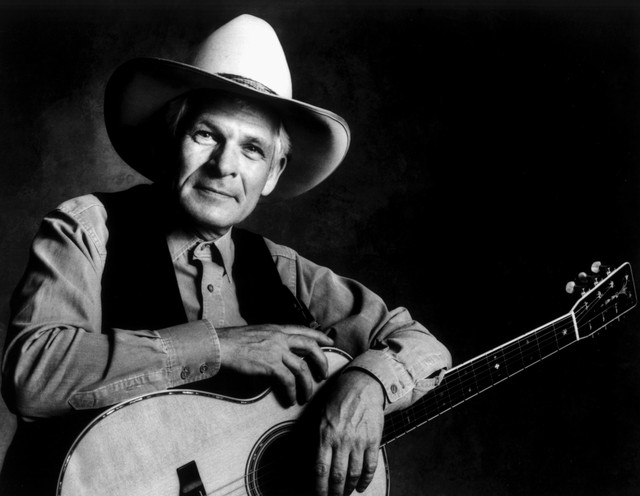
Don Edwards born 20 March 1936

Don Edwards (March 20, 1936* – October 23, 2022) was an American cowboy singer, guitarist, and recording artist who specialized in Western music. Edwards released more than a dozen solo albums from 1980 through 2010, as well as a greatest hits collection. Two of his albums, Guitars & Saddle Songs and Songs of the Cowboy, are included in the Folklore Archives of the Library of Congress. 

Singer/songwriter Don Edwards has dedicated his musical career to recapturing and preserving the spirit of the Old West by recording old and new cowboy songs. Almost alone in his enthusiasm when he took up the cowboy genre, by the 1990s he reigned as the pre-eminent specialist in a field that began to attract many other musicians. Edwards was born and raised in Boonton, a New Jersey farming community. Inspired by the books of cowboy author Will James (such as The Lone Cowboy), he took up the guitar at age ten. He learned his first Western songs from the films of cowboy crooners Gene Autry and Tex Ritter, later discovering Jimmie Rodgers. At age 16, he left home to work in the oil fields and ranches of Texas and New Mexico in order to experience Western life and the landscape firsthand. 

Edwards made his professional debut in 1961 after he was hired as a singer, actor, and stuntman at the newly opened amusement park Six Flags Over Texas. He worked there for five years before moving to Nashville to seek a recording contract. Although the folk revival was in full swing, no one was much interested in Western music at the time. Edwards eventually recorded an album combining classic Western numbers with some of his own compositions on the independent Stop label. Some of the songs were played on the radio, but they never hit the charts, and Edwards returned to Texas and settled in the Fort Worth area. 

                      Here’s “Whoppi Ti Yi Yo” from above CD


In 1980, Larry Scott, a Los Angeles DJ, helped Edwards record the Happy Cowboy album, which featured backup musicians from Gene Autry's band and the Sons of the Pioneers. Edwards released the album on his own Sevenshoux label. A visit to the Cowboy Poetry Gathering in Elko, Nevada in the early '80s inspired him to create a 24-song tribute to Jack Thorp, the cowboy musician who first began collecting traditional cowboy songs, on a cassette packaged with a book entitled Songs of the Cowboy. He then released a second book/cassette anthology, Guitars and Saddle Songs, and in 1990 released the album Desert Nights and Cowtown Blues. 

In 1992 Edwards signed with the new Warner Western label helmed by Michael Martin Murphey and released Songs of the Trail, a spare album of traditional songs that gave the dry, melancholy, sometimes-violent narratives of the cowboy a startling immediacy. Edwards gained exposure from his major-label association and became a fixture at clubs and events with any kind of Western theme throughout Texas and the Southwest. He followed up Songs of the Trail with Goin' Back to Texas (1993), an album containing new Western songs by some of the best writers in Nashville. Also in 1993 he appeared on Nanci Griffith's Grammy Award winning album Other Voices, Other Rooms on which he accompanied Griffith on a Michael Burton song entitled "Night Rider's Lament". 

The summer of 1997 found Don in Livingston, Montana portraying the role of "Smokey" in Robert Redford 's film The Horse Whisperer. Also that year Edwards moved to the folk-oriented Shanachie label and continued to dip into his vast song bag of traditional Western material with the double-CD Saddle Songs: Vols. 1 & 2 of 1997.Subsequent Shanachie releases saw Edwards branching out musically even as he stuck with Western songs. My Hero, Gene Autry: A Tribute (1998) was recorded at a live appearance honoring Autry on his 90th birthday, and two years later Edwards resurfaced with Prairie Portrait, a project recorded with cowboy poet Waddie Mitchell and the Fort Worth Symphony Orchestra. 

Kin to the Wind, a tribute to Marty Robbins, was issued in early 2001. The 2002 project High Lonesome Cowboy teamed Edwards with folk-bluegrass singer Peter Rowan and several other acoustic music luminaries, putting a new twist on Edwards' cowboy material. A final Shanachie project, the double-disc Last of the Troubadours: Saddle Songs, Vol. 2, appeared in 2004, followed by Moonlight and Skies on Western Jubilee in 2006. In 2005, Edwards was inducted into the Western Music Association Hall of Fame.

 Don Edwards died on October 23, 2022 at the age of 86. 

(Edited from AllMusic & Wikipedia) (* other sources give 1939 as birth year)


Wednesday, 19 March 2025

Tibby Edwards born 19 March 1935

Tibby Edwards (19 March 1935 – 21 September 1999) was a country and rockabilly singer and guitarist.

Tibby Edwards was born Edwin Thibodaux in Garland, Louisiana. By the time he was 15 or 16, he'd fallen heavily under the influence of Roy Acuff, Lefty Frizzell, & Hank Williams all of whom were then beginning to dominate the national country charts. Around 1949, he met Lefty Frizzell. For a number of years afterward, Tibby became Lefty's musical protege. The two of them lived together, toured extensively together, & frequently sang together on stage At one point in the mid-1950's Tibby toured California & Washington state with Lefty & appeared briefly on the legendary television show, Town Hall Party, in Compton, California, along with other artists like Tex Ritter, Joe Maphis & The Collins Kids. 

After he & Lefty eventually parted ways, Tibby moved to Beaumont, Texas, there he sang in clubs frequently with other local talents like, George Jones & Benny Barnes. Tibby's version of "Play It Cool Man, Play It Cool" an early Jones original was released on Mercury on the flip side of "Shift Gears". It was musical entrepreneur J.D. Miller who first bought Tibby & his fellow musical associate Jimmie C Newman to Nashville in 1953 to audition for the Mercury label, "They took me & turned Jimmie Newman down" he recalled in an interview to Bob Allen in 1985, "looking back on it now that might have been a mistake". 


During the next five years he completed a number of recording sessions for both Mercury & Starday labels. In December 1952, when he was just 17 years old, his career took another significant step when he landed membership on The Louisiana Hayride where he held the record, along with Hank Williams & Elvis Presley for the most encores received from a Hayride audience. When the Rockabilly craze swept through the nation in the mid 50's, Tibby like most country entertainers of the day was not immune to it; he cut a fine version of Joe Turner's "Flip Flop & Fly" in Nashville in August 1955. Tibby recalled "This was when Elvis showed up on the Scene" Tibby often appeared on the same Saturday night lineup as Elvis. 

"I introduced Elvis on the Hayride, in fact, I'd been singing "Blue Moon Of Kentucky" & "That's Alright Mama" on the show & I was tearing audiences up with them, it was maybe not so much because of my singing, but maybe just because people were ready for that change. I remember when Elvis & Bill & Scotty first came down to play the Hayride, I was sharing a backstage dressing room with Johnny Horton, the first thing Elvis did was come up the stairs & introduce himself to me. He just wanted to thank me for singing his songs. it was a great honor". 

The 12 singles Mercury issued between 1953 & 1957 were cut at Owen Bradley's studios in Nashville, D. Kilpatrick (A&R man & staff producer for Mercury records, who later went on to succeed Jim Denny as manager of the Grand Ole Opry, produced these sessions & the backing was provided by Hank William's Original Drifting Cowboys, also on the session were Floyd Cramer on piano & Chet Atkins on rhythm guitar. In 1958 Tibby entered the Army, he was processed at Fort Chaffee in Arkansas, within a few days of when Elvis was processed at the same facility. with his entry into the army this was effectively when his career came to an end, Starday released a 45 at the tail end of his Mercury output, this was also re-titled & re-released on the Mercury label, he also cut one 45 for Louisiana based Jin label & disappeared from the music scene. 

It was reported that in his later years Tibby became a heavy drinker and that he died from cancer on September 21, 1999 in Baton Rouge, Louisiana. 

(Edited from Bob Allen's Bear Family liner notes & Rocky 52).

Tuesday, 18 March 2025

Big Daddy Kinsey born 18 March 1927

Lester J. Kinsey Jr., (March 18, 1927 – April 3, 2001) known as Big Daddy Kinsey, was an American Chicago blues singer, guitarist and harmonica player. 

Like so many great local bluesmen, Lester J. Kinsey Jr. was born in the south, near Pleasant Grove, Mississippi. Lore has it that Kinsey picked up the guitar at age six, and because his father pastor father didn’t condone the devil’s music (that is, the blues), he started out playing gospel. While still in Mississippi, though, he caught a glimpse of Muddy Waters through a crack in a farmhouse wall.By the time his family packed up and moved to Gary in 1944, Kinsey was just getting started on his own musical career, playing the occasional local party. His father became pastor of Gary’s Chase Street Church of God in Christ, and Kinsey did a stint in the military and then went to work in the steel mills. 

In 1946, Kinsey married Christine McNeal, and for a few years he put music on the back burner while they started a family. By the late 50s he was gigging in Gary and Chicago alongside Windy City legends such as Jimmy Reed, Albert King, and his idol and muse Muddy Waters. Kinsey also played live in those days with guitarist Lonnie Brooks, who had moved to Chicago in 1960 but was still many years from becoming a blues legend in his own right. 

Kinsey raised a musical family. Sons Donald (born May 12, 1953), Ralph (April 26, 1952), and Kenneth (January 21, 1963) all played the blues too, and their dad made his return to live music only when they were old enough to join in. Kinsey started Donald on guitar at age four, and Ralph was hitting the drums by six. When Donald was six and Ralph was seven, they began gigging with their father as Big Daddy Kinsey & His Fabulous Sons. Because Donald had learned a lot of B.B. King songs, by the time he’d turned 12 he was being billed as B.B. King Jr. 


The family band broke up in 1972, but by then they’d grown popular enough around Gary that Kinsey had quit his day job. Donald and Ralph played in a short-lived but successful blues-rock trio called White Lightnin’, and Donald toured and recorded with the likes of Peter Tosh, Bob Marley & the Wailers, and the Staple Singers. In 1984 the brothers rejoined their father as Big Daddy Kinsey & the Kinsey Report, adding Kenneth on bass. The elder Kinsey brought a roaring mix of Delta blues and golden-age Chicago electric blues, and the kids added elements of funk, rock, reggae, and soul. 

Big Daddy Kinsey & the Kinsey Report got a huge boost from the participation of beyond-legendary Chicago pianist Pinetop Perkins, who’d played with basically every famous bluesman who’d ever lived. The band signed to Rooster Blues for the lauded 1985 LP Bad Situation, Kinsey’s debut album, and they toured 

internationally to support it. Kinsey probably enjoyed his greatest commercial success in the 80s, and throughout the 80s and 90s the family would appear on a flurry of releases under various names. 

As Big Daddy Kinsey & Sons, they issued the heavy blooz-rockin’ 1990 record Can’t Let Go on Blind Pig. The Kinsey brothers also put out several albums on their own as the Kinsey Report, beginning in 1987 with Edge of the City on famed Chicago label Alligator. Big Daddy made several solo albums too, including a raw, traditionalist 1993 release for Verve Records called I Am the Blues, whose all-star cast includes Perkins, Buddy Guy, Willie “Big Eyes” Smith, Jimmy Rogers, James Cotton, and Sugar Blue. 

In 1995 Christine Kinsey passed away, and by ’97 Big Daddy had stopped touring. He focused instead on a business he’d started: a charter bus company called Kenites Coach Lines that took tour groups on casino trips to the south. He had recorded his final album, Ramblin’ Man, in 1994, enlisting guests such as Carey Bell, John Primer, the Memphis Horns, Johnnie Johnson, Koko Taylor, and his son Donald. 

He died following a struggle with prostate cancer on April 3, 2001,at the Methodist Hospital Northlake Campus, in Gary, Indiana, aged 74. The big man left behind an impressive musical and family legacy—at the time of his death he had 12 grandchildren and six great-grandchildren. 

(Edited mainly from The Chicago Reader)


Monday, 17 March 2025

Vince Martin born 17 March 1937

Vince Martin (born Vincent Marcellino; March 17, 1937 – July 6, 2018) was an American folk singer and songwriter.

Martin’s career began when he recorded the 1956 pop song “Cindy, Oh Cindy,” with the Tarriers. The song was Martin’s only Top 40 hit and peaked at Number Nine. The record's flip, "Only If You Praise the Lord", written by Dick Cella, was a hit in England and Ireland. Martin’s pop contributions were overshadowed by his influential folk career. 

In Greenwich Village in the early 1960s, Martin formed a duo with singer-songwriter Fred Neil. They released what would be a seminal folk-rock album Tear Down These Walls in 1964, with musicians John Sebastian of The Lovin’ Spoonful and Felix Pappalardi of Mountain. The record has been cited as a major influence on the burgeoning folk scene by bands from Spoonful to the Byrds and the Grateful Dead. In 1965 he was featured in a movie called Once Upon a Coffeehouse. This B movie is a charmer set in a, you guessed it, coffeehouse in Miami Beach where Vince lived for a time. 


Soon after, Martin was signed to and released two solo albums on Capitol Records. The first, 1969’s If The Jasmine Don’t Get You … The Bay Breeze Will, is regarded as an early folk gem. It was recorded with the same band Bob Dylan had just finishing playing with to record his album Nashville Skyline. 

When Martin moved to south Florida in the early 1970s, he became similarly influential in Miami’s Coconut Grove scene of the 1960s, out of which David Crosby and Joni Mitchell emerged. He subsequently lured many of his peer performers to the area, creating a music scene that had not existed before, at small coffee houses such as the Flick and the Gaslight South. His second album, Vince Martin, was released in 1973. 

Martin was also the first of the musical community to get involved with Ric O'Barry's work with dolphins, (recently documented in the Oscar-winning "THE COVE"), known as the Dolphin Project. Vince performed tirelessly, donating time and efforts to the early Dolphin Project concerts, which were the basis of today's movement towards the humane treatment of dolphins. 

In more recent years, Martin gained an unlikely fan in Thurston Moore. According to Kwait, the Sonic Youth guitarist met Martin at a show in New York and expressed gratitude for Martin’s obscure folk-rock album, If The Jasmine Don’t Get You. The encounter with Moore spurred Martin’s desire to record. In 2003, he released what would be his final album, Full Circle, on a small New York label. He remained active in music ever since. In 2010, Martin was featured in a documentary about his life titled Vagabondo!  

Martin was diagnosed with pulmonary fibrosis and was hospitalized in March 2018. He died in a nursing home facility near his native Sheepshead Bay, New York on July 6, 2018. 

(Edited from Rolling Stone & Wikipedia)

Saturday, 15 March 2025

Henry Thomas born 1874

Henry Thomas (1874 – 1930?) was an American country blues singer, songster and musician. Although his recording career, in the late 1920s, was brief, Thomas influenced performers including Bob Dylan, Taj Mahal, the Lovin' Spoonful, the Grateful Dead, and Canned Heat. Often billed as "Ragtime Texas", Thomas's style is an early example of what later became known as Texas blues guitar. 

Thomas was born into a family of freed slaves in Big Sandy, Texas, in 1874. He began traveling the Texas railroad lines as a hobo after leaving home in his teens. He eventually earned his way as an itinerant songster, entertaining local populaces as well as railway employees. 

He recorded 24 sides for Vocalion Records between 1927 and 1929, 23 of which were released. They include reels, gospel songs, minstrel songs, ragtime numbers, and blues. Besides guitar, Thomas accompanied himself on quills, a folk instrument fabricated from cane reeds whose sound is similar to the zampona played by musicians in Peru and Bolivia. His style of playing guitar was probably derived from banjo-picking styles. 


His life and career after his last recordings in 1929 have not been chronicled. Although the blues researcher Mack McCormick stated that he saw a man in Houston in 1949 who met Thomas's description, most biographers indicate that Thomas died in 1930, when he would have been 55 or 56 years old. 

Thomas's legacy has been sustained by his songs, which were revived by musicians beginning in the folk music revival of the early 1960s. Among the first of these was "Honey, Won't You Allow Me One More Chance", which was reinterpreted by Bob Dylan on the album The Freewheelin' Bob Dylan in 1963 under the title "Honey, Just Allow Me One More Chance". Dylan reworked the melody and almost totally rewrote the lyrics, but he credited Thomas as co-writer. Thomas's song "Fishing Blues" was recorded by the folk-rock group the Lovin' Spoonful in 1965, for their hit debut album Do You Believe in Magic. The song was also recorded by Jim Keskin, John Martyn, and the Nitty Gritty Dirt Band. "Don't Ease Me In" was covered by the Grateful Dead on their first single in 1966, and on their album Go to Heaven. 

"Bull-Doze Blues" was reworked by the pianist Johnny Miller in 1927, who rewrote the words and gave it to Wingy Manone, who recorded two versions titled "Up the Country" in December 1927 for Columbia and September 1930 for Champion Records. Except in jazz circles, it remained an obscure blues number until blues-rock group Canned Heat recorded "Going Up the Country". Though rearranged, the Canned Heat song is musically the same, down to a faithful rendition of Thomas's quill solos by Jim Horn. The lyrics also borrow from Blind Willie McTell's "Statesboro Blues" (1928). Fellow band member Alan "Blind Owl" Wilson rewrote the lyrics entirely and received credit on the song's original release in 1968 on Canned Heat's third album, Living the Blues. In 2023, "Bull Doze Blues" was featured in Martin Scorsese's film Killers of the Flower Moon in an early scene where the Osage community is having their pictures taken. 

(Edited from Wikipedia)


Could this be Henry Thomas / Ragtime Texas? Courtesy of Axel Küstner, a 1931 silent film, at 56:30 there's a musician in Maxwell Street market, who is perhaps working with the war-bonneted 'Indian' as a medicine show.

There is a high likelihood that this is Henry Thomas. How many people played guitar and panpipes on a rack? (Here his panpipes are in some sort of decorated wooden or cardboard container.) He recorded in Chicago on four occasions between 1927 and 1929, which suggests that Chicago was his home or at least his "home base." He plays the guitar with a fast strumming technique, is capoed rather high up the neck (4th fret), and plays in G position of standard tuning, using his ring finger to alternate between the first and third strings at the third fret - all characteristics of Henry Thomas's playing. He appears to be around 50 years old, which would conform with what Mack McCormick reported about Thomas, though I myself have some degree of doubt that McCormick really identified the man. Anyway, just from the recorded repertoire and style, it's likely that Thomas was born in the 1880s if not earlier. I'm 99% certain it's Henry Thomas. Amazing! (David Evans)