Monday, 22 February 2021

Oliver born 22 February 1943

William Oliver Swofford (February 22, 1945 – February 12, 2000), known professionally as Oliver, was an American pop singer, best known for his 1969 song "Good Morning Starshine" from the musical Hair as well as "Jean" (the theme from the film The Prime of Miss Jean Brodie). 

William Oliver Swofford was born in North Wilkesboro, North Carolina, to Jack and Helen Swofford. He was a recipient of the prestigious Morehead Scholarship and attended the University of North Carolina at Chapel Hill starting in 1963 and began singing as an undergraduate. He was a member of two popular music groups — The Virginians and, later, The Good Earth — and was then known as Bill Swofford. 

His clean-cut good looks and soaring tenor voice were the perfect vehicle for the uptempo single titled "Good Morning Starshine" from the pop/rock musical Hair, which reached No. 3 on the Billboard Hot 100 in July 1969, sold over one million copies, and was awarded a gold disc by the R.I.A.A. a month later. 

Later that fall, a softer, ballad single titled "Jean" (the theme from the Oscar-winning film The Prime of Miss Jean Brodie) bested his previous effort by one, reaching No. 2 on the Hot 100 and No. 1 on the Billboard Easy Listening chart. Written by poet Rod McKuen, "Jean" also sold over one million copies, garnering Oliver his second gold disc in as many months. Performing both hits on a number of television variety shows and specials in the late 1960s, including The Ed Sullivan Show, helped both songs. 


Oliver had more modest commercial success, however, with the cover of "Sunday Mornin'", which peaked at No. 35 in December 1969, and "Angelica", which stalled at No. 97 four months later. His cover of "I Can Remember", the 1968 James & Bobby Purify hit, missed the Hot 100 but climbed into the top 25 of the Billboard Easy Listening chart in the mid summer of 1970. 

Tom Jones & Oliver

Late that fall, Oliver also had one inspirational recording titled "Light the Way", composed by Eric Carmen. Oliver's last single to enter the pop music charts was his 1971 cover of "Early Morning Rain" by Canadian singer-songwriter Gordon Lightfoot. The song "Bubbled Under" at No. 124 on May 1, 1971 and also reached No. 38 on the Easy Listening chart a few weeks later. 

As producer Bob Crewe preferred elaborately orchestrated musical arrangements and Oliver preferred a simpler folk sound, these "creative differences" led them to part ways in 1971. Resuming the name Bill "Oliver" Swofford, the singer toured hundreds of college campuses in the eastern and southern United States in 1976 and 1977. He was recorded on numerous albums of his friends including Steve Goodman and is credited with guitar, and vocals on several of Steve's albums. He and Goodman wrote one of the songs together (Jessie's Jig (Rob's Romp, Beth's Bounce)) which was released on the album Jessie's Jig and Other Favourites and dedicated it to their children. His natural talent and vocal range made him one who was called often for recording sessions. 

Despite his vocal and songwriting talents, Swofford was unable to sustain further success on the charts and, in 1983, People magazine ran a feature article on Swofford, describing him as a happily married father who kept his distance from the music industry, working sales for a new home builder. He was divorced the following year. He then landed a job at a major American pharmaceutical company where he quickly rose through the ranks to a director-level position and responsible for one of its major cardio drugs. 

He was so successful in this role that after his death, the company created the "Bill Swofford Leadership Award", which it still awards today to his highest performing leader. During the last ten years of his life, he served as President of the American Heart Association in North Louisiana; He served as music director for several churches in Shreveport and from time to time performed as "Oliver" for various fundraisers. He maintained a rigorous schedule until six weeks before he died. 

For a number of years in the mid-1990s, Oliver was treated for Sjögren syndrome, before being diagnosed with Non-Hodgkin lymphoma. By the time that disease was confirmed, it had spread throughout his body, giving little hope of a full remission. In 1999, his brother John donated his bone marrow for a transplant to try to save Bill's life. However, he died ten months later on February 12, 2000, at LSU Hospital in Shreveport, ten days shy of his 55th birthday. He is buried at Laurel Land Memorial Park in Dallas, Texas. 

Swofford was married twice. His first marriage was to Margaret Hicks Ramspacher, from 1974 to 1987, and he adopted her children, Beth Swofford (CAA Partner and art collector) of New York and Rob Swofford of Austin, Texas. He married Rebecca Jean Alexander in 1991 and moved to Pennsylvania and then to Shreveport until his death in early 2000.        (Edited from Wikipedia) 


Sunday, 21 February 2021

Big Al Sears born 21 February 1910


 Albert Omega Sears better known as “Big Al Sears” (February 21, 1910 – March 23, 1990) was an American jazz tenor saxophonist and bandleader. 

Big Al Sears, who was born in Macomb, Illinois, had a remarkable career as a musician and businessman. While only in his mid-teens, he had a brief gig playing saxophone with Fats Waller in Harlem. Several years later, at the age of eighteen, he replaced Johnny Hodges in Chick Webb’s band and played in the Savoy Ballroom in Harlem. During that same year, 1928, he joined a road show entitled Keep Shufflin’, which was financed by Arnold Rothstein, a gangster who was reputed to have fixed the 1919 World Series. Funding ran out while the show was in Chicago, but Sears soon found a job in 1929 with Zack Whyte’s Jazz Orchestra in Cincinnati. 

During the early 1930s he played in various cities (Cincinnati, Buffalo, New York) and in various bands (including Elmer Snowden’s). Eventually he came to the notice of John Hammond, the illustrious promoter of jazz who is credited with discovering the likes of Benny Goodman, Billie Holliday, Count Bassie, Robert Johnson, Bessie Smith and Aretha Franklin, among others. By 1937, Hammond had become virtually a manager for Sears and obtained recording dates for him with Harry James. (Frank Sinatra recorded with the James band on one of those days.) 

Harlem’s Renaissance Ballroom

A job with the Vernon Andrade dance band gave him steady employment in New York City, where he played regularly during the late 1930s at Harlem’s Renaissance Ballroom. At that stage of his career, he usually played alto sax in the dance band until midnight and then jammed on the tenor sax during the wee hours at a jazz club. From around 1941, he concentrated on the tenor sax, and played that instrument in Andy Kirk’s band, the “Twelve Clouds of Joy.” 

During 1942 and 1943, soon after the U.S. entered World War II, Hammond helped arrange for Sears to lead a very talented band on a USO tour of military bases and camps. The favourable publicity from that tour helped Sears get two subsequent gigs, first with Lionel Hampton’s band and then with the Duke Ellington Orchestra. Replacing Ben Webster, Sears was Ellington’s principal tenor saxophonist from mid-1944 until about the end of 1948. His solos on recordings made by that fabulous band in the mid-to-late 1940s are still greatly admired by jazz aficionados. 


After leaving the Ellington Orchestra, Sears became a leading member of the Johnny Hodges Band, which enjoyed success in the early 1950s. Sears was the lead player on the hit recording of a jump tune that he composed entitled “Castle Rock.” In that stage of his career he was gravitating towards rhythm and blues, and he had a noteworthy influence on that genre as it gained popularity. After leaving the Hodges Band, he worked as a session player on many rhythm and blues records. Having business acumen, he also built up his own music publishing enterprise – Sylvia Music Company, named after his daughter. 

During the mid-1950s, Sears went on to play a role in the emergence of rock-and-roll. When Alan Freed, the famous deejay and promoter, started staging big rock and roll shows, he featured Sears several times. Popularly known as Big Al Sears, he led the band that Freed formed for those shows, and he teamed up with his friend Jesse Stone to write one of Alan Freed’s theme songs: “Right Now, Right Now.” Those were prosperous years for Sears, but he soon faded from view as a performer when Freed’s career went into a steep decline in 1957. Freed’s Big Beat TV show was cancelled–in part because he refused to stop using black performers. (The ABC network wanted only white acts for national broadcasts that included the segregated South.) 

After the end of his rock-and-roll heyday, Sears continued in the music publishing business. Indeed, he was an important executive in ABC Paramount and had noteworthy success in battling for fairer financial compensation for black recording artists such as Ray Charles. 

Although Sears played less often, he continued to play very well. Moving back to jazz, he recorded a fine album of danceable music entitled “Swing’s the Thing” in 1960. That marked the end of his recording career, but he occasionally performed into the 1980s. Reacting to a performance at a jazz club in 1985, a New York Times critic wrote: “His playing . . . was just as strong, full-toned and expressive as it was when he played in the Duke’s series of Carnegie Hall concerts in the 1940s.” That appearance in the mid-1980s was, incidentally, over 60 years after his youthful gig with Fats Waller. 

Al Sears died in St’ Albans, New York during 1990, at the age of 80. 

(Sourced from an article by Sterling Kernek’ @ Western Illinois Museum) 

Saturday, 20 February 2021

Rick Evans born 20 February 1943


Rick Evans (20 February 1943 – February 2018)  and Denny Zager (born 1944, Wymore, Nebraska) were known as the American rock-pop duo Zager & Evans who were active during the late 1960s and early 1970s. They are best known for their 1969 No. 1 hit single "In the Year 2525", which earned them one-hit wonder status. 

Rick Evans (left) & Denny Zager (right)

Denny Zager and Rick Evans met at Nebraska Wesleyan University in 1962. They were joined by drummer Danny Schindler (later of the Benders) in the Nebraska band the Eccentrics until Schindler's tour of Vietnam in 1965. Evans also left in 1965 and reunited with Zager in 1968. 

The Eccentrics

As Zager and Evans, the duo were backed by another Nebraska native, Mark Dalton, on bass. Their first drummer, Paul Maher, was later replaced by another Nebraskan, Dave Trupp. Trupp and Dalton were also the rhythm section in the Liberation Blues Band and backed Evans on some solo demo material prior to Zager and Evans's recording of "In the Year 2525" in 1968. 

Written by Evans, "In the Year 2525 (Exordium & Terminus)" warned of the dangers of technology, portraying a future in which the human race was destroyed by its own technological and medical innovations. The last stanzas of the song suggest mankind undergoes a continuing cycle of birth, death, and rebirth. 


"In the Year 2525" hit number one on the Billboard Hot 100 in 1969, ultimately claiming the top spot for six weeks. It also hit #1 in the UK. "2525" topped the charts at the time of two major cultural events: the first moon landing on July 20, 1969 and the Woodstock Music Festival a month later. The record sold over four million copies by 1970 and was awarded a gold disc by the Recording Industry Association of America (RIAA) in July 1969. 

"2525" was originally written in 1964, but not recorded or released until 1968 on the Truth Records label. After radio stations in Lincoln and Omaha made "2525" a regional "break-out" hit record, RCA Records signed the duo and released the song with "Little Kids", also written by Evans, as the B-side nationwide. Zager and Evans also immediately recorded an album of the same name, again using Trupp and Dalton as the primary rhythm section. "In the Year 2525" remains popular on oldies stations; sales of the original hit recording, including singles sales, album usage and compilation inclusions, are estimated at over ten million worldwide. In Italy, the duo released an Italian version on RCA Victor 1583: "Nell'anno 2033" b/w "Donna" ("Woman"). 

Zager and Evans are considered to be the prototypical one-hit wonder artists. Despite the success of "2525" (it was even nominated for a special Hugo Award), the follow-up single, "Mr. Turnkey", failed to chart in the US and UK, as did subsequent releases. As of 2019, the duo remains the only act to have a chart-topping hit on both sides of the Atlantic and never have another chart single in Billboard or the UK. Their third single, "Listen to the People", appeared on the Cashbox chart at #100, while "Mr. Turnkey"/"Cary Lynn Javes" (double A-side) and "Help One Man Today" both charted in Australia, at #86 and #94 respectively. 

After the success of "2525", White Whale Records released an LP titled The Early Writings of Zager & Evans and Others featuring recordings of the Eccentrics on side one and a band called J.K. and Co., who had no connection to Zager and Evans, on side two. After releasing two albums on RCA, Zager and Evans moved to Vanguard Records in 1971 for a final record. 

Evans later released an album for Truth Records titled I Need This Song, a duet with Pam Herbert. In the late 1970s, he formed his own label, Fun Records, and released an album titled Fun Songs, Think Songs containing both new material and re-recordings of Zager and Evans material. He played his last gig somewhere around Lake Tahoe on New Year’s Eve 1984, but continued to write songs. 

Drummer Dave Trupp died in November 2015 at the age of 72. Mark Dalton still performs on bass in the Pacific Northwest of the United States.. Zager now builds custom guitars at Zager Guitars in Lincoln, Nebraska. Evans was largely retired from public life but he continued to chat online with Dalton and his best friend, Nashville producer Gary Earl, until his death of natural causes at his home in February 2018. Recordings from Evans' private collection of original tapes began appearing on eBay in the spring of 2019, as his estate was apparently being disposed of by relatives. There was no official announcement of his death in the national media.

(Edited mainly from Wikipedia)

Friday, 19 February 2021

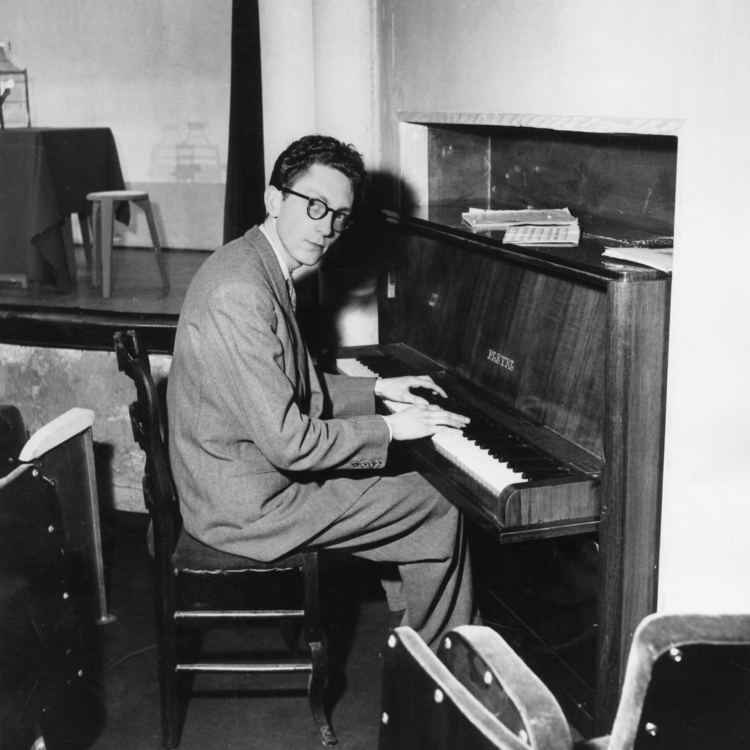
André Popp born 19 February 1924

André Charles Jean Popp (19 February 1924 – 10 May 2014) was a French composer, arranger and screenwriter.

Held in high esteem by lovers of light orchestral music, Eurovision connoisseurs and the space age pop aficionados who revived the easy listening genre in the mid-1990s, the fabulously named and fantastically talented French composer, conductor, arranger and orchestrator André Popp wrote some of the most enduring melodies of the 1960s. 

André Popp was born in the Vendée region, Western France, where he grew up in his grandparents' villa. His mother sent him to a piano teacher when he was five years old. Later onwards, at secondary school, André played the church organ after the cleric originally entrusted with this task had been enlisted into the French army upon Germany's declaration of war in 1940. During the war years, André met songwriter Jean Broussolle, with whom he travelled to Paris after the liberation of France. 

With Broussolle, Popp tried breaking into the Parisian music industry by signing many songs, most notably 'Grand papa laboureur', which was recorded by Cathérine Sauvage. In the late 1940s, Popp also worked as a piano accompanist for theatres and record companies. Later on, after a particularly well-received Christmas broadcast for which he had written the music, Popp was signed by French radio as a producer and conductor (1953). Having formed his own orchestra, he entertained nationwide audiences with his instrumental compositions and arrangements in different styles in 'La bride sur le cou', a weekly radio programme which ran for five consecutive years. 

Meanwhile, Popp continued composing songs, amongst which big (international) hit successes such as 'Les lavandières du Portugal' (Portuguese washerwomen), originally recorded by Jacqueline François (1954), Eurovision winner 'Tom Pillibi' for Jacqueline Boyer (1960), and 'Manchester et Liverpool' for Marie Lafôret (1967). As an arranger, he worked with many different artists, most notably Jacques Brel, for whom he wrote the original score to 'Quand on n'a que l'amour'. He orchestrated a number of Juliette Gréco albums in the late 1950s and early 1960s. 

Testimony to Popp's creativity is the creation of an educative symphonic work for children, 'Piccolo, Saxo et Cie.', for which he teamed up with his old friend Jean Broussolle. The first of the four ‘Piccolo, Saxo et Compagnie’ albums, released in 1956, won the Grand Prix du Disque. He also released several instrumental albums, including the innovative 'Delirium in Hi-Fi' (under the pseudonym Elsa Popping) and two LPs with ukelele virtuoso Herb Ohta. 


In the Eurovision Song Contest, after his victory with 'Tom Pillibi' (France 1960, lyrics by Pierre Cour), Popp composed three more Grand Prix entries: 'Le chant de Mallory' (Rachel, France 1964), 'L'amour est bleu' (Vicky Leandros, Luxembourg 1967), and 'Une chanson c'est une lettre' (Sophie Hecquet, Monaco 1975). For the last-mentioned song, Popp conducted the Eurovision orchestra himself. Indeed, the haunting "Love Is Blue", as it became known internationally, turned into a worldwide standard. 

In 1968 the French orchestra leader, Paul Mauriat, took an instrumental arrangement to the top of the US hit parade and battled it out with the version by guitarist Jeff Beck in the UK charts, while the following year the American vocal group the Dells recorded a successful medley combining an English adaptation by Bryan Blackburn with Arthur Hamilton's "Sing A Rainbow". 

Popp had a singular knack for writing melodies that appealed to the collective consciousness. Originally recorded by Les Compagnons De La Chanson, "Tzinerlin", with an English lyric by Jack Fishman, became "Years May Come, Years May Go", the last UK Top 10 hit for Herman's Hermits in 1970. In 1979, Popp won the Grand Prix Académie Charles Cros for the second time, on this occasion for his music to a series of audio reworkings of Hergé’s cartoon creation ‘Tintin’. In the 1970s and 1980s, Popp continued writing songs for artists such as Mireille Mathieu, Nicole Croisille, and Gérard Palaprat. He also continued writing film scores, his last being Pineapple Express in 2008. 

Popp died at his apartment in the Paris suburb of Puteaux on 10 May 2014. The day a pre-recorded interview, his last, was broadcast on the radio station France Musique. As French media remarked, this was a fitting farewell for the master of the soundscape and the composer whose series of Piccolo, Saxo Et Compagnie recordings had introduced several generations of children to the nuances of the orchestra.

(Edited mainly from “And The Conductor Is”)


Thursday, 18 February 2021

Bobby Taylor born 18 February 1934

Bobby Taylor (February 18, 1934 - July 22, 2017) was an American soul singer, songwriter, and producer active primarily in the 1960s and 1970s. He played a key role in the development of soul music over the past half century. 

Morris Wade & The Four Pharaohs

He was born Robert Edward Taylor in Washington, D.C. As a young man, he moved to New York City and sang in doo-wop groups with singers who later joined successful acts such as Frankie Lymon & the Teenagers and Little Anthony and the Imperials. In 1958 he began his music career as a member of The Four Pharaohs, who released a few locally-selling recordings in the Columbus, Ohio, area. 

In the early 1960s, while they were in San Francisco, Taylor joined Little Daddy and the Bachelors, made up of vocalist Tommie Melton, guitarist Tommy Chong, bassist Wes Henderson, pianist Bernie Sneed, and drummer Floyd Sneed. While in Calgary they were known as the Calgary Shades. The word Shades in the group's name referenced the fact that the band was interracial. Chong is half Chinese. The other members were black, white, and Aboriginal. Taylor was of American Negro, Puerto Rican, and Native American heritage. 

"Little Daddy & The Bachelors" recorded a single, "Too Much Monkey Business" / "Junior's Jerk". Melton and Chong opened a Vancouver dance hall in 1962 called the Blues Palace, which was formerly a movie theatre. They brought in the Ike & Tina Turner Revue who had never been to Vancouver before. They drew a small crowd and Melton and Chong broke even on that one. Although Little Daddy & The Bachelors built up a small following, things soured when they went with Chong's suggestion and had themselves billed as " "Four N's and a C", before taking on the moniker Bobby Taylor & the Vancouvers. 

In 1965, Supremes members Mary Wilson and Florence Ballard heard the band at the Elegant Parlour in Vancouver, and alerted Motown CEO Berry Gordy, Jr.. Gordy brought the Vancouvers to Motown Records in Detroit, Michigan, and signed them to his Gordy Records imprint. By this time the evolving line-up consisted of Taylor, Henderson, and Chong along with guitarist Eddie Patterson, organist Robbie King, and drummer Duris Maxwell (aka Ted Lewis), the latter three having come as a package when the original Vancouvers merged with another local group, the Good Shepherds. Some say that Jimi Hendrix played with them in those early days, but there is no proof except Hendrix later jammed onstage with the Vancouvers in Europe. 


The group recorded its debut album, an eponymous release, and their debut single, the Tommy Chong co-composition "Does Your Mama Know About Me," peaked at number 29 on the Billboard Hot 100, and #44 in Canada. For a July, 1968, engagement at the Regal Theater in Chicago, Bobby Taylor & the Vancouvers had a local-area family band, The Jackson 5, as their opening act. Impressed with the group, Taylor personally brought them to Detroit and the Motown offices, arranging an audition for them with Motown executive Suzanne de Passe. De Passe and Berry Gordy were impressed with the Jacksons, and the group was signed to the label within a year. 

After releasing two further singles, The Vancouvers ended up performing in support of Motown artist Chris Clark. Tommy Chong and Wes Henderson were fired by Clark and Motown producer Johnny Bristol for missing a gig to apply for Green cards. The group broke up shortly afterwards. Taylor auditioned for the then-vacant lead singer position in The Temptations, but was turned down. After the Jackson 5 signed to Motown in March 1969, Taylor became the group's first producer. He supervised the bulk of their first album, Diana Ross Presents the Jackson 5, recording the Jacksons on a number of soul covers. Berry Gordy would later move the group to California and take personal control of their sound. Although Taylor would briefly join the Jacksons in California, he did not receive credit for working on the group's early singles such as "I Want You Back" and "ABC" . In addition to those, he produced most of their covers of older rhythm and blues songs. 

As a solo artist, Taylor was shifted to Motown's V.I.P. label and continued as a solo artist. Although his "Oh, I've Been Blessed" later attained a cult status, Taylor's solo singles failed to sell well. By 1971, Taylor had departed Motown because of a financial dispute, recording sporadically into the mid-1970s.Taylor later successfully sued Motown for a substantial amount of money. Moving to the United Kingdom, Taylor started an offshoot group, Bobby Taylor & the New Vancouvers, and recorded an album for Ian Levine's Motorcity Records. 

In the eighties, he was diagnosed with throat cancer and relocated to Columbus, OH.  There, he lived with his mother before returning to the west coast and making his home in San Jose.  He would later be diagnosed with leukemia and the metastatic cancer that would ultimately take his life.  He was performing a Motown-themed show in Hong Kong under the name “The Bobby Taylor Band.”  His later musical efforts were tempered by bouts with throat cancer, which he had treated by various holistic doctors. 

As of 2014, Taylor resided in Hong Kong where he died on 22 July 2017,age 83. (Edited mainly from Wikipedia) 

Wednesday, 17 February 2021

Anne Phillips born 17 February 1935


Anne Phillips (born 17 February 1935) is an American singer, songwriter, and producer. She has worked with Burt Bacharach, Carole King, Mahalia Jackson and has arranged and produced jingles for the Four Tops and Martha and the Vandellas. 

Phillips was born Anne Latta Dinsmore in Philadelphia, Pennsylvania, USA and grew up in Wyomissing. She played piano growing up but didn't hear jazz until she was a senior in high school. Phillips studied at Oberlin College singing in her freshman year with the college big band. She had her own radio show, singing and playing on the college station, and sang with a college trio that was the supporting act on the occasion of Dave Brubeck’s famous Brubeck at Oberlin concert. 

After attending the New England Conservatory of Music, she relocated to New York City. There, she performed on a number of live television shows as a member of two of the best known choirs, the Ray Charles Singers and the Norman Luboff Choir. She also sang demonstrations for songwriters such as Burt Bacharach and Hal David, Carole King, Neil Diamond and Paul Simon. 


She made her recording debut in 1959 for Roulette Records, with Born To Be Blue, This marked shift in popular music patterns resulted in a highly successful career in the studios. Her industry was soon disrupted by rock ‘n roll and she wouldn’t record another album under her name until 2000, but Phillips now became one of the most respected and in-demand studio performers in the music business in New York City. 

Anne with Kermit Lewinsky

Throughout the 60s, she sang in backing groups on countless recording sessions, wrote, arranged and produced commercials for the American Gas Association, Kent Cigarettes, Campbell’s Soup and Sheraton Hotels. Phillips composed music for a Pepsi campaign with BBDOcalled "The Taste That Beats the Others Cold, Pepsi Pours it On. The spot included The Turtles, The Four Tops, The Hondells, and the Trade Masters. 

Anne with The Turtles

Other artists with whom she worked during these years include the Sammy Davis Jnr. ,Leslie Gore, Linda Ronstadt, Mahalia Jackson, Wilson Pickett and Martha And The Vandellas. She formed her own choir for recording and broadcasting, and became music director at St. Bartholomew’s Church on Park Avenue. She wrote book, lyrics and music for The Great Grey Ghost Of Old Spook Lane, a children’s show that has been produced by many theatrical groups and, with her husband, tenor saxophonist, Bob Kindred, created Bending Towards The Light - A Jazz Nativity, the Christmas story told through the medium of jazz. 

This work is produced annually in New York and elsewhere in America and has featured guests such as Brubeck, Al Grey, Lionel Hampton, Tito Puente and Clark Terry. She and her husband also operate a non-profit organization, the Kindred Spirit Foundation. Additionally, from the early 90s onwards, Phillips has been on the adjunct faculty of the Jazz and Contemporary Music Department at New York University, where she arranges for and directs the NYU Jazz Choir. She also directs Children’s Jazz Choirs through which she teaches inner-city kids songs from the Great American Songbook. 

In recent years she has happily been welcomed into the classical community. Her short operas have been performed at Weill Hall at Carnegie as a part of a program called “Opera Shorts,” She received a grant from Opera America for an evening of short operas entitled That ‘Certain Age’ (about aging with grace and humour.) Her songs have been recorded by soprano Monica Harte for MSR Records, and have been performed on concerts throughout the country and on concerts produced by Chelsea Opera. 

In 2001 she released her second solo album “Gonna lay My Heart on the Line” on which she performs songs she has written, both music and lyrics. Margaret Whiting said “Some of the best songs I’ve heard in years.”.”Noel Noel “followed in 2002 containing Christmas carols written for a 25 voice a cappella choir. On “Ballet Time” (2007) she sings with such jazz greats as Dave Brubeck and Marian McPartland. 

In 2019 she released “Live at the Jazz Bakery”. Comparing 1959’s “Born to be Blue” with this set her voice has held up remarkably well. Her accompaniment is jazzier now than it was then, led by husband Bob Kindred on tenor sax and joined by Roger Kellaway on piano and Chuck Berghoffer on bass. Her original compositions make up most of the album with a couple of standards thrown in. Her writing captures that mid-century moment when songs and singers were appreciated. This intimate and warm album, with its engaging monologues peppered with recognizable names spanning a half-century, feels like meeting someone special.  

Phillips was recently awarded the “Heart of Gold” award from the Best Friends Foundation in Washington DC for her work with her Children’s Jazz Choirs. 

(Edited mainly from AllMusic)