Saturday, 7 October 2023

John Hickman born 7 October 1942


John Hickman (October 7, 1942 – May 11, 2021) was an American five-string banjo player. 

Hickman was born and raised in Columbus, Ohio. He bought his first banjo in 1957 and after listening intently to all the old Flatt and Scruggs’ 78s, began a life of total dedication to the five-string. He became one of the most appreciated and distinctive banjo pickers in California bluegrass circles. 

After graduating from high school around 1960, John began first performing professionally in the Columbus area with guitarist Bill Dunken and mandolin player Don Sours. The group was relatively short-lived and in 1962, Hickman enlisted in the Marine Corps. He was fortunate though to have been stationed in West Virginia and during his free time would travel about the countryside with his banjo and occasionally jam with bluegrass musicians such as Buzz Busby, Red Allen, Frank Wakefield and The Kentuckians, Mike Auldridge and Ben Eldridge. 

Upon his release from the service in 1964, Hickman headed directly back to Columbus and quickly formed a trio with guitarist Landen Rowe and the late Pee Wee Lambert on mandolin. Though the union lasted for only about a year, John, intent upon continuing his musical career, immediately joined up with the Dixie Gentlemen, another Columbus group comprised of Sid Campbell on guitar, Ralph (Robbie) Robinson on mandolin, Chuck Cordell on bass, and of course, Hickman on the five-string. The group remained strictly local, performing in small clubs and bars around the Columbus area.

Hickman soon found himself in still a third Columbus group, this time composed of Earl Taylor (of Stoney Mountain Boys fame) and comedian “Boat Whistle” McIntyre. This group stayed together for about three years and like the previous two groups, performed at festivals and small clubs in the vicinity of Columbus. It was in 1969 that Hickman finally made the move to southern California, and with his wife Sidney, lived there ever since. Soon after his arrival, John formed a trio with his brother George and mandolinist Scott Hambly. The group quickly worked up enough material to perform in a “Bluegrass Showcase” at McCabes—a Santa Monica music store-turned concert hall and a leading force in the promotion of traditional folk and bluegrass music on the West Coast. 


It was there at McCabes, Hickman was “discovered” by fiddler Byron Berline and banjoist Alan Munde, both of the Country Gazette. Berline and Munde frequented McCabes, especially when the show featured bluegrass, and it was fortunate for John’s career that they did. Berline, it seems, was extremely impressed with Hickman’s command of the five-string, and through him, John was introduced and became close picking friends with such musicians as the late Clarence White and his brother Roland, Doug Dillard, and John Hartford. 

After settling in the Los Angeles area, Hickman stacked up a number of important credits previous to his job on the Smothers’ Show: he has played on a country album featuring Danny Michaels; dubbed banjo over a number of rock tunes; sat in on what he described was a country-gospel album which also included Byron Berline, Roland White, Roger Bush (of the Country Gazette), and Dobro player Leroy Mack (once associated with The Kentucky Colonels). Hickman’s banjo playing can also be heard on the album “Black Mountain Blues” on Briar Records, which features fiddler Leslie Keith, composer of the famous “Black Mountain Rag.” John has done a seventeen-day western promotional tour for Disneyland and with Corn Bred, recorded a radio commercial for Retronox (an anti-smog device). 

His banjo playing was always marked by its simplicity, especially as compared to the more experimental styles in vogue during the 1970s and ’80s, and the clean and crisp tone of everything he played. There was only a single banjo album, Don’t Mean Maybe in 1978, which brought him tremendous attention in the banjo community. A humble and unassuming man, the limelight was never something he craved, and John seemed most comfortable in the accompanist’s role, where he excelled over five albums with Berline, Crary, and Hickman during the ’80s, and a reunion project in 2002. He and Berline also cut a duet project, Double Trouble, in 2006. 

When Berline returned home to Oklahoma in 1995, Hickman followed along and worked as a teacher and luthier in Byron’s music store, Double Stop Fiddle Shop. There he remained until his retirement, while also playing with The Byron Berline Band. Despite a long career as a professional banjo player, In 2015 John fell and broke his hip, which at 72 years of age was a major concern. But he underwent surgery at Mercy Hospital in Oklahoma City. 

John’s most lasting legacy may be as a banjo instructor, something he had started doing not long he started playing in 1957, and remained a primary focus of his career until he was unable to keep playing as cancer and cardiac problems took him from music. Hickman died on May 11, 2021, following a long illness. He passed away quietly in his sleep, at home with his wife, Sue, by his side. He was 78 years of age.

(Edited from Bluegrass Unlimited & Bluegrass Today)

Friday, 6 October 2023

Cees Veerman born 6 October 1943


Cees Veerman (6 October 1943 – 15 March 2014) was a Dutch musician. He was a singer, composer and guitarist for the rock band The Cats. He was born in Volendam in the province of North Holland.

The Cats began life as two separate duos: Cees Veerman and Arnold Muhren who started in a skiffle band; and cousins Piet Veerman and Jaap Schilder who modelled themselves after the Everly Brothers. The duos merged and became The Mystic Four, with Cees and Piet Veerman on vocals and guitar, Schilder on guitar (and piano), and Muhren on bass. By 1965 they changed their name to The Blue Cats, a reference to the colour of their suits and Cees' nickname, Poes (Dutch for 'cat'). Dropping the 'Blue' from their name in 1966 they recruited drummer Theo Klouwer. 

The Cats borrowed money from Jan Buys, who was later to become their manager, and recorded their first singles that immediately entered the charts. Singing in English thanks to a songwriting duo from England, the group sounded British. Cees initially performed the majority of the lead vocals but that was to change by 1968 when the band recorded a cover version of Studio Six' "Times Were When"; Piet felt that this song suited his voice better and Cees agreed. Arnold's lyrics and Piet's sad voice appeared to be a match made in heaven, spawning five Top 10 hits in the next two years. 


Their international popularity began to grow. By spring 1970 the Cats toured Suriname and the Netherlands Antilles and played one show on 4 April 1970 in Guyana. A tour of Indonesia followed early 1971. "Don't Waste Your Time" broke a string of Top 10 chart dominations, but the next single, "One Way Wind", became The Cats' biggest ever hit. In Germany it reached Number One chart position and in 1972 the band responded by releasing Katzenspiele (Cat's Play), featuring their hits rerecorded in German. By now, the band were very popular and had a busy touring schedule, which began to take its toll Cees contracted voice problems. Crew member Piet Keizer replaced him.

In 1976, Cees Veerman released a solo album called "Another Side of Me", which spawned the single "Sailor, Sail On (Dreamer, Dream On)". By this time Cees had rejoined the group and although the hits continued, the group didn't recapture past glories. In 1978 The Cats were booked to appear on chart-show to playback "She Was Too Young". It was, however, a thinly-disguised solo-performance by Cees. By the end of 1979 The Cats decided to disband. A farewell-single (a reissue of the 1972 track "End of the Show") charted as late as April 1980. After a brief Cats-reunion Piet Veerman had a solo-hit in 1987 with "Sailing Home". 

On 23 March 2006, The Cats were made Members of the Order of Orange-Nassau. The same year the group had a reunion to record a single for inclusion on a best of album. It went gold. Cees Veerman performed with the Cats Aglow Band who both supported and backed Willy DeVille at the latter's Amsterdam CarrĂ© Theatre show on 7 July 2008. 

He moved to Indonesia where he died in his sleep on the morning of 15 March 2014 in Yogyakarta, at the age of 70. 

(Edited from Wikipedia)

Thursday, 5 October 2023

John "Dizzy" Moore born 5 October 1938


John Arlington "Dizzy" Moore OD (5 October 1938 - 16 August 2008) was one of Jamaica's most renowned trumpeters. As a founding member of the Skatalites, Jamaica's premier session band of the early 1960s, he helped create the ska form and backed scores of significant singers, including the young Bob Marley. 

Moore was born in Kingston, where he was raised in a strict Seventh Day Adventist household. An early fascination with music led him to fashion rudimentary wind instruments out of papaya stalks and pumpkin vines. After discovering that a drumming neighbour learned his musical craft at the Alpha boys' school, a Catholic charitable institution for "wayward boys" that was a breeding ground for some of Jamaica's most talented musicians, Moore set his mind on attending Alpha, despite the social stigma surrounding its students. Most Alpha boarders were orphans or street urchins whose parents could not afford their upkeep, but Moore gained entry by pretending to be out of control, so that his disapproving parents, who objected to the school's Catholic foundation, would allow him to learn music there. 

Don Drummond
At Alpha, where he studied electrical engineering and printing as well as music, he grew close to his fellow students Don Drummond, who soon emerged as the country's most outstanding trombonist, and Lester Sterling, later a leading alto saxophonist. Upon graduating in 1955, Moore joined the Jamaica Military Band, but was ultimately thrown out for playing bebop and refusing to shave. He then joined an uptown jazz orchestra, but was fired for refusing to cut his hair. 


Facing growing discrimination for his Rastafarian beliefs, he retreated to Count Ossie's Rasta camp, where he took part in the late-night jam sessions that gave birth to ska, just as Jamaica was struggling to free itself from Britain's colonial yoke. After being spotted by Clement "Sir Coxsone" Dodd, founder of Studio One, Moore and his peers regularly featured on recording sessions cut for Dodd during the early 1960s. Then, in 1964, following the demise of the leading session group the Cavaliers, Dodd decided to form an official ska supergroup, featuring Moore, Drummond and Sterling, along with the pianist Jackie Mittoo, drummer Lloyd Knibb, bassist Lloyd Brevett, guitarist Jerome "Jah Jerry" Haynes and saxophonists Roland Alphonso and Tommy McCook. 


Named the Skatalites (in reference to a recently-launched Sputnik satellite), the group was officially together for only 14 months, but changed the shape of Jamaican popular music as chief proponents of the ska form, backing all the leading artists of the day, including Owen Gray, Alton Ellis, and Toots and the Maytals. Skatalites instrumentals such as Tear Up, Guns of Navarone, which also made the UK top 40, and Ball of Fire topped the Jamaican charts, and Moore, whose nickname "Dizzy" stemmed from his intricate soloing, was a key feature of songs including Ska La Parisienne, Dick Tracy, Nimrod and Ringo, the last cut for the producer Justin Yap. 

Following the break-up of the Skatalites, McCook and Knibb defected to Treasure Isle, the producer Duke Reid's rival stable, to form the Supersonics, while Moore, Alphonso and Mittoo remained at Studio One as the Soul Vendors, touring Britain with Ken Boothe in 1967. Returning to Jamaica, where he was briefly active in the uptown club act Kes Chin and the Souvenirs, Moore then joined the Supersonics, helping to define the rock steady style at Treasure Isle, but after a tour of Canada, the group disbanded, and he began to rely on session work. 

Although less active from the mid-1970s, Moore joined the re-formed Skatalites to perform at Reggae Sunsplash in 1983, contributing to the album Return of the Big Guns the following year. In 1989, the group backed Bunny Wailer on an international tour and began touring as the Skatalites in 1990, but as most of the band lived in New York, he was usually absent from their line-up, though he was later active in the Jamaica All Stars with Justin Hinds. In October 2007, Moore was awarded the Order of Distinction in the Rank of Officer (OD) for pioneering work in popularizing Jamaican music. 

After a long battle, Moore died of colon cancer on 16 August 2008 at the age of 69. (Sourced from David Katz @The Guardian)

Wednesday, 4 October 2023

Mark Levine born 4 October 1938


Mark Levine (October 4, 1938 – January 27, 2022) was an American jazz pianist, trombonist, composer, author and educator. 

Mark Jay Levine was born on Oct. 4, 1938, in Concord, New Hampshire. His father, Hyman “Harry” Levine, originally hailed from Minsk, Belarus, and ran a women’s clothing store. His mother, the former Sarah Lubovitz, was a homemaker who had been born in Russia. He had an older brother by eight years, named Earl. Piano was Levine’s first instrument; he began taking lessons at age 5. By his middle school years, his family had moved to Daytona Beach, Fla. 

His musical world was forever changed at age 12, when his brother gave him a jazz recording. He quickly became enamored of the great jazz pianists, starting with Dave Brubeck, Bud Powell and Bill Evans. While attending Seabreeze High School in Daytona Beach, Levine also began playing the valve trombone. He attended Boston University, and graduated with a degree in music in 1960. He also studied privately with Jaki Byard, Hall Overton, and Herb Pomeroy. 


After graduating, Levine moved to New York, where he freelanced and then played with musicians including Houston Person (1966), Mongo SantamarĂ­a (1969–70), and Willie Bobo (1971–74). Levine then moved to San Francisco, and played there with Woody Shaw in 1975–76. Levine made his first recording as a leader for Catalyst Records in 1976. He also played with the Blue Mitchell/Harold Land Quintet (1975–79), Joe Henderson, Stan Getz, Bobby Hutcherson, Luis Gasca, and Cal Tjader (1979–83). From 1980 to 1983, he concentrated on valve trombone, but then returned to playing mainly the piano. He then led his own bands, and recorded for Concord as a leader in 1983 and 1985. 


                            Here's "Black" from above CD


Inspired by Jelly Roll Morton’s quip to Alan Lomax about “the Spanish tinge” in jazz and also by a 1979 tome by John Storm Roberts, The Latin Tinge: The Impact of Latin American Music on the United States, Levine’s band produced a series of impeccably recorded albums showcasing Afro-Cuban and Brazilian rhythms in a small-group setting. Tight arrangements and his unique harmonic approach yielded works worthy of study for their harmonic and rhythmic sophistication. The title track from Isla, the quintet’s Grammy-nominated 2002 release, is a perfect example of this approach, morphing seamlessly from the northeastern Brazilian rhythm known as baiĂ£o to Puerto Rican bomba sicĂ¡ to Cuban guaguancĂ³, all framed by his advanced harmonic approach.

Levine began teaching in 1970: in addition to private lessons, he worked at Diablo Valley College (1979–95), Mills College (1985–95), Antioch University in San Francisco (1986–87), the San Francisco Conservatory of Music (1992–97), Sonoma State University (1989-1990), and the JazzSchool in Berkeley (from 1997). But it was as a pedagogue that Levine became legendary, through a pair of instructional texts: The Jazz Piano Book, first published in 1990, and the The Jazz Theory Book, published in 1995. Translated into numerous languages, they have become standard texts on the college level for jazz education worldwide. 

From 1992 Levine was part of Henderson's big band, but a milestone in Mark’s career took place in 1996, when he traveled to Cuba and studied with Hilario Duran and Chucho ValdĂ©s. He formed a Latin jazz group, Que Calor in 1997. Upon returning to the Bay Area, he created his Afro-Caribbean group, The Latin Tinge, with Paul van Wageningen (drums), Michael Spiro (percussion), John Wiitala (bass) and Mary Fettig (flute, soprano sax, bass clarinet). With their very first release, Hey, It’s Me (2000), Mark already showed his affinity to Brazilian music.


Levine was very active in the Latin music scene in the Bay Area, most recently with his group The Latin Tinge. He died of pneumonia on January 27, 2022, at the Sunrise Assisted Living Facility of Oakland Hills, Calif. He was 83. 

(Edited from Wikipedia, WBGO.org & Music Brasileira)

Tuesday, 3 October 2023

Marilyn Duke born 3 October 1916


Marilyn (Marylin) Duke (October 3, 1916 – August 7, 1995) was an American singer from the swing era of the mid to late 1930s and early 1940s. 

Born Manfrey Lecta Duke in Jackson, Georgia, she learned to sing in a choir at her church, likely the Macedonia Baptist Church in Jackson, Georgia, a suburb of Atlanta. She began her career as a soloist in 1933 on radio in Atlanta and after winning a radio audition contest around 1934, Duke headed to New York City, where, from December 30, 1934, to 1936 (and later), she sang regularly on NBC radio and the Mutual Broadcasting Company. She was billed as a blues singer and contralto. 

Her radio broadcasts included performances with the orchestras of Leon and Nathan Brusiloff and Paul Whiteman. In 1935, her broadcast performances were sometimes with The Charioteers, a male choral quartet. Beginning December 30, 1934, Duke sang on WOR two or three times a week, typically Tuesdays, Thursdays, and Saturdays at 5:15 pm. She sang 15-minute segments, usually. The WOR broadcasts were carried on the Mutual Network. From Mid to late-1930s, Duke, as vocalist, was the star attraction for Manny Gates and his Orchestra in Miami. She joined Jolly Coburn's Orchestra, a society band, around July 1937 after playing a piano stint at a Boston nightclub. Duke also sang with the Shep Fields Orchestra in 1937 (in Philadelphia).
 
On New Year's Eve 1940, Duke debuted with the Vaughn Monroe Orchestra at the Statler Hotel Boston, eight months after Monroe founded the orchestra. Monroe formed his orchestra April 1940 in Miami at the urging and sponsorship of band agent Willard Alexander and New England–based band leader Jack Marshard, who saw an opportunity when offered two simultaneous bookings. Marshard became his manager. Marylin Duke was Monroe's first female vocalist. She had been working as a pianist-singer at a Boston nightclub; but because an infected finger interrupted her playing, she auditioned for Vaughn Monroe and was promptly signed. 


Her notoriety rose rapidly during her tenure with Monroe and traveled and recorded as his featured singer. Duke was a tall brunette, and according to journalists, attractive and was acclaimed for having an engaging personality. In fact, she was known as the tallest female singer in the business. Published accounts state that she was 5'9". She left the Monroe Orchestra around June 1943 to join the WAAC, but instead, continued performing, which included a two-month stint with Tommy Dorsey. That same year Duke also sang with Will Osborne and His Orchestra. Filling the void, Monroe hired Phyllis Lynne, in Los Angeles, to replace Duke. Monroe gave Lynne her East Coast debut on September 14, 1943, in New York City at the Paramount. Duke was a blonde when she re-joined Monroe's band in 1944. Her recorded hits with Vaughn Monroe include "There'll Be Some Changes Made" and "The Trolley Song," the latter being a late-1944, post-Petrillo-ban, rush-to-market, swing band vocal duet with Monroe. 

In September 1944, she married Peter O'Brien, a Boston amusement park owner. (They adopted two sons, Michael and Patrick. Their marriage ended in divorce.) She then permanently left the orchestra in April1945. By December she was performing at the Music Box in Boston. After her career with big bands and into the late 1960s, she performed on-and-off as a nightclub pianist-singer in the metropolitan areas of Boston, New York City, and Newport, Rhode Island. 

Marilyn at the Moulin Rouge '55
Marylin Duke was known as Manfred L. Bowker when she died. She had been residing in Fayetteville, Fayette County, Georgia. She was the widow of Benjamin Cushing Bowker (1912–1968), a native of Quincy, Massachusetts, who died in an auto accident in Jackson County, Georgia. At the time of his death, they were residents of Dorchester, Massachusetts. 

Duke was a heavy smoker and had problems, before her stroke, with alcohol; Marilyn smoked Camel Cigarettes, the brand that Vaughn Monroe promoted beginning 1946. She suffered a stroke in 1990 and was treated at Grady Memorial Hospital, Atlanta. Her maternal 1st cousin, Marilyn Jean Howell, cared for her until her death August 7, 1995, aged 78 years. Duke is buried in Crest Lawn Memorial Park, Atlanta, in the family plot of her maternal Aunt Clara Belle Tarrant. 

(Edited from Wikipedia)

Monday, 2 October 2023

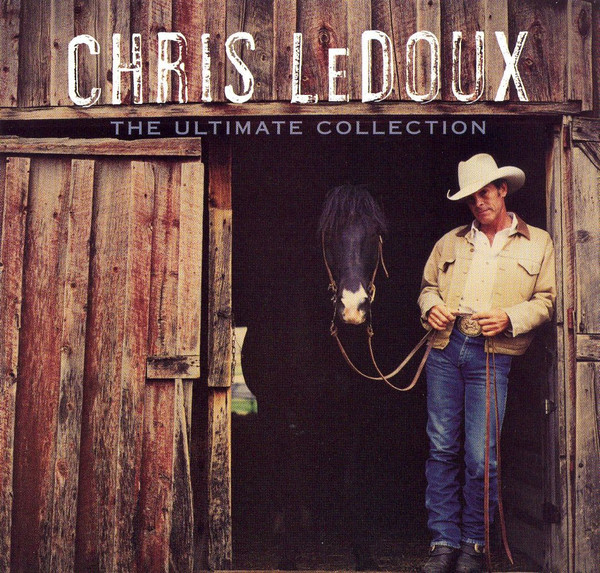
Chris LeDoux born 2 October 1948


Chris LeDoux (October 2, 1948 – March 9, 2005) was an American country music singer-songwriter, bronze sculptor, and hall of fame rodeo champion. During his career, LeDoux recorded 36 albums (many self-released), which have sold more than six million units in the United States as of January 2007. He was awarded two gold and one platinum album certifications from the Recording Industry Association of America, was nominated for a Grammy Award, and was honored with the Academy of Country Music Cliffie Stone Pioneer Award. LeDoux is also the only person to participate and also perform at the Houston Livestock Show and Rodeo. 

LeDoux was born in Biloxi, Mississippi, on October 2, 1948. He was of French descent on his father's side. His father was in the US Air Force and was stationed at Keesler Air Force Base at the time of his birth. He learned to ride horses while visiting his grandparents on their Wyoming farm. At age 13, LeDoux participated in his first rodeo, and before long was winning junior rodeo competitions. 

LeDoux continued to compete in rodeo events and played football through his high-school years. When his family moved to Cheyenne, Wyoming, he attended Cheyenne Central High School. After twice winning the Wyoming State Rodeo Championship bareback riding title during high school, LeDoux earned a rodeo scholarship to Casper College in Casper. During his junior year at Eastern New Mexico University, LeDoux won the Intercollegiate National bareback riding championship. 

In 1970, LeDoux became a professional rodeo cowboy on the national circuit. To help pay his expenses while traveling the country, he began composing songs describing his lifestyle. Within two years, he had written enough songs to make up an album, and soon established a recording company, American Cowboy Songs, with his father. After recording his songs in a friend's basement, LeDoux "began selling his tapes at rodeo events out of the back of his pickup truck". In 1976, LeDoux won the world bareback riding championship at the National Finals Rodeo in Oklahoma City. Winning the championship gave LeDoux more credibility with music audiences, as he now had proof that the cowboy songs he wrote were authentic. LeDoux continued competing for the next four years. He retired in 1980. 

With his rodeo career at an end, LeDoux and his family settled on a ranch in Kaycee, Wyoming. LeDoux continued to write and record his songs, and began playing concerts. His concerts were very popular, and often featured a mechanical bull (which he rode between songs) and fireworks. By 1982, he had sold more than 250,000 copies of his albums, with little or no marketing. By the end of the decade, he had self-released 22 albums. 


Despite offers from various record labels, LeDoux refused to sign a recording contract, instead choosing to retain his independence and control over his work while enjoying his regional following. In 1989, however, he shot to national prominence when he was mentioned in Garth Brooks' top-10 country hit "Much Too Young (To Feel This Damn Old)." Capitalizing on the sudden attention, LeDoux signed a contract with Capitol Records subsidiary Liberty Records and released his first national album, Western Underground, in 1991. His follow-up album, Whatcha Gonna Do with a Cowboy, was certified gold and reached the top 10. The title track, a duet with Brooks, became LeDoux's first and only top-10 country single, reaching number seven in 1992. In concert, he ended the song by saying, "Thanks, Garth!" 

For the 35th annual Grammy Awards in 1992, the single track "Whatcha Gonna Do with a Cowboy" was nominated for Best Country Vocal Collaboration. For the next decade, LeDoux continued to record for Liberty. He released six additional records, including One Road Man, which made the country top 40 in 1998. Toward the end of his career, LeDoux began recording material written by other artists, which he attributed to the challenge of composing new lyrics With his 2000 release, Cowboy, he returned to his roots, re-recording many of his earliest songwriting creations. 

In August 2000, LeDoux was diagnosed with primary sclerosing cholangitis, which required him to receive a liver transplant. Garth Brooks volunteered to donate part of his liver, but it was incompatible. An alternative donor was located, and LeDoux received a transplant on October 7, 2000. After his recovery, he released two additional albums. In November 2004, LeDoux was diagnosed with cholangiocarcinoma, for which he underwent radiation treatment until his death. LeDoux died of cancer on March 9, 2005, at age 56. His funeral was held on March 11.

(Edited from Wikipedia)

Sunday, 1 October 2023

Wild Child Butler born 1 October 1936


George "Wild Child" Butler (October 1, 1936 – March 1, 2005) was an American blues harmonica player, and vocalist with a full, rich-toned voice whose songs arose from his long experience in the Blues. 

Born in Autaugaville, Alabama, Butler spent part of his youth in the state capital Montgomery, where he played harmonica as a child with Big Mama Thornton, a family friend. At first, he played the instrument upside down - with the high end to the left rather than the right - "because no one showed me how to hold it the right way". 

Disenchanted with farm work, he left Montgomery to seek a living as an itinerant musician, and travelled widely in the US south. By his early 20s, he was married and living in Chicago or Detroit, where he played in clubs and at house parties with Big Walter, Sonny Boy Williamson, Sunnyland Slim and others. 

Later, in the 1960s, he worked mostly in Texas and Louisiana, and it was for Jewel Records in Shreveport, Louisiana, that he made his first important recordings (though the sessions were in Chicago and supervised by that city's blues godfather, the bassist and composer Willie Dixon). His prospects as the ‘Wild Child’ looked good. Willie Dixon produced all his tracks, playing bass on many of them, and employing quality side-men like ‘Shakey’ Horton, Jimmy Dawkins and Cash McCall. Sales were not great, but George picked up some work as a side-man himself, touring and recording with Lightnin’ Hopkins. 

As Butler recalled, his old-fashioned singing struck Dixon as "way-out strange". After a couple of sessions, the producer was apparently sufficiently impressed to comment: "You are the moan of the suffering woman, the groan of the dying man. You ain't nothing but the blues. Keep this work up and you gonna help keep the blues alive." 


The records came out with the byline George "Wild Child" Butler, the nickname he had acquired as a baby, when, his mother Beatrice told him later, he would bother her lady friends by crawling over to them, stroking their legs and pulling at their skirts. "Beatrice," the visitors would say, "this child is wild." 

The music Butler and Dixon created was admirable, but it was 10 years too late: that sort of hard-hitting, unpretentious blues had little or no market at the end of the 1960s, and even the gesture of recording a number called Hippy Playground could do nothing to win over fans of the Grateful Dead or Big Brother & The Holding Company. Blues enthusiasts paid attention, though, and Butler was able to record fairly often over the next 35 years, making half a dozen albums in the US and one in Britain. 

He cut an album for Mercury in 1969 which sank with little trace, while a 1976 LP for T.K., Funky Butt Lover, did equally little for his fortunes (it was later reissued in slightly altered form on Rooster Blues as Lickin' Gravy). and another, ‘Funky Butt Lover’ in 1976 for the TK label, again without much success, although the second of these re-appeared many years later, with the piano of Pinetop Perkins overdubbed, re-titled as ‘Lickin’ Gravy’ on the Rooster Blues imprint. 

In 1981, George relocated to Windsor Ontario, just across the lake from Detroit, and settled into a life of relentless gigging, leading his band on regular trips south of the border and touring as a harp player with Jimmy Rogers‘ band. Though a seasoned listener could readily spot evidence of his admiration for men like Howlin' Wolf, Muddy Waters, Sonny Boy Williamson and Lightnin' Hopkins, Butler distinguished himself by not relying on the standard blues repertoire but creating his own stories instead. It's A Pity, which he first sang in 1991 on the album The Devil Made Me Do It, was a rare bluesman's reaction to his country's confrontation with Iraq. His last album, Sho' Nuff, was issued in 2001. 

Over the years, Butler had spells of working for Howlin' Wolf, Waters and Hopkinson, as well as with Jimmy Rogers, Sam Lay, Jimmie Lee Robinson, Big Jack Johnson and others. Latterly, he made his home in Windsor, Ontario. Butler died on March 1, 2005, in Windsor, Ontario, of a pulmonary embolism, at the age of 68. He was buried there shortly thereafter. A version of Howlin’ Wolf‘s ‘Spoonful’, which George recorded with Kenny Wayne Shepherd for his ’10 Days on the Road’ project, was a fine posthumous tribute to the ‘Wild Child’. 

(Edited from The Guardian, Wikipedia, AllMusic & All About Music)