Tuesday, 13 June 2023

Doc Cheatham born 13 June 1905

Adolphus Anthony Cheatham, better known as Doc Cheatham (June 13, 1905 – June 2, 1997), was an American jazz trumpeter, singer, and bandleader. He is also the grandfather of musician Theo Croker. 

Doc Cheatham was born in Nashville, Tennessee, United States, of African, Cherokee and Choctaw heritage. He noted there was no jazz music there in his youth; like many in the United States he was introduced to the style by early recordings and touring groups at the end of the 1910s. He abandoned his family's plans for him to be a pharmacist (although retaining the medically inspired nickname "Doc") to play music, initially playing soprano and tenor saxophone in addition to trumpet, in Nashville's African American Vaudeville theater. Cheatham later toured in band accompanying blues singers on the Theater Owners Booking Association circuit. 

His early jazz influences included Henry Busse and Johnny Dunn, but when he moved to Chicago in 1924, he heard King Oliver. Oliver's playing was a revelation to Cheatham. Cheatham followed him around. Oliver gave young Cheatham a mute, which Cheatham treasured and performed with for the rest of his career. A further revelation came the following year when Louis Armstrong returned to Chicago. Armstrong would be a lifelong influence on Cheatham, describing him as "an ordinary-extraordinary man." 

Ma Rainy

Cheatham played in Albert Wynn's band (and occasionally substituted for Armstrong at the Vendome Theater), and recorded on sax with Ma Rainey before moving to Philadelphia in 1927, where he worked with the bands of Bobby Lee and Wilbur de Paris, before moving to New York City the following year. After a short stint with Chick Webb, he left to tour Europe with Sam Wooding's band. 

Cheatham returned to the United States in 1930, and played with Marion Handy and McKinney's Cotton Pickers, before landing a job with Cab Calloway. Cheatham was Calloway's lead trumpeter from 1932 through 1939. According to a personal discussion with Doc Cheatham, he studied with Max Schlossberg for six months in 1931. "I approached the topic, at Sweet Basil's, because his tone was like Schlossberg's; I had heard Schlossberg, my grand uncle, play once, at home, in 1936." 

He performed with Benny Carter, Teddy Wilson, Fletcher Henderson, and Claude Hopkins in the 1940s; after World War II he started working regularly with Latin bands in New York City, including the bands of Perez Prado, Marcelino Guerra, Ricardo Ray (on whose catchy, hook-laden album Jala, Jala Boogaloo, Volume II, he played exquisitely (but uncredited), particularly on the track "Mr. Trumpet Man"), Machito, and others. The first time Cheatham joined Machito's band, he was fired because he could not cope with clave rhythm. Cheatham eventually got the hang of it though. In addition to continuing Latin gigs, he played again with Wilbur de Paris and Sammy Price. He led his own band on Broadway for five years starting in 1960, after which he toured with Benny Goodman. 


                           Here's "Dinah" from above album.     


In 1959, the U.S. State Department funded a trip for bandleader Herbie Mann to visit Africa, after they heard his version of "African Suite". The grueling 14-week tour took place between December 31, 1959 to April 5, 1960. Band personnel included Herbie Mann, bandleader, flute and sax; Johnny Rae, vibist and arranger; Don Payne; bass Doc Cheatham; trumpet Jimmy Knepper; trombone Patato Valdez; and conguero Jose Mangual, bongos. Destinations listed on the official itinerary included Sierra Leone, Liberia, Nigeria, Mozambique, Rhodesia, Tanganyika, Kenya, Ethiopia, Sudan, Morocco, Tunisia. 

In the 1970s, Cheatham made a vigorous self-assessment to improve his playing, including taping himself and critically listening to the recordings, then endeavoring to eliminate all clichés from his playing. The discipline paid off, and he received ever-improving critical attention. His singing career began almost by accident in a Paris recording studio on May 2, 1977. As a level and microphone check at the start of a recording session with Sammy Price's band, Cheatham sang and scatted his way through a couple of choruses of "What Can I Say Dear After I Say I'm Sorry". The miking happened to be good from the start and the tape machine was already rolling, and the track was issued on the LP Doc Cheatham: Good for What Ails You. 

Cheatham toured widely in addition to his regular Sunday gig leading the band at Sweet Basil in Manhattan's Greenwich Village in his final decade. During one of his frequent trips to New Orleans, Louisiana, he met and befriended young trumpet virtuoso Nicholas Payton. In 1996, the two trumpeters and pianist Butch Thompson recorded a CD for Verve Records, Doc Cheatham and Nicholas Payton. The Recording Academy nominated Cheatham for Best Jazz Instrumental Solo and Best Jazz Instrumental Performance, Individual or Group. 

Doc Cheatham’s last performance was at the Blues Alley club in Washington. The following day he suffered a stroke in his hotel and was taken to George Washington University Hospital, where he died, June on June 2, 1997, eleven days shy of his 92nd birthday. 

(Edited from Wikipedia & Chicago Tribune) 

Monday, 12 June 2023

Chick Corea born 12 June 1941

Chick Corea (June 12, 1941 – February 9, 2021) was an American jazz composer, pianist, keyboardist, bandleader, and occasional percussionist. 

Corea was born in Chelsea, Massachusetts, to the Boston trumpeter and bandleader Armando Corea and his wife, Anna (nee Zaccone). Corea Sr began guiding his son’s piano studies when he was four, but encouraged him also to play the trumpet, drums and vibraphone. Chick, who acquired his nickname from an aunt who liked to address him as “Cheeky”, later learned classical piano from the Boston Pops concert pianist Salvatore Sullo, performing regularly with a local marching band and playing restaurant and dance jobs in his teens. 

He took up formal musical studies in New York at Columbia University and the Juilliard school of music, but soon dropped out to take on professional gigs – with leaders including the Cuban percussionist Mongo Santamaria, the trumpeter Blue Mitchell, and in the late 60s with Getz. He revealed his composing talents on his 1967 debut album as a leader, Tones For Joan’s Bones, which featured Steve Swallow on bass and Woody Shaw on trumpet. The next year’s Now He Sings, Now He Sobs, a session featuring the Czech bassist Miroslav Vitouš and the drummer Roy Haynes, showed just how much the newcomer revered the piano-trio format of his forebears while imagining audacious new ways to stretch it further. 

Chick with Miles Davis

Between 1968 and 1970, in a version of Miles Davis’s Bitches Brew line-up, he provided insistently drum-like chord work behind the solos of Davis and the saxophonist Wayne Shorter, as well as impressionistic keyboard breaks that seemed to stray close to freefall improvisation. By the end of 1971, Corea had shifted his creative direction again, playing for a short time with Stan Getz before forming Return to Forever. The group initially started out as a Brazilian-influenced ensemble, featuring bassist Stanley Clarke, saxophonist Joe Farrell, percussionist Airto Moreira, and vocalist Flora Purim. They debuted in 1972 with the eponymous Return to Forever, hitting number eight on the Billboard Jazz chart. 

Although he was inclined towards delicacy and subtlety when left alone with a piano and likeminded friends, Corea genuinely relished the full-on, prog-rockish energy that his later editions of Return to Forever had unleashed, including on the mid-70s albums Hymn of the Seventh Galaxy (1973) and Where Have I Known You Before (1974). Through the new millennium he remained on the road with various reunion bands, with duos (including with the bluegrass banjo virtuoso Béla Fleck) and with the Vigil. 


Corea investigated atonal chamber jazz with Dave Holland, a former Davis bassist, and others, and then moved towards more communal rather than introverted pursuits through his encounters with Scientology. He experimented with airily vocal Latin jazz dance grooves with his fusion band Return to Forever, thickening the sound with increasingly rock-heavy elements as the decade progressed. Oscillating between a rock feel and a more lyrical Latin-inflected vibe (the 1976 album My Spanish Heart joined jazz and flamenco music), he also began a series of intimate improvised duos with peers such as the former Getz vibraphonist Gary Burton and fellow piano star Herbie Hancock. 

By that time he had provided jazz musicians a raft of new standard songs, including La Fiesta, Armando’s Rhumba, and Spain. In the 80s and 90s he juggled genres on constant world tours and album releases with his Elektric Band and its Akoustic sub-group, as well as with his powerful, horn-packed Origin sextet. Nonetheless he kept his classic jazz antennae sharp with regular revisits to the standards repertoire and originals in their likeness, and he launched the Stretch Records label to document his own work and introduce new artists. 

After the turn of the millennium he swung tirelessly on in reunions with old associates and versions of new classic jazz trios. In 2006 Corea was named a National Endowment for the Arts Jazz Master, and over his career he picked up 23 Grammy awards, having been nominated 60 times. At the age of 70 in 2011 he had a month-long residency at the Blue Note club in New York that was edited into a feature-length documentary and the dynamic and diverse music on the box set The Musician: Live at the Blue Note Jazz Cafe. 

He also had a starring role in Jazz at Lincoln Center’s retrospective in his honour, a steady stream of new pieces, and a powerful new band in the Vigil, launched in 2013 to blend the raw power of his earlier fusion groups and the subtlety of his first and lasting love, acoustically conversational jazz. He released the Latin jazz album Antidote with his Spanish Heart Band in 2019, and the following year the trio album Trilogy 2 with Christian McBride on bass and Brian Blade on drums. 

Corea died of a rare form of cancer shortly after his diagnosis. He died at his home near Tampa Bay, Florida, on February 9, 2021, at the age of 79.   

(Edited from John Fordham @ The Guardian, AllMusic  & Wikipedia)


Sunday, 11 June 2023

Alice Darr born 1932

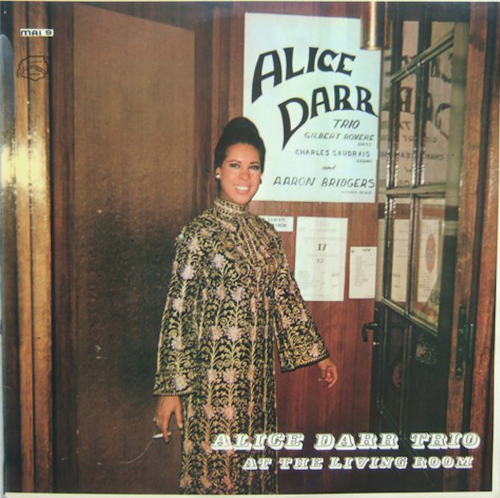
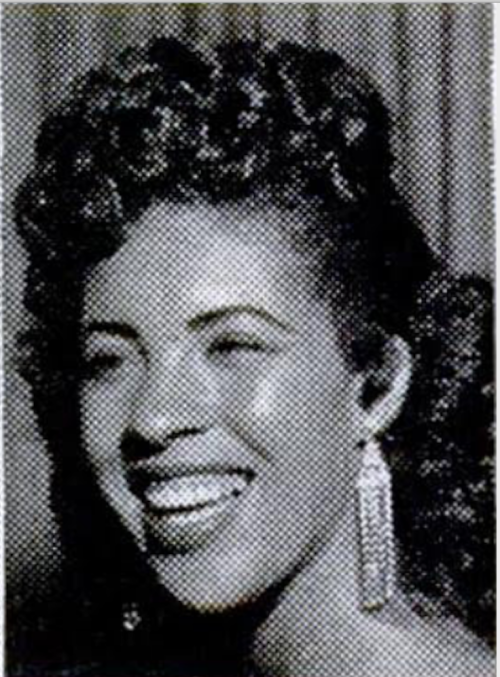
Alice Darr (born 1932) is a recording artist, song writer, and composer. She so impressed legend Dean Martin that when he first heard her sing, he offered her a contract right on the spot.  She was linked romantically with Nat King Cole.  She was one of the first artists to be offered a residency at more than one nightclub.  She was the first woman of colour (in 1955) to appear in national magazine wearing a bikini and she is regarded as one of the most underrated and underappreciated jazz musicians of her time. 

Alice Darr was born in Cumberland, the second of the Darrs' three daughters, who began singing with her sisters when she was a first-grader. With help from their dad, the girls learned to sing in harmony before they could read. Alice grew up on Pine Avenue, and attended the Carver School. Her parents were extremely hard working, and worked several jobs to provide for the family. Her father, James Darr, was also an accomplished jazz musician who worked with the Black Diamonds, the Original Bellhops and other bands and combos. 

Alice not only sang, but at the age of 10 she took her first piano lesson, she also learned the snare drums. She first gained experience playing at the former Cadillac Cocktail Lounge in downtown Cumberland. She won $50 in an amateur contest, and having been billed as the "star" of any number of school and church functions afterward.  She soon afterwards received a call from an agent out of Pittsburgh which resulted in a nation-wide tour. 

At 17, she was a full-time professional with a contract in Pittsburgh. Then began the climb to bigger and better-paying club jobs in various parts of the country and finally in New York itself. Her parents, justly proud and happy about her success, hoped for "that one chance" on television that could someday make their daughter a top-ranking star. As noted by the famous variety show television host, Ed Sullivan, in describing Alice in his New York Daily News column, she has "Plenty of Talent", and in writing for the New York Post, the nationally syndicated show business columnist Earl Wilson described her as, "a lovely, charming, and vivacious girl". An exceptionally talented pianist, Alice Darr enjoyed great success in the music industry as a performer, music composer, and songwriter with two albums and six copyrighted songs. 


An article from Jet magazine from 1961 stated “The next big interracial marriage will involve singer-pianist Alice Darr and a Greek New York night club owner, who has planted a $3,500 ring on her finger.” In 1962 Alice recorded one of the most obscure albums on the Charlie Parker label “I Only Know How To Cry -- Music For Lovers & Losers” It contained moody vocals with just the guitar of Mundell Lowe and bass of George Duvivier for accompaniment! The set included a number of original and unusual tunes. 

Many singers were auditioned but failed to impress. Then an agent steered Mayhew and Mundy to a small club where Darr was singing. She was perfect. Several of the songs on the album were composed by Joan Moskatel, who was little known in 1962 and even less so now. This is a brilliant album on so many levels, particularly Mundy's accompaniment on guitar. 

Alice would go on to perform around the world, meet and work alongside some of the greatest entertainers, and performed in Europe for many years, but Cumberlanders will remember Miss Darr's piano-and-vocal performances at the old Cadillac and at the Alibi, later Al's Chateau which is now a parking lot. Miss Darr played the two night spots for more than a year, alternating with out-of-town professional acts. She sang in New York, Florida, Chicago and Mexican supper clubs for many years and was at The Toast (1068 First Avenue) in Manhattan for a total of about two years, with a time out for an eight-month engagement at The Left Bank. 

Alice was singing on national stages and in front of thousands a night, and briefly dating Nat King Cole, when her shows were over, she was not permitted to join many of her fellow headliners in white hotels and restaurants.  The folks who bought tickets to see her would and could be the same people who would not allow her into their businesses when she was not performing. In 1966 she toured military bases in the Far East before returning to New York's Apartment. In 1969 she was at Dino's in Las Vegas and at Chez Voltaire in Los Angeles. It is supposed that she made the West Coast her home into the 1970s and beyond.

A second album Darr recorded in 1972, which is very rare on a  private label was The Alice Darr Trio Live At The Living Room An excellent vocal jazz and soul LP recorded in France with G. Rovere ( Bass ) - Ch. Saudrais ( drums ) andd M. Hemmeler ( organ ). 

Alice Darr is now 91 years old and living quietly and comfortably at the Allegany Nursing and Rehabilitation Facility in Cumberland. 

(Edited from the Cumberland Times-News & Dusty Groove)

Saturday, 10 June 2023

Jack Turner born 10 June 1921


Jack Turner (June 10, 1921 - December 29, 1993) sometimes billed as the "Singing River Boy" was an American Country singer and musician. 

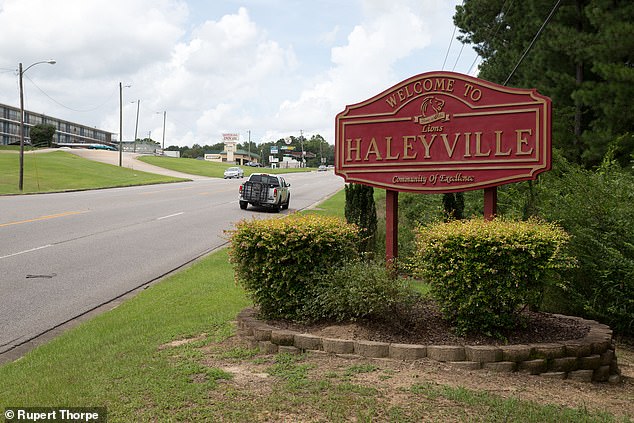
Born Will Jack Turner, he came from Haleyville, Alabama. Jack's father was S.W. Turner, a conductor on the I.C. Railroad. Jack made his first public appearance when he was six years old and sang at a county wide gathering that encompassed all Winston County schools. They say that he wore a blue ribbon on his overalls button until it wore out. His mother gave him a ukelele when he was seven and in a couple years, he got his first guitar, an $8.00 special. Where he lived, there were many good fiddle players and before long, Jack could 'second' to the old-time breakdowns. 

Jack had another artistic bent to him. He also enjoyed painting and drawing. His parents often wondered what to make of his varied interests and which way he would turn. He just about almost chose the artist in him as a career. After he graduated from high school, he headed up to Nashville to enrol in an advertising art school. However, the very first Saturday he was there, he went to WSM's Grand Ole Opry and the itch to sang came back again. And somehow, he managed to work both loves into his life. 

Early 1942 saw some changes in Jack's life. He met a gal named Lorene Davidson who was from northern Alabama. Later, he enrolled in the US Navy. While there, he formed a hillbilly band and entertained his fellow troops. He also kept up his artistic work by drawing charts and illustrations along with his regular duties as Yeoman. 

When he got out of the service, he moved his family to Montgomery, Alabama. By then, he had two daughters, Jacqueline and Dixilyn. He got work as an artist-illustrator at the Air University at Maxwell AFB. And also hooked up with a local radio station, too, but they don't mention which one. If he had any spare time, he spent it composing songs and taking private lessons in portrait painting. Not to mention taking an ICS course in commercial art, selling vacuum cleaners part-time and accepting commissions to do portraits. 

Television came to Montgomery like it did to many cities back then. And Jack auditioned and became a regular member of the first Saturday night hillbilly program, "Bar Twenty" that aired over WCOV-TV. He stayed with that for several months. He was turning to music and singing more and more it seems. When WBAM radio came on the air, Jack was a guest on Shorty Sullivan's first "Deep South Jamboree" program and had stayed with them it appears through the mid-1950s. 


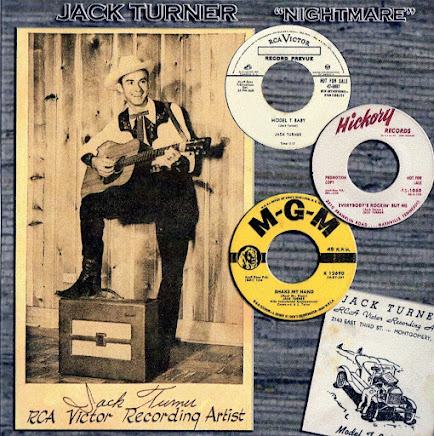
Jack eventually got his own show on WBAM and signed on with the RCA Victor record label in 1954. Some of the releases he had back then included: "Shoot I Reckon I Love You" backed with "Walkin' A Chalk Line"; "If I Could Only Win Your Love" backed with "I'm Getting Married Tonight".Turner recorded with some of the best studio musicians that Nashville had at that time and despite fine recordings, that certain hit record wouldn't roll along with RCA. After a total of six discs released on the label (the last one in November 1955), the company dropped Turner from its roster.

However, Turner had built himself quite a following, especially in Alabama. He started two new shows on his own, besides his regular performances on the Deep South Jamboree. On June 6, 1955, the first episode of his half-hour long "Jack Turner Show" aired on WFSA-TV in Montgomery. One June 14, Turner also started another TV show, the "Alabama Jubilee" on the same station. The shows featured his regular band, the Singing River Boys, which included Jimmy Porter on steel guitar. Also appearing with him on TV was his daughter Dixie at times. 

Although Turner's homebase remained Montgomery, he still held his ties to Nashville and signed a new recording contract with Hickory Records in May 1956, but after two records that were unsuccessful he changed labels again to MGM in 1957. Again, after only a few releases, no more records appeared afterwards by Turner and Billboard ceased mentioning him or his shows. It seems, he turned his back on the music business, limiting his career to the 1950s. 

Turner nevertheless enjoyed fishing as well as painting and several of his artworks turned up in the Montgomery area. The themes for his drawings were mostly taken from the Alabama countryside, inlcuding old barns, creeks, and the cotton fields. Nevertheless, Turner also continued singing and entertained his family with his musical abilities, 

The passing date of Jack Turner has been unproven for a long time. At first the suspected date was August 22, 1997, but recently it has been determined that he died on December 29, 1993 and is buried at Greenwood Cemetery in Montgomery.

(Edited from Hillbilly Music & Mellow’s Log Cabin Blog)

Friday, 9 June 2023

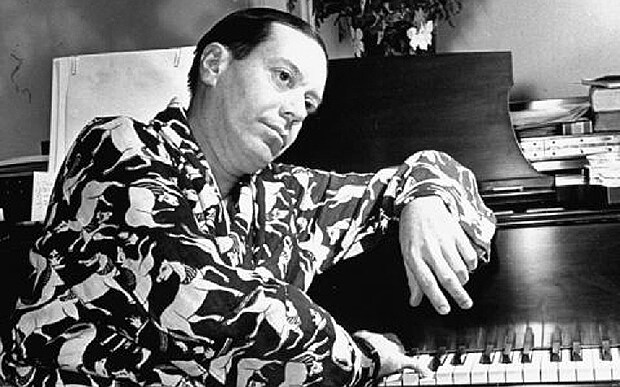
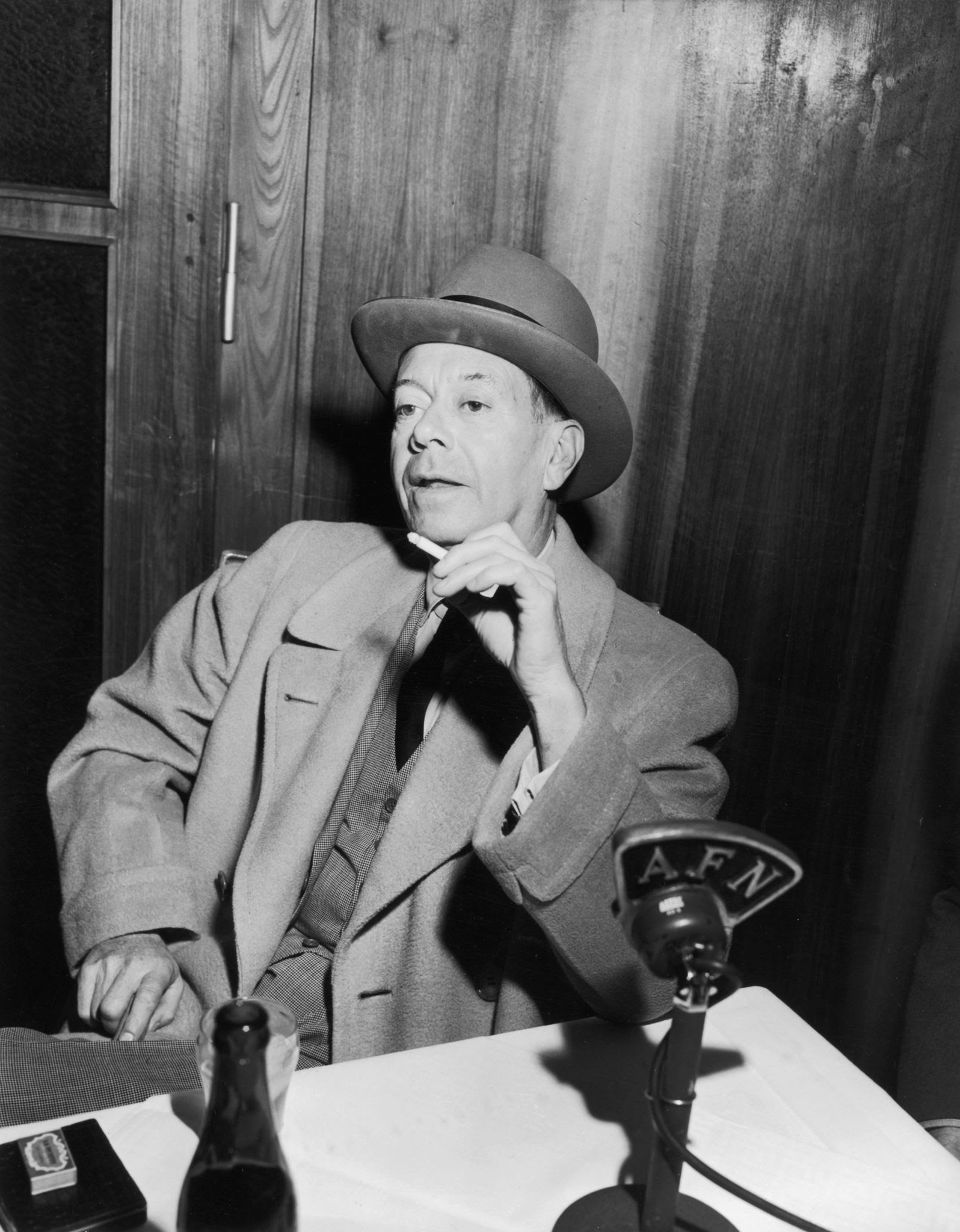
Cole Porter born 9 June 1891


Cole Albert Porter (June 9, 1891 – October 15, 1964) was an American composer and songwriter. Many of his songs became standards noted for their witty, urbane lyrics, and many of his scores found success on Broadway and in film. 

Cole Porter was born in Peru, Indiana. His mother gave him the middle name Albert later in his life. With a wealthy grandfather, James Omar Cole, Porter had a comfortable childhood, during which he studied the violin and piano. He preferred the piano, and was soon practicing for two hours every day. At age 11, he wrote a song that his mother helped him publish. 

While an undergrad at Yale University, Porter wrote the fight song "Bulldog," as well as other pieces for student productions; his output during these years totaled approximately 300 songs. As his grandfather didn't want him to have a career in music, Porter was dispatched to Harvard's law school. However, he soon switched to studying music (though his grandfather was told he continued to be a law student). 

After his first musical, See America First, made an unsuccessful appearance on Broadway in 1916, Porter went to France the next year. World War I was still in progress, and he sent home reports that he had joined the French Foreign Legion. Some writers have been skeptical about Porter's claim, but the Legion lists Porter as one of its soldiers and displays his portrait at its museum in Aubagne. By some accounts, he served in North Africa and was transferred to the French Officers School at Fontainebleau, teaching gunnery to American soldiers. He still participated in an active Parisian social life. 

Porter maintained a luxury apartment in Paris, where he entertained lavishly. His parties were extravagant and scandalous and in 1919, he married Linda Lee Thomas, a widowed socialite. Porter's life with Thomas featured travel around Europe. The two set up a home in Paris, and later rented the Palazzo Rezzonico in Venice, Italy. Porter didn't depend on music for an income; in addition to his wife's money, he received financial support from his family. However, he continued to create songs, with his numbers appearing in some London shows. 


Porter wrote "Let's Do It (Let's Fall In Love)" for Paris (1928). The song was a hit, and the beginning of a successful Broadway career that reached new heights in the 1930s. For Gay Divorce (1932), which starred Fred Astaire, Porter wrote "Night and Day." Anything Goes (1934) contained more popular numbers, including "I Get a Kick Out of You" and "You're the Top." 

Other notable songs Porter wrote during this decade are "Begin the Beguine" (1935) and "It's De-Lovely" (1936). His talents found a home on the big screen as well: "Easy to Love" (1936) "I've Got You under My Skin" (1936) and "In the Still of the Night" (1937) were all written for the movies. 

In 1937, Porter was in a riding accident; his horse fell on top of him, crushing both of his legs. The after-effects of his injuries would force Porter to endure more than 30 operations and years of pain. However, in spite of this, he continued to work, producing memorable songs like "Friendship" (1939) and "You'd Be So Nice to Come Home To" (1942). 

Some of Porter's post-accident Broadway shows were successful, if forgettable, such as Something For The Boys (1943). He had a huge flop with Around the World (1946), directed by and starring Orson Welles. In Kiss Me, Kate (1948), adapted from William Shakespeare's The Taming of the Shrew, Porter once again had a musical hit, receiving a Tony award for his work. The show's songs include "Too Darn Hot" and "I've Come To Wive It Wealthily In Padua." 

Porter's wife died in 1954. Despite his years of extramarital homosexual relationships, she had been a source of friendship and support, and her death was a blow for Porter. He continued to work on both Broadway shows and films—gaining an Academy award nomination for "True Love," written for High Society (1956)—but he also escaped into alcohol and painkillers. 

By 1958, due to his accident, Porter's injuries caused a series of ulcers on his right leg. After 34 operations, it had to be amputated and replaced with an artificial limb. Afterwards Porter never wrote another song and spent the remaining six years of his life in relative seclusion, seeing only intimate friends. He continued to live in the Waldorf Towers in New York in his memorabilia-filled apartment. On weekends, he often visited an estate in the Berkshires, and he stayed in California during the summers. Porter died of kidney failure at age 73 on October 15, 1964, in Santa Monica, California. 

(Edited from Biography.com & Wikipedia)

Thursday, 8 June 2023

Nancy Sinatra born 8 June 1940


Nancy Sandra Sinatra (born June 8, 1940, in Jersey City, New Jersey) is an American singer and actress. She is the daughter of singer/actor Frank Sinatra from his first wife, Nancy Barbato, and remains known for her 1966 signature hit "These Boots Are Made for Walkin'". 

Growing up as the child of one of the greatest icons in American music can't be easy, but Nancy Sinatra managed to create a sound and style for herself fully separate from that of her (very) famous father, and her sexy but strong-willed persona has endured with nearly the same strength as the image of the Chairman of the Board. Nancy Sinatra was born in the Summer of 1940, while her father, Frank Sinatra, was singing with the Tommy Dorsey Orchestra; as the daughter of show business royalty, Nancy grew up in the spotlight, and made her first appearance on television with her father in 1957. 

It wasn't long before Nancy developed aspirations of her own as a performer — she had studied music, dancing, and voice through much of her youth — and in 1960 she made her debut as a professional performer on a television special hosted by her father and featuring guest star Elvis Presley, then fresh out of the Army. After appearing in a number of movies and guest starring on episodic television, Nancy was eager to break into music, and she signed a deal with her father's record label, Reprise. However, her first hit single, 1966's "These Boots Are Made for Walkin'," made it clear she had the talent and moxie to make it without her father's help. 

Sounding both sexy and defiant, and belting out a definitive tough-chick lyric over a brassy arrangement by Bill Strange (and with the cream of L.A.'s session players behind her), "These Boots Are Made for Walkin'" was an immediate and unstoppable hit, and took the "tuff girl" posturing of the Shangri-Las and the Ronettes to a whole new level. A number of hits followed, including "How Does That Grab You," "Sugar Town," and the theme song to the James Bond picture You Only Live Twice. Nancy also teamed up with her father for the single "Somethin' Stupid," which raced to the top of the charts in 1967. 


Most of Nancy's hits were produced by Lee Hazlewood, who went on to become a cult hero on his own and recorded a number of memorable duets with her, including "Sand," "Summer Wine," and the one-of-a-kind epic "Some Velvet Morning." Nancy reinforced her "bad girl" persona in 1966 with co-starring role opposite Peter Fonda in The Wild Angels, the Roger Corman film that helped kick off the biker flick cycle of the 1960s.

In the early '70s; she also teamed up with Elvis Presley in the 1968 movie Speedway. Nancy continued to record into the early '70s, but in 1970 she married dancer Hugh Lambert (a brief marriage to singer and actor Tommy Sands ended in 1965), and she devoted most of her time to her new life as a wife and mother, as well as working with a number of charitable causes. 

In 1985, she published the book Frank Sinatra: My Father, and became increasingly active in looking after her family's affairs; she published a second book on Frank Sinatra in 1998 and currently oversees the Sinatra Family website. In 1995, Nancy returned to the recording studio with a country-flavored album called One More Time, and she helped publicize it by posing for a sexy photo spread in Playboy magazine. Nancy launched a concert tour in support of the album, and in 2003 teamed up with Hazlewood to record a new album together, Nancy & Lee 3, which sadly was not released in the United States. 

However, Nancy soon returned to the recording studio at the urging of longtime fan Morrissey, and in the fall of 2004 she released a new disc simply entitled Nancy Sinatra, an ambitious set which included contributions from members of U2, Pulp, Calexico, Sonic Youth, Jon Spencer Blues Explosion, and other contemporary rock performers. The album's release was followed by more live work from Nancy, including a memorable appearance at Little Steven's International Underground Garage Rock Festival 2004, in which she performed songs from her new album as well as "These Boots Are Made for Walkin" backed by an all-star band (including a horn section) and flanked by dozens of frugging go-go dancers. 

Over the next two decades, Sinatra would continue to make appearances on-stage and onscreen while turning her attention to archival recording projects. She released Shifting Gears, a collection of 15 unreleased Billy Strange-produced recordings of show tunes, all excavated from her personal vaults, on her Boots Enterprises imprint in 2013. Light in the Attic released the compilation Start Walkin' 1965-1976 in 2021; it was the first in the label's reissue campaign called the Nancy Sinatra Archival Series. Several of her albums were reissued in lush packing with new liner notes and bonus tracks. The campaign dovetailed with the label's reissues of Lee Hazlewood material and in 2023, Nancy & Lee Again received its first reissue since its 1972 release. 

(Edited from AllMusic)