Tuesday, 7 March 2023

Townes Van Zandt born 7 March 1944


John Townes Van Zandt (March 7, 1944 – January 1, 1997) was an American singer-songwriter. His musical style has often been described as melancholy and features rich, poetic lyrics. During his early years, Van Zandt was respected for his guitar playing and fingerpicking ability. 

Van Zandt was born in Fort Worth, Texas. His father was in the oil business and the family moved around a lot to Montana, Colorado, Minnesota, Illinois, among other places which accounted for his sometimes vague answers to questions of where he "came from." In 1962, he enrolled at the University of Colorado Boulder, wrote poetry, and listened to records by Lightnin' Hopkins and Hank Williams. In the spring of his second year, his parents flew to Boulder to bring Townes back to Houston, worried about his binge drinking and episodes of depression. 

They admitted him to the University of Texas Medical Branch in Galveston, where he was diagnosed with manic depression. He received three months of insulin shock therapy, which erased much of his long-term memory. In 1965, he was accepted into the University of Houston's pre-law program. Soon after, he attempted to join the Air Force, but was rejected because of a doctor's diagnosis that labelled him "an acute manic-depressive who has made minimal adjustments to life". After Townes' father died in January 1966 at age 52, he quit school and went on the road for the first time having been inspired by his singer-songwriter heroes to pursue a career in playing music. 

In 1965, Van Zandt began playing regular shows at the Jester Lounge in Houston for $10 per night. After the Jester closed, he began to regularly perform (and occasionally live) at Sand Mountain Coffee House. In these Houston clubs, he met fellow musicians Lightnin' Hopkins, Guy Clark, Jerry Jeff Walker, and Doc Watson. His repertoire consisted mostly of covers of songs written by Hopkins, Bob Dylan, and others, as well as original novelty songs like "Fraternity Blues." In 1966, Harris Van Zandt had encouraged his son to stop playing covers and write his own songs. 


In 1968, Van Zandt met songwriter Mickey Newbury in a Houston coffee shop. Newbury persuaded Van Zandt to go to Nashville, Tennessee, where he was introduced by Newbury to the man who became his longtime producer, "Cowboy" Jack Clement. The years between 1968 and 1973 proved to be his most prolific era. Van Zandt released six albums during the time period. Among the tracks written for these albums were "To Live Is to Fly", "Pancho and Lefty", and "If I Needed You". These songs eventually raised Van Zandt to near-legend status in American and European songwriting circles. 

In the mid-1970s, Van Zandt split from his longtime manager, Kevin Eggers. He found a new manager, John Lomax III (grandson of the famed folk music historian John Lomax), who set up a fan club for Van Zandt. In 1978, the singer fired Lomax and re-hired Eggers. He soon signed with Eggers' new label, Tomato Records The following year, he recorded Flyin' Shoes; he did not release another album until 1987's At My Window. Despite critical acclaim, he remained a cult figure. He normally played small venues (often to crowds of fewer than fifty people) but began to move towards playing larger venues (and even made a handful of television appearances) during the 1990s. For much of the 1970s, he lived a reclusive life outside of Nashville in a tin-roofed, bare-boards shack with no heat, plumbing or telephone, occasionally appearing in town to play shows. 

Van Zandt was addicted to heroin and alcohol throughout his adult life. At times, he became drunk on stage and forgot the lyrics to his songs. At one point, his heroin habit was so intense that he offered Kevin Eggers the publishing rights to all of the songs on each of his first four albums for $20. At various points, his friends saw him shoot up not just heroin, but also cocaine, vodka, as well as a mixture of rum and Coke. 

As a result of Van Zandt's constant drinking, Harold Eggers, Kevin's brother, was hired as his tour manager and 24-hour caretaker in 1976, a partnership that lasted for the rest of the singer's life. His battles with addiction led him into rehab nearly a dozen times throughout the 1970s and 1980s. Medical records from his recovery centers indicate that he believed his drinking had become a problem around 1973, and that by 1982 he was drinking at least a pint of vodka daily. 

Van Zandt continued writing and performing through the 1990s, though his output slowed noticeably. He had enjoyed some sobriety during the early 1990s, but actively abused alcohol during his final years. In 1994, he was admitted to the hospital to detox, when a doctor told Jeanene Van Zandt that trying to detox Townes again could potentially kill him. He grew increasingly frail with friends noting that he seemed to have "withered." 

Townes Van Zandt died in the early morning hours of January 1, 1997, at the age of 52. His official cause of death was "natural" cardiac arrhythmia. 

(Edited from Wikipedia) 

Monday, 6 March 2023

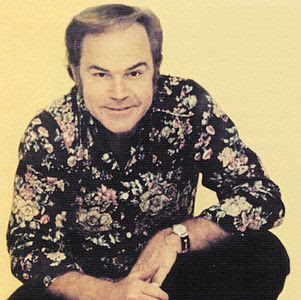
Red Simpson born 6 March 1934


Red Simpson (March 6, 1934 – January 8, 2016) was an American country music singer and songwriter best known for his trucker-themed country songs. 

Joseph Simpson was born in Higley, Arizona to John and Lille Simpson, migrant farmworkers born in the South and driven west by the Dust Bowl. He was the youngest of 12. His father played the banjo, his sisters sang harmony. Music was ever-present in the home. The Simpsons arrived in Bakersfield in 1937. Young Red (nicknamed for his red hair) mowed lawns and shined shoes. He graduated from Bakersfield High. 

Simpson was just 18 when he shipped off to Korea. Aboard the U.S.S. Repose, a hospital ship, he met some fellow sailors who played music. They formed the Repose Ramblers, and every night aboard ship, right before the evening movie, they sang and picked for 30 minutes. Simpson mustered out of the Navy in 1955 and went to Bakersfield College on the G.I. Bill to learn sheet-metal work. What he really wanted to do was get on stage and pick guitar in the Bakersfield area’s many nightclubs. He eventually started studying piano, getting tips from Buck Owens, George French, and Lawrence Williams, and in 1956, when Williams left Fuzzy Owen’s band at the Clover Club, Owen offered Simpson the job. After working for next to nothing for so long, Simpson was finally playing for what the boys called “whiskey money.” 

He then got a job replacing Buck Owens at the Blackboard Club on weekends. Simpson who was influenced by Owens and Merle Haggard, helped forge a more twangy, edgier alternative to the then-dominant Nashville country sound. The Bakersfield sound, as it came to be called, channelled the distinct agri-industrial working culture of the Central Valley and incorporated flourishes of rock and Latin music. Simpson epitomized the working-class elements of this classic California music. Simpson began writing songs with Owens in 1962, including the Top Ten hit "Gonna Have Love." 


In 1965, Capitol Records producer Ken Nelson was looking for someone to record some songs about trucking. His first choice was Haggard, who wasn't interested, but Simpson readily agreed. In Bakersfield, working-class life revolved around State Route 99. Although Simpson never drove a truck, big rigs were the lifeblood of his highway hometown. His first record, Tommy Collins' "Roll, Truck, Roll," became a Top 40 country hit and Simpson recorded an album of the same name. That year he offered up two more trucking songs, both of which made it to the Top 50 or beyond. As a songwriter, he scored his first number one hit with "Sam's Place," recorded by Buck Owens. After that, Simpson decided to become a full-time writer. He returned to performing in 1971 with his Top Five hit "I'm a Truck," which had been written by postman Bob Staunton. 

In 1972, he debuted on the Grand Ole Opry and had two more "truck" hits for Capitol. In 1976, Simpson signed to Warner Brothers and released "Truck Driver's Heaven." The following year, he teamed up with Lorraine Walden for a series of duets that included "Truck Driver Man and Wife." In 1979, Simpson appeared for the last time on the charts with "The Flying Saucer Man and the Truck Driver." Haggard recorded his song "Lucky Old Colorado" in 1988. Later that year Simpson was diagnosed with skin cancer and underwent surgery. He fully recovered and continued his writing and performing career. 

In the 1995, Red re-entered the studio to record a pair of duets with Junior Brown  "Semi Crazy" and "Nitro Express". Simpson performed frequently in the Bakersfield area, including a regular Monday night gig at Trout's in Oildale. Simpson's most recent release is "Hey, Bin Laden". He was also working on a project with Windsor Music tentatively entitled The Bard of Bakersfield. Simpson also appeared alongside Bakersfield business owner Gene Thome on his ode to Simpson, Haggard, and Owens "It's a Bakersfield Thing" released in early 2015. 

He performed up until the last weeks of his life, making twice-weekly regular appearances at Bakersfield clubs to appreciative and mostly elderly audiences especially on Monday nights at Trout’s nightclub in Oildale. Simpson had suffered a heart attack on the 18th December 2015, after returning from a concert tour of the Pacific Northwest. Many friends and well-wishers had hoped he was on the mend and might even return to his familiar Monday night gig, but he died on January 8, 2016, at a hospital in Bakersfield. He was 81. He was 81 years old. 

Simpson completed his most recent album in December 2015 entitled Soda Pops and Saturdays with Mario Carboni. The album was recorded in Portland, Oregon, and featured 12 tracks. Simpson plays guitar and sings lead and backup vocals on this album. Carboni plays piano, strings, and backup vocals. The album was scheduled to be released on February 4, 2016; instead, it was released on January 9, 2016, after his death. Simpson was posthumously honoured at the 2016 Ameripolitan awards. His son David Simpson accepted the "Founder of the Sound" award on his behalf. 

(Edited from Wikipedia, Los Angeles Times & The Bakersfield Californian)

Sunday, 5 March 2023

J.B. Lenoir born 5 March 1929


J. B. Lenoir (March 5, 1929 – April 29, 1967) was an American blues guitarist and singer-songwriter, active in the Chicago blues scene in the 1950s and 1960s. 

Lenoir was born in Monticello, Mississippi. His full given name was simply "J. B."; the letters were not initials. Lenoir's guitar-playing father introduced him to the music of Blind Lemon Jefferson, which became a major influence. Lenoir began travelling to play music in his teens. He lived in Gulfport and worked at the Splendid Cafe there at one point in the 1940s, and later worked with the blues artists Sonny Boy Williamson II and Elmore James in New Orleans. He was later influenced by Arthur Crudup and Lightnin' Hopkins. Lenoir had one of the most beautiful voices in postwar blues, and on his recordings his musicians gave him sparse, skeletal accompaniment, which framed his vocals perfectly. He was certainly one of the most original sounding of the blues singers. 

In 1949, he moved to Chicago, where Big Bill Broonzy helped introduce him to the blues community. He began to perform at local nightclubs, with musicians such as Memphis Minnie, Big Maceo Merriweather, and Muddy Waters, and became an important part of the city's blues scene. He began recording in 1951 for J.O.B. Records and Chess Records. His recording of "Korea Blues" was licensed to and released by Chess, as having been performed by J. B. and his Bayou Boys. His band included the pianist Sunnyland Slim, the guitarist Leroy Foster, and the drummer Alfred Wallace. His more successful songs included "Let's Roll," "The Mojo" (featuring saxophonist J. T. Brown) and the controversial "Eisenhower Blues," which Parrot Records forced him to re-record as "Tax Paying Blues." 


Lenoir was known in the 1950s for his showmanship, particularly his zebra-patterned costumes, and his high-pitched vocals. He became an influential electric guitarist and songwriter, and his penchant for social commentary distinguished him from many other bluesmen of the time. Lenoir recorded his most enduring number, "Mama Talk to Your Daughter," in 1954 for the Parrot label. 

He was quite prolific between ’54 and ’58 for both the Parrot and Chess labels. Lenoir's recordings are also distinctive for their excellent saxophone arrangements and unconventional drumming (Alex Atkins and Ernest Cotton were often on sax with Al Gavin on drums). Other blues standards include “Don't Dog Your Woman" and "Don't Touch My Head!!!" (1956).

In 1963, he recorded for USA Records as J. B. Lenoir and his African Hunch Rhythm, having developed an interest in African percussion. He was rediscovered by Willie Dixon, who recorded him playing acoustic guitar, with the drummer Fred Below, on the albums Alabama Blues and Down in Mississippi (inspired by the Civil Rights Movement and Free Speech Movement).These albums are quite astonishing given the social turmoil of the period as racism, Civil Rights, poverty, and the war. Lenoir seemed to vocalize the intense situations. No blues singer had ever or since covered such poignant themes. Lenoir toured Europe and performed in 1965 with the American Folk Blues Festival in the United Kingdom. Lenoir's work had overtly political content relating to racism and the Korean and Vietnam wars. 

Lenoir was likely about to achieve greater fame when he died on April 29, 1967, in Urbana, Illinois, at the age 38, of injuries he had suffered in a car crash three weeks earlier. John Mayall paid tribute to the fallen bluesman with the songs "I'm Gonna Fight for You, J. B." and "The Death of J. B. Lenoir," though in both songs, Mayall mispronounces Lenoir's name. 

The 2003 documentary film The Soul of a Man, directed by Wim Wenders as the second installment of Martin Scorsese's series The Blues, explored Lenoir's career, together with those of Skip James and Blind Willie Johnson. In 2011, Lenoir was inducted into the Blues Hall of Fame. 

(Edited from Wikipedia & All About Jazz)

Saturday, 4 March 2023

Bobby Womack born 4 March 1944

Bobby Womack (March 4, 1944 – June 27, 2014) was an American singer, songwriter, musician, and record producer who, in a professional career that lasted nearly six decades, worked closely with leading musicians ranging from Sam Cooke, Ray Charles, Wilson Pickett and Sly Stone to Damon Albarn and Gorillaz. 

Robert Dwayne Womack was born in Cleveland, Ohio, the third of five brothers. His father, Friendly Womack, spotted Bobby's talent on the guitar at an early age, and Bobby was only 10 when he and the rest of his family started touring the midwest gospel circuit as the Womack Brothers, accompanied by their mother on the organ and their father on the guitar. 

They soon came to the attention of Cooke, who signed them to his label SAR in 1961. Cooke changed their name to the Valentinos, relocated them to Los Angeles and encouraged them to take the same journey from gospel to secular R&B that he had taken. Bobby's speciality was to contribute unorthodox rhythm guitar lines, although he was left-handed, he played a right-handed guitar upside down without changing the stringing. He would occasionally sing lead vocals. He was also the band's main songwriter: a 1964 single he wrote for the Valentinos, It's All Over Now, was covered by the Rolling Stones and taken to the top of the UK chart. He later toured with the Stones and appeared on their 1986 album Dirty Work. 

Womack was also a member of Cooke's band, touring and recording with him from 1961. Cooke's death in December 1964 hit him hard. He grew close to Cooke's widow, Barbara, 10 years his senior. When they married, only three months after Cooke's funeral, it was seen by many as a betrayal. Womack fell out with his brothers, was booed at concerts and was severely beaten up by Barbara's brother. The first solo records he recorded for the labels Him and Checker were all but ignored. 

Undeterred, Womack continued to work as a session musician. Between 1965 and 1968 he toured and recorded with Ray Charles, quitting, he claimed, because of Charles's tendency to pilot his own personal jet. He later moved to Memphis to work at Chips Moman's American Studios, where he played the guitar on recordings by Presley (Suspicious Minds), Franklin (Rock Steady), Springfield (Son of a Preacher Man), the Box Tops (The Letter) and Pickett (I'm a Midnight Mover). 


Womack also wrote 17 songs during this period, and gave all of them to Pickett; with none of his own material left, Womack cut an album of covers in 1968. Ironically, his unorthodox R&B versions of Fly Me to the Moon and California Dreamin' became Womack's first solo hits in the US. Further collaborations followed: in 1969 he started writing with the jazz guitarist Gabor Szabo; in 1970 he co-wrote a track on Janis Joplin's last album, Pearl (his sportscar also inspired Joplin to write Mercedes Benz); the following year Womack's guitar, bass and backing vocals were crucial to Sly Stone's LP There's a Riot Going On. 

By this time, Womack's personal life was deteriorating. He split with Barbara in 1970 when she found that he had a relationship with her 18-year-old daughter Linda. (Linda later married Bobby's younger brother Cecil and formed the duo Womack & Womack). But, despite a wrecked marriage and a cocaine habit, Womack was to start his most successful spell as a solo singer. He signed to United Artists, where he chalked up R&B hits including That's the Way I Feel About 'Cha and Woman's Gotta Have It. 

As the R&B world moved from funk to disco, Womack baffled his fans by recording a country album (BW Goes C&W), and was dropped by his label in 1976. That year, he married Regina Banks; two years later, their son, Truth Bobby, died aged four months old. Womack turned again to cocaine, and his subsequent albums suffered.  Salvation came in the form of a 1980 hit single, Inherit the Wind, which he sang and co-wrote with Wilton Felder of the Crusaders, and his solo career picked up once more. The Poet (1981) and The Poet II (1984) saw him move into the modern soul pioneered by Teddy Pendergrass and Luther Vandross. Both albums were critical and commercial successes (The Poet II was the NME's album of the year in 1984) but Womack saw little money from them, and spent much of the decade in protracted legal wrangling with his record label. 

There was a scattering of albums through the late 80s and 90s (including an LP of Christmas carols in 1999) and some odd collaborations (with Living in a Box, Todd Rundgren, the Wu-Tang Clan and Lulu). Womack was inducted into the Rock and Roll Hall of Fame in 2009. On January 1, 2013, Womack admitted that he struggled to remember his songs and other people's names, and later he was diagnosed with early stages of Alzheimer's disease. 

Womack died at his home in Tarzana, California at the age of 70 on June 27, 2014. 

(Edited from John Lewis obit @ The Guardian & Wikipedia)

Friday, 3 March 2023

Doc Watson born 3 March 1923


Arthel Lane "Doc" Watson (March 3, 1923 – May 29, 2012) was an American guitarist, songwriter, and singer of bluegrass, folk, country, blues, and gospel music. For almost 50 years, Doc Watson was the most illustrious name in traditional American folk music. A superb, original guitarist and a singer of warmth and simplicity, he set countless musicians on the road to careers in folk music. Probably no folk performer of his time has inspired greater admiration and affection. 

Watson was born and grew up in the small community of Deep Gap in the Blue Ridge mountains of northwestern North Carolina. He lost his sight as a result of an eye infection in early childhood, and attended the Governor Morehead School for the Blind in Raleigh. But he was always surrounded by music: his mother, Annie, sang; his father, General Dixon Watson, played the banjo. Numerous other relatives were musicians, singers or storytellers. 

Doc himself first learned the harmonica and banjo, then at 13 began teaching himself the guitar on an instrument bought for him by his father for just a few dollars. No investment in a young musician ever paid such dividends. In his hands, the use of the guitar in American folk music expanded radically. His folklorist friend Ralph Rinzler would later write that Watson was "single-handedly responsible for the extraordinary increase in acoustic flatpicking and fingerpicking performance. His flatpicking style has no precedent in early country music history." In bluegrass, too, his adaptations of traditional fiddle tunes to the guitar allowed the instrument to go beyond rhythm-setting and take on a leading role. 

Yet Watson first came to the attention of folk music enthusiasts beyond his home region only as a supporting player. In 1960 Rinzler recorded the old-time banjo player and singer Clarence Ashley in a freewheeling session with friends and neighbours, including Watson. The result, two Folkways label LPs of Old Time Music at Clarence Ashley's, alerted folk enthusiasts to the talent of the guitarist, who until then had played chiefly in a local rockabilly band. In 1961 Ashley, Watson and two other participants in the Ashley sessions, Clint Howard and Fred Price, gave a memorable performance at a concert in New York, staged by the Friends of Old-Time Music. Then in 1963 and 1964, at Rinzler's instigation, Watson appeared at the Newport Folk festival, and in 1963 he recorded his first solo album, for Vanguard. 


For two decades, Watson's companion on recordings and live was his son, Merle, a gifted guitar-player and banjoist. Often accompanied by the bass guitarist T Michael Coleman, they toured all over the world, playing at venues from concert halls to folk clubs, and made many albums, among them Doc Watson & Son, Doc Watson on Stage, Ballads From Deep Gap, Pickin' the Blues and Then and Now. The Watsons were also sought as collaborators by other musicians, notably the Nitty Gritty Dirt Band for the triple LP Will the Circle Be Unbroken (1972), a record that revived their career, which had flagged after interest in folk music waned in the late 60s. 

Merle died in a tractor accident on his farm in 1985 at the age of 36, and for a time Watson found it hard to work, but he resumed with the guitarist Jack Lawrence or with his own grandson, Richard, with whom he recorded Third Generation Blues in 1999. Richard and Coleman also formed part of the band Frosty Morn with which Watson played in the early 2000s. A collaboration with the banjoist David Holt, Legacy, won a Grammy in 2002. Altogether Watson won seven Grammys, as well as a 2004 Grammy lifetime achievement award. He also received a National Heritage Fellowship and, in 1997, a National Medal of the Arts, presented by President Bill Clinton, who remarked: "There may not be a serious, committed babyboomer alive who didn't at some point in his or her youth try to spend a few minutes at least trying to learn to pick a guitar like Doc Watson." 

The more than 50 albums to Watson's name testify to the extraordinary breadth of his musical interests and skills. He made several recordings of backwoods old-time music with members of his family, including his wife, Rosa Lee, and her father, the fiddler Gaither Carlton, yet he could cross from that rugged milieu to a Nashville studio and work easily with country music's leading session musicians on albums such as Good Deal (1968), while on the 1995 album Docabilly he recalled his rockabilly days, 40 years on. 

In the last couple of decades, weary of the road, Watson had made fewer personal appearances. One booking he always kept, though, was the annual music event MerleFest, held in memory of his son at Wilkesboro, North Carolina, every April since 1988. 

On May 21, 2012, Watson fell at his home. He was not seriously injured in the fall, but an underlying medical condition prompted surgery on his colon. Watson died on May 29, 2012, at Wake Forest Baptist Medical Center of complications following the surgery at the age of 89. He is buried in the Merle and Doc Watson Memorial Cemetery, Deep Gap, Watauga County, North Carolina, with his wife and son. 

(Edited from Tony Russell @ The Guardian & Wikipedia)

Wednesday, 1 March 2023

Kenny Baker born 1 March 1921


Kenny Baker MBE (1 March 1921 – 7 December 1999) was an English jazz trumpet, cornet and flugelhorn player, and a composer. 

Kenny Baker was born in Withernsea, Yorkshire. Both his parents were musical and he credited his mother with giving him a thorough musical grounding in theory and harmony at a very early age. This stood him in good stead when he wanted to arrange and compose. He began by playing piano, sax, violin and piano-accordian before switching to tenor horn and then cornet. While in Withernsea he played in the Gospel Mission Band and by the age of 17 was leading his own band at the Queens hotel.

When the family moved to Hull he played local gigs as well as playing in the West Hull Silver Band. In 1940 he came to London with comedian Sandy Powell for a three week season at the London Coliseum. He worked in the theatre first with Lew Stone for the revue Under your Hat and then in the Jack Buchanan show Top Hat and Tails. He worked with Ambrose, Maurice Winnick and Ken "Snakehips" Johnson before joining the RAF in 1942. Here he began his big band training playing in the RAF Fighter Command Band and also the American Base Command Dance Band. He also called up, when available to do forces programmes  with Ambrose, the Squadronaires, Geraldo and Sidney Gross until his discharge from the RAF. 

Baker was first heard on record in a British public jam session in 1941 and quickly established a strong reputation in London clubs. He was brass band trained and had faultless technical command. In 1945 the young Baker was lead trumpeter with Ted Heath's post war orchestra, and with Jack Parnell is credited with stopping Ted Heath having the "sweet" band that he wanted. They consistently brought a jazz feel to the music. Baker was a featured soloist in the Ted Heath band, he was by now a virtuoso performer and recorded "Bakerloo Non-Stop" for the Decca record label in 1946. He played a tenor saxophone solo on "Johnny Gray", the piece recorded by both Baker and the drummer Jack Parnell. He  remained with Heath until the end of 1948, occasionally returning for one off performances through to the 1990s. 


In the 1950’s he led and recorded with a variety of bands including probably his best jazz group the 'Baker's Dozen' that had a regular late night broadcast on the BBC from 1952 for many years with the Light Programme series Let's Settle For Music. By now he was constantly in demand as a freelance in the theatre, for broadcasts, films as well as playing theatres as a solo variety act. 

In this period he played with many top USA stars including Benny Goodman, Louis Armstrong, Billy May, Bobby Hackett, Bing Crosby, Billy Eckstine and even Billie Holiday at London's Festival Hall in 1954. He he was regularly performing in studios with his numerous jazz recordings appearing as a quartet for Parlophone, and groups of all kinds for Nixa and others. 

A notable appearance on soundtrack for Baker was a long hot trumpet solo mimed by Kay Kendall (who like Baker was a native of Withernsea, a small Yorkshire coastal town) in the 1954 film Genevieve. He regularly emerged to play at jazz clubs often with co-trumpeter John McLevey. Baker's skills brought him wider prominence, starting in 1955 when he appeared at Blackpool with the up-and-coming comic pair of Morecambe and Wise. 

He also went on to share top billings with other big comedy variety acts of the day, such as Tommy Trinder, Benny Hill and Ken Dodd. Appearing on the BBC's Big Band Special in 1962, leading British jazzman John Dankworth said, "Everybody regarded him on a different level to any other trumpeter in the British Isles. He was a world class performer." 

His career saw him play with alongside Frank Sinatra, Petula Clark, Sammy Davis, Jr. and Tony Bennett. He also performed on James Bond soundtracks and with The Beatles. In addition, he was also heard on hundreds of TV programmes including The Muppet Show, through his involvement with the Jack Parnell Orchestra, which played for the now-defunct ATV company. In 1962, he recorded a light jazz set with Petula Clark at the Pye Studios at Great Cumberland Place, live and late at night with the Kenny Baker Trio. 

He often appeared on BBC Radio's Sounds of Jazz programme introduced by Peter Clayton in the 1970s with recordings made at the Maida Vale Studios in London and broadcast late on Sunday evenings. He formed the 'Best of British Jazz', which was a show with Don Lusher and Betty Smith. This group toured regularly in 1976 and after the death of Harry James in 1983, he was asked by the James Foundation to take over their orchestra; a request he declined.  His group, Baker's Dozen, reformed in 1993 for four sell-out nights at Ronnie Scott's in Birmingham, releasing an album of the set on Big Bear Records, The Boss Is Home (1994). 

He was presented with the best trumpet player title for the third time at the BT British Jazz Awards in 1999. He was also awarded the MBE in the Queen's Birthday Honours in 1999.  He was active until just a few months before his death He died in a hospital close to his home at Felpham, West Sussex, at the age of 78 after suffering from a viral infection for more than three weeks. (Edited from Henry Bebop & Wikipedia)

Here’s a clip of Kenny Baker playing "Mean to me" at the Royal Albert Hall in the mid 1990's. Kenny was a member of Laurie Johnston's London Big Band who were joined for the concert by the Royal Philharmonic Orchestra.