Saturday, 6 March 2021

Kiki Dee born 6 March 1947

Pauline Matthews (born 6 March 1947), better known by her stage name Kiki Dee, is an English singer. Known for her blue-eyed soul vocals, she was the first female singer from the UK to sign with Motown's Tamla Records. 

Dee was born in Bradford, West Riding of Yorkshire, England. At the age of 10 she won a local talent contest, and at 16 she had her first paid job in show business. "I realised when I sang at family parties and Christmases I'd suddenly get everyone's attention and, being the youngest of three, I thought what a brilliant attention-seeking ploy it was," says Kiki in a 2013 interview. Dee worked at Boots in Bradford during the day, whilst in the evenings she sang songs with a dance band in Leeds. A record scout liked her singing and invited her to London to do an audition. There, in 1963, she signed as a solo artist to Fontana Records. 

After singing with a local band in Bradford in the early 1960s, Dee began her recording career as a session singer. She sang backing vocals for Dusty Springfield, among others, but did not achieve solo success in the UK for many years. In 1963, Dee released her first single, "Early Night", and recorded her debut album, I'm Kiki Dee, which included a series of Phil Spector-style tracks and covers. 


Her 1966 release "Why Don't I Run Away From You" (a cover of Tami Lynn's "I'm Gonna Run Away From You") was a big hit on Radio London and Radio Caroline, and she sang the B side "Small Town" in her appearance in Dateline Diamonds the same year. Her 1968 release "On a Magic Carpet Ride", which was originally a B-side, has remained popular with the Northern Soul circuit. 

Songwriter Mitch Murray created her stage name, and penned her first single, "Early Night".In the United States she became the first white British artist to be signed by Motown, releasing her first Motown single in 1970. 

In the days before BBC Radio 1, Dee was a regular performer of cover versions on BBC Radio, and she starred with a group of session singers in the BBC Two singalong series, One More Time. She also appeared in an early episode of The Benny Hill Show in January 1971, performing the Blood, Sweat and Tears hit, "You've Made Me So Very Happy". Nevertheless, it was only after she signed with Elton John's label, The Rocket Record Company, that she became a household name in the UK. 

Her first major solo hits were "Amoureuse" (written by VĂ©ronique Sanson, with English lyrics by Gary Osborne) (1973) and "I've Got the Music in Me" (written by Tobias Stephen Boshell), the latter credited to the Kiki Dee Band (1974). In addition to her burgeoning career as a lead vocalist, she could sometimes be heard singing backing vocals on various John recordings, such as "All the Girls Love Alice" from Goodbye Yellow Brick Road and various tracks on Rock of the Westies. 

Her biggest hit came in 1976, when she replaced an ailing Dusty Springfield for the recording of a duet with John, "Don't Go Breaking My Heart". The single reached number 1 in both the UK and US, remaining at the top for six weeks in the UK. At the end of the summer, she played as support act to Queen at their Hyde Park concert in front of a crowd of 150,000 peopleAfter a quiet period in the late 1970s, Dee launched a comeback in 1981, releasing one of her biggest hits, "Star", written by Doreen Chanter of the Chanter Sisters. This later became the theme music to the BBC1 programme Opportunity Knocks between 1987 and 1990. 

Dee joined forces again with John in 1981, recording a cover of the Four Tops' song "Loving You Is Sweeter Than Ever" .Both of these were included on her album Perfect Timing, which became a modest hit on the album chart, and she supplied backing vocals for John's 1983 album Too Low for Zero. Dee also sang the song "What Can't Speak Can't Lie" (1983), composed and recorded by the Japanese jazz fusion group Casiopea. She performed at Live Aid in 1985, reprising "Don't Go Breaking My Heart" with John, and performing backing vocals on the other songs in his set. She also contributed backing vocals to John's 1992 album The One, and a year later recorded "True Love" with John for his 1993 album Duets. 

Dee released the live album Almost Naked, a joint effort with Carmelo Luggeri, in 1995, followed by the studio albums Where Rivers Meet (1998) and The Walk Of Faith (2005) with Luggeri. In September 2013, Dee and Luggeri released their third studio album, A Place Where I Can Go, on Spellbound Records. They have been touring together ever since and can’t wait to start their 2021 UK tour once restrictions have been lifted. 

2019 marked Kiki’s 55th year in the music industry and has cemented her status as one of the UK’s finest and most revered vocalists. (Edited from Wikipedia)    

Friday, 5 March 2021

India Adams born 5 March 1927


India Adams (5* March 1927 – 25 April 2020) was among a stable of American singers hired by Hollywood studios to dub the singing voices of dancers or comediennes who lacked the vocal talents to record on film. 

She was born Patricia Sue Perlin on March 8 1927 and brought up in Los Angeles. Singing by the time she was 10, she turned professional in her teens, combining her studies with a weekly nightclub residency, performing with a three-piece jazz band. She was auditioning to perform at a nightclub when spotted by an MGM scout and was soon under contract to MGM Studios where she recorded an album with Walter Gross, a pianist. 

She then provided the singing voice for Joan Crawford in her Technicolor musical debut, “Torch Song,” as well as for Cyd Charisse, in one of the most popular musicals of all time, “The Band Wagon,” which featured India’s vocals on “New Sun in the Sky” and the classic Hollywood anthem “That’s Entertainment!” which she sang with Fred Astaire, Nanette Fabray, Jack Buchanan and Oscar Levant.  A recording contract with RCA Records ensued, yielding India’s debut release, “Comfort Me With Apples.” 


After moving to New York, India had starring roles in several musical shows including, “Can-Can,” “The Most Happy Fella,” and “Brigadoon.” She performed extensively in nightclubs in Manhattan as well as the Catskills, and was also the featured singer at both The Latin Quarter, and Radio City Music Hall. 

Adams with Joan Crawford

Having relocated to London in 1965, India became a regularly featured artiste on BBC Radio and Television, performing on hundreds of occasions, as well as on radio broadcasts, nightclub appearances, and television commercials throughout the U.K., Europe and Scandinavia. She has been the featured entertainer on numerous cruise ships, including transatlantic crossings of the SS United States, and the QE2. She performed during a televised Royal Command Performance, and was standby to Ginger Rogers during her entire run in the lead role of “Mame,” at the Theatre Royal Drury Lane in London’s West End. She lived in London until 1981. 

After returning to Los Angeles, India released India Adams Sings and India Adams Sings Again . By 1990 she teamed up with two other singers known for dubbing the voices of famous actresses in films, Annette Warren and Betty Wand. The result of this collaboration, a sparkling review called “Hollywood’s Secret Singing Stars,” received unanimous critical and public acclaim. 

 “Hollywood’s Secret Singing Stars” has played at the Cinegrill in the Hollywood Roosevelt Hotel, the Norris Theatre in Palos Verdes, the Castro Theatre in San Francisco, the Annenberg Theatre in Palm Springs, the Lehman Center for the Performing Arts in New York, the Smothers Theatre at Pepperdine University, and the Alex Theatre in Glendale. “Hollywood’s Secret Singing Stars” were the featured entertainment at the 1992 Academy Award Presentations for Scientific and Technical Achievement. 

India has performed her own show several times at the Gardenia, in Hollywood and has also headlined sold-out performances at The Catalina Bar & Grill on Sunset Boulevard. 

During the 2011 Turner Classic Movie (TCM) Festival in Hollywood, India was a featured artiste on the celebrity panel, “Voice Doubles: They Sang The Songs That Made Movies Famous.” In 2013, India was featured in Southern dysComfort, an award-winning independent feature film. She is also the subject, along with Rita Moreno and Marni Nixon, of a new BBC 4 documentary, “Secret Voices of Hollywood,” about the “ghost” singers who provided the singing voices of famous stars of important movie musicals. 

She performed into her eighties in supper clubs across California, and worked with a musical improvisation group, the Spring Chickens, as well as taking several acting roles, including the short The Gestapo vs Granny (2014). Her last project was a guest role on the series The Roommates, which stars Bruce Davison and Barry Bostwick; she also sang as recently as 2019, according to The Hollywood Reporter.She died on 25 April 2020 at the Providence Cedars-Sinai Tarzana Medical Center in Los Angeles following a short illness, she was 93 years old. 


India married Jack Stanley, an advertising executive, in 1951 until their divorce in 1970; she married Quentin Rance, an English interior designer, in 1974 until his death in 2016.

(Edited mainly from the Daily Mail) (* some sources give 8th March as birth date) 

Thursday, 4 March 2021

Miriam Makeba born 4 March 1932


Zenzile Miriam Makeba (4 March 1932 – 9 November 2008), nicknamed Mama Africa, was a South African singer, songwriter, actress, United Nations goodwill ambassador, and civil rights activist. Associated with musical genres including Afropop, jazz, and world music, she was an advocate against apartheid and white-minority government in South Africa. 

Miriam Makeba was born in Johannesburg, during a time of economic depression. She grew up in Nelspruit where her father was a clerk with Shell Oil. Her  mother was a practitioner of herbal medicine, divination and counselling in traditional Zulu, Xhosa, Ndebele and Swazi societies of Southern Africa. Her father died when she was five years old, Miriam was sent to live with her grandmother at a compound in Riverside, Pretoria. From a young age, Makeba loved to sing at church, and performed her first solo during the 1947 Royal Visit. Miriam began her working life helping her mother clean houses. In the 1950s, she lived in Sophiatown when it was a vibrant place and one of the few areas where all races could mix.  It was the scene of kwela music, marabi and African jazz and big band music became popular. 

The Skylarks

Makeba began her music career singing for her cousin’s band, the Cuban Brothers, but it was only when she began to sing for the Manhattan Brothers in 1954 that she began to build a reputation. She toured South Africa, Zimbabwe (former Rhodesia) and the Congo with the band until 1957. After this Makeba sang for all-women group, the Skylarks, which combined jazz and traditional African melodies. Makeba’s appearances in the films Come Back Africa (1957) and as the female lead in Todd Matshikiza’s King Kong (1959) cemented her reputation in the music industry both locally and abroad. She later married her King Kong co-star, Hugh Masekela, in 1964. Makeba arrived in New York in November 1959, later resigning herself to exile after South Africa refused to renew her passport. 

The South African government then revoked her passport and denied her the possibility of returning to South Africa. She was the first black musician to leave South Africa on account of apartheid, and over the years many others would follow her.Makeba took up refuge in London after the Venice film festival and met Harry Belafonte, who helped her to immigrate to the USA. In the early 1960s, she shot to fame in the USA overnight, and performed for former US President John F. Kennedy at Madison Square Garden in 1962. Among her other admirers were Marlon Brando, Bette Davis, Nina Simone and Miles Davis. 


In 1960, when she tried to return to South Africa for her mother’s funeral, she discovered that her passport had been revoked. In 1963, she testified about apartheid at the United Nations and her South African citizenship was taken away from her.  She lived in the US thereafter and her records were banned in South Africa. 

In 1966, she won a Grammy award for An Evening with Harry Belafonte in 1965. She was also the first black woman to have a Top-Ten worldwide hit with Pata Pata in 1967. In total, she recorded four albums in the USA. It was in the United States that she also recorded her famous Qogothwane (The “Click” Song). 

In 1968, she married militant African-American civil rights activist and Black Panther leader Stokely Carmichael but harassment from the US government and forced to move to Guineau. They separated in 1978. After moving to Guinea, Makeba managed to find work outside the USA. She toured Europe, South America and Africa in the 1970s and 1980s. It was during this period that Makeba addressed the United Nations’ General Assembly twice, speaking out against apartheid as a Guinean delegate to the United Nations (UN). In 1986, she was awarded the Dag Hammerskjold Peace Prize from the Diplomatic Academy for Peace. 

The 1980s were a difficult time for Makeba, as she separated from Carmichael and her daughter, Bongi, died in tragic circumstances. She also battled with alcohol abuse and cervical cancer during this period. In 1987, she joined American folk singer Paul Simon’s highly successful Graceland tour to newly independent Zimbabwe. After Graceland, Miriam was in great demand, and went on to perform for heads of state, and even the Pope. In 1990, African National Congress (ANC) leader Nelson Mandela was freed from 27 years in prison, and encouraged Miriam Makeba to return to South Africa. She then returned, after 31 years in exile, and became a goodwill ambassador for South Africa to the United Nations. 

In 1997, she embarked on her Farewell Tour and appeared in the movie Mama by Veronique Patte Doumbe. In 1998 she toured Africa, the USA and Europe and sold out theatres. In 2005, Makeba announced her retirement for the mainstream music industry but she continued to make appearances and to do smaller performances. Makeba continued her humanitarian work and also supported campaigns against drug abuse and HIV/Aids awareness.


She died in 2008, at the age 76, after having a of a heart attack after a 30 minute performance at a concert for Roberto Saviano near the southern Italian town of Caserta. (Edited mainly from South Africa History On Line)

Wednesday, 3 March 2021

Barney Bigard born 3 March 1906


Albany Leon "Barney" Bigard[ (March 3, 1906 – June 27, 1980) was an American jazz clarinetist known for his 15-year tenure with Duke Ellington. He also played tenor saxophone. 

Bigard was born in New Orleans to a family of Creoles. The son of Alexander and Emanuella Bigard, he had two brothers, Alexander Jr. and Sidney.His uncle, Emile Bigard, was a jazz violinist. He attended local schools and studied music and clarinet with Lorenzo Tio. In the early 1920s he moved to Chicago, where he worked with King Oliver and would also record with Jelly Roll Morton, Johnny Dodds and Louis Armstrong while in the Windy City. 

In 1927 Bigard joined Duke Ellington's orchestra in New York, where he was part of the Harlem Renaissance. He played with Ellington until 1942. They played primarily at the Cotton Club until 1931, and then toured almost nonstop for over a decade. With Ellington, he was the featured clarinet soloist, while also doing section work on tenor saxophone. He was featured on many of Ellington‘s classic recordings, including “Mood Indigo” which Bigard co-composed. 

In 1936, Helen Oakley, the wife of journalist Stanley Dance, was the A & R (artist and repertoire) manager for Irving Mills’ new Variety label. She suggested to Mills that they try some small group recordings using musicians from the Ellington Orchestra. Given the go ahead Oakley arranged for a number of sessions, including a few led by Bigard under the name Barney Bigard and His Jazzopaters.


Their December 19, 1936 session introduced the jazz standard “Caravan.”  Two takes were recorded and were issued. The band members were Cootie Williams (trumpet), Juan Tizol (trombone), Barney Bigard (clarinet), Harry Carney (baritone sax), Duke Ellington (piano), Billy Taylor (bass), and Sonny Greer (drums). All of the players were members of the Duke Ellington Orchestra, which was often drawn upon to record small-group sides. Even though Ellington was present at the recording date, the session leader was Bigard.

In keeping with Ellington's formation of small groups featuring his primary soloists, Bigard continued to be featured under his own name on Variety and subsequently Vocalion Records and OKeh through 1940. When Ellington signed with Victor in 1940, Bigard (and other Ellingtonians) recorded for Bluebird under his own name. He sat in with the Glenn Miller Orchestra for some of their biggest hits, such as "Moonlight Serenade", "Little Brown Jug", and "Tuxedo Junction". Bigard was also a member of Louis Armstrong's All Stars before and after Edmond Hall joined. Bigard can be seen with the All Stars in the movie The Glenn Miller Story. 

When he grew tired of touring and quit the band in 1942, Bigard played with Freddie Slack’s big band, and Kid Ory’s Creole Orchestra. He did soundtrack work for Hollywood film studios and had an onscreen featured role in the film New Orleans (1946). He was awarded the Esquire Jazz (Silver) Award, 1945-46-48. 

In 1947, Bigard joined the Louis Armstrong All-Stars, and constantly toured the world including an appearance with Velma Middleton who snag vocals for the famed ninth Cavalcade of Jazz concert held at Wrigley Field in Los Angeles. The concert was produced by Leon Hefflin, Sr. on June 7, 1953. By 1955 Bigard left the band. He spent 1958-59 with Cozy Cole’s big band and appeared and played in the movie St. Louis Blues (1958), with Nat King Cole, Ella Fitzgerald, Pearl Bailey and Eartha Kitt. He later re- joined Armstrongs band from 1960-1961. 

He led his own sextet, and toured Europe and Africa for the State Department, 1961-1962.  Bigard was semi-retired after 1962, but still played now and then, recording with Earl Hines, and playing in a Johnny St. Cyr’s Dixieland band called the Young Men from New Orleans at Disneyland in Anaheim, California. From 1970-1973 he was a featured performer at Dick Gibson’s jazz parties in Vail, Colorado. 

Bigard died at the age of 74 from cancer on June 27, 1980, in Culver City, California after writing and dictating his autobiography  entitled “With Louis and the Duke: The Autobiography of a Jazz Clarinetist”. The book was edited by Barry Martyn and published in 1986.        (Edited mainly from Wikipedia)

Here’s a clip of Barney in a club session in 1968 together with pianist Art Hodes. The other members of this group are Rails Wilson on bass and Bob Cousins on drums. 

Tuesday, 2 March 2021

Eddie "Lockjaw" Davis born 2 March 1922


Edward F. Davis (March 2, 1922 – November 3, 1986), known professionally as Eddie "Lockjaw" Davis, was an American jazz tenor saxophonist. 

Born in New York City, he was a largely self-taught musician. He began his professional career in Harlem eight months after purchasing his first saxophone. During the late 1930s he worked regularly at Clark Monroe’s Uptown House, and despite the establishment’s support and close connection with bebop a few years later, Davis’s personal style remained firmly rooted in swing and blues. His early playing, in fact, displayed an affinity with the tough Texas tenor style. 

Davis played with Cootie Williams (1942-1944), Lucky Millinder, Andy Kirk (1945-1946), Louis Armstrong, Count Basie (1952-1953, 1957 & 1964-1973), Shirley Scott (1955-1960), Johnny Griffin, Harry "Sweets" Edison and others, and in own groups and making many recordings as a leader. He played in the swing, bop, hard bop, Latin jazz, and soul jazz genres. Some of his recordings from the 1940s also could be classified as rhythm and blues. His 1946 band, Eddie Davis and His Beboppers, featured Fats Navarro, Al Haig, Huey Long, Gene Ramey and Denzil Best. 

In 1952 Davis started working with Count Basie’s band, taking a starring role in many of its lineups. “At a time when the Basie band needed an outsize personality in the ranks,” remarked the Illustrated Encyclopedia of Jazz, “Jaws fitted the bill, and the tracks on which he solos, ‘Flight of the Foo Birds’ and ‘After Supper (The Atomic Mr. Basie),‘ leap with vigor and enthusiasm.” His debut recording, Modern Jazz Expression, was released in 1955. 


With Basie, Davis displayed his broad musical range, shedding his former reputation as a Texas school tenor and proving his ability to “blow his way out of any problem,” as described in Annual Obituary 1986. Moreover, his ballad playing, influenced greatly by fellow tenor Ben Webster, flourished and he developed an inventiveness and tone inspired by the legendary Cole-man Hawkins. “To the Basie band he brought vigour and toughness, a superb foil to the carriage-clock precision of the Basie rhythm section.”

During these years Davis also led his own groups. Among his biggest successes was a blues-based ensemble featuring organist Shirley Scott, bassist George Duvivier, drummer Arthur Edgehill, and flutist/saxophonist Jerome Richardson. The group’s recording debut, Eddie “Lockjaw” Davis Cookbook Volume 1, was followed by Smokin’, two more Cookbook volumes, and Jaws (recorded without Richardson), all in 1958. Jaws in Orbit, featuring trombonist Steve Pul-liam, was released in 1959, the same year that Davis recorded the acclaimed Gentle Jaws, an album that also features a session with the trio of pianist Red Garland, bassist Sam Jones, and drummer Arthur Taylor. 

Davis won further acknowledgment with the release of 1960’s Trane Whistle, on which he is accompanied by a big band, with arrangements by Oliver Nelson and Ernie Wilkins. The following year saw the release of Afro-Jaws, a quartet session featuring percussion by Ray Barretto and a trumpet section led by Clark Terry for two of the tracks. During the 1960s Davis also recorded with saxophonist Johnny Griffin. Of their work, the Illustrated Encyclopedia of Jazz noted, “Sounding positively mainstream beside the mercurial Bebop Griffin, Jaws’ swaggering, melodramatic delivery gives these sessions the stature of a classic boxing bout.” 

Although the two tenors were of different temperaments both musically and emotionally—Davis played with the fire he learned with Basie and was known for his observant, wry, and private nature, while Griffin, who had played with Lionel Hampton, Art Blakey, and Thelonius Monk was outgoing and always smiling—their ideas complemented and enhanced one another. “What we are doing is presenting, side by side, two different styles of playing tenor—a contrast, not a contest,” explained Davis to J. Robert Bragonier on the 52nd Street Jazz website. Their recordings include Tough Tenors (1960) and Blues Up and Down (1961). 

Davis continued to record, releasing Straight Ahead in 1976 with the Tommy Flanagan trio in 1967, and Montreux ’77 the following year.Both albums earned critical praise. In his later years, Davis often worked with trumpeter Harry “Sweets” Edison. Touring for months at a time in addition to recording, the pair would pick up local sidemen to complete their group. Davis kept busy with music until the time of his death. He succumbed to Hodgkin's lymphoma cancer on November 3, 1986, passing away in a Culver City, California, hospital. 

Sources vary regarding the way in which Eddie “Lockjaw” Davis earned his nickname. Some claim he adopted the moniker at an early recording session while creating titles for his compositions; “Lockjaw” consequently, became not only the name of a tune, but also an important part of his billing. Still others point to Davis’s habit of clamping down on his tenor saxophone with his mouth as the reason his nickname came about, leading observers to call him “Lockjaw.”  (Edited mainly from Jazz Giants)

Monday, 1 March 2021

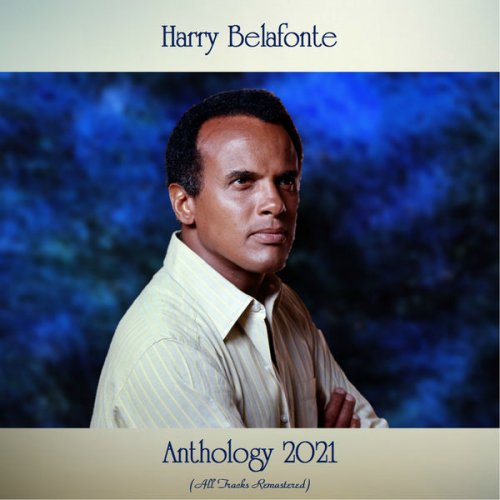
Harry Belafonte born 1 March 1927


Harry Belafonte (born March 1, 1927) is an American singer, songwriter, activist, and actor. One of the most successful Jamaican-American pop stars in history, he was dubbed the "King of Calypso" for popularizing the Trinidadian Caribbean musical style with an international audience in the 1950s. 

Harold George Belafonte, Jr., was born in Harlem, New York. The son of Caribbean-born immigrants, he returned with his mother to her native Jamaica at the age of eight, remaining there for the next five years. Upon returning to the U.S., Belafonte dropped out of high school to enlist in the U.S. Navy; after his discharge, he resettled in New York City to forge a career as an actor, performing with the American Negro Theatre while studying drama at Erwin Piscator's famed Dramatic Workshop alongside the likes of Marlon Brando and Tony Curtis. 

A singing role resulted in a series of cabaret engagements, and eventually Belafonte even opened his own club. Initially, he put his clear, silky voice to work as a straight pop singer, launching his recording career on the Jubilee label in 1949; however, at the dawn of the 1950s he discovered folk music, learning material through the Library of Congress' American folk songs archives while also discovering West Indian music. With guitarist Millard Thomas, Belafonte soon made his debut at the legendary jazz club the Village Vanguard; in 1953, he made his film bow in Bright Road, winning a Tony Award the next year for his work in the Broadway revue John Murray Anderson's Almanac. 

With his lead role in Otto Preminger's film adaptation of Oscar Hammerstein's Carmen Jones, Belafonte shot to stardom; after signing to the RCA label, he issued Mark Twain and Other Folk Favorites, which reached the number three slot on the Billboard charts in the early weeks of 1956. His next effort, titled simply Belafonte, reached number one, kick-starting a national craze for calypso music; Calypso, also issued in 1956, topped the charts for a staggering 31 weeks on the strength of hits like "Jamaica Farewell" and the immortal "Banana Boat (Day-O)." 


Following the success of 1957's An Evening with Belafonte and its hit "Mary's Boy Child," Belafonte returned to film, using his now considerable clout to realize the controversial film Island in the Sun, in which his character contemplates an affair with a white woman portrayed by Joan Fontaine. Similarly, 1959's Odds Against Tomorrow cast him as a bank robber teamed with a racist accomplice. Also in 1959 he released the LP Belafonte at Carnegie Hall, a recording of a sold-out April performance that spent over three years on the charts; Belafonte Returns to Carnegie Hall followed in 1960 and featured appearances by Odetta, Miriam Makeba, and the Chad Mitchell Trio. 

At the turn of the '60s, Belafonte became television's first black producer; his special Tonight with Harry Belafonte won an Emmy that same year. Although dissatisfied with filmmaking, he continued his prolific album output with 1961's Jump Up Calypso and 1962's The Midnight Special, which featured the first-ever recorded appearance by a young harmonica player named Bob Dylan. As the Beatles and other stars of the British Invasion began to dominate the pop charts, Belafonte's impact as a commercial force diminished. 1964's Belafonte at the Greek Theatre was his last Top 40 effort, and subsequent efforts like 1965's An Evening with Belafonte/Makeba and 1966's In My Quiet Room struggled even to crack the Top 100. 1969's Homeward Bound earned Belafonte his final Billboard chart appearance, although he continued to record. He then made his first film appearance in over a decade in 1970's The Angel Levine and continued to focus on his work as a civil rights activist.  

In addition to his continued work in recording and film, Belafonte spent an increasing amount of the '70s and '80s as a tireless humanitarian; most famously, he was a central figure of the USA for Africa effort, singing on the 1985 single "We Are the World." A year later, he replaced Danny Kaye as UNICEF's Goodwill Ambassador. After a long absence from the screen, Belafonte resurfaced in the mid-'90s with a number of film roles. Although at this point Belafonte had stopped recording new music, he kept his name in the news by releasing the occasional live album as well as being an outspoken proponent of Venezuelan president Hugo Chavez and opponent of the Bush government. His political and social work surfaced again in the late 2010s, when he curated a career-spanning anthology, The Legacy of Harry Belafonte: When Colors Come Together. 

Belafonte has won three Grammy Awards (including a Grammy Lifetime Achievement Award), an Emmy Award, and a Tony Award. In 1989, he received the Kennedy Center Honors. He was awarded the National Medal of Arts in 1994. In 2014, he received the Jean Hersholt Humanitarian Award at the Academy's 6th Annual Governors Awards. 

Belafonte lives in New York City with his third wife, photographer Pamela Frank. The couple wed in 2008. Belafonte had two children with second wife, dancer Julie Robinson, as well as two other children from his first marriage, to Marguerite Byrd.  (Edited mainly from AllMusic)