Saturday, 13 February 2021

Jim McReynolds born 13 February 1927


Jim McReynolds (February 13, 1927 – December 31, 2002) was better known as half of the American bluegrass duo Jim & Jessie. 

Jessie McReynolds (born July 9, 1929) and his brother James were born and raised in Carfax, a community near Coeburn, Virginia. Their grandfather, Charles McReynolds, had led the band "The Bull Mountain Moonshiners" who recorded at the famous Bristol Sessions in 1927. 

Their harmony was exceptional, a rarity some say only brothers can produce. Jim's enhanced high tenor combined with Jesse's deep lead and unique mandolin style set this duo apart in the world of traditional music, now termed Bluegrass. Very early in their career, Jesse developed a "McReynolds style" technique on the mandolin, combining his invention of "crosspicking and split-string playing", which distinguished his picking from others. Many have imitated, but few have successfully mastered his unique style of fast execution of intricate melodic patterns. Jim sang as a high tenor and played guitar. They played with their backing band, The Virginia Boys, consisting of five-string banjo, fiddle and bass. 

The Virginia Boys have included musicians such as fiddler Vassar Clements, banjo player Allen Shelton, Mike Scott, Vic Jordan, Bobby Thompson, Carl Jackson, fiddler Jimmy Buchanan, Glen Duncan, Jesse's oldest son, the late Keith McReynolds, Randall Franks and many more. 

In 1952, Jim & Jesse were signed to their first major label, Capitol Records. They have also recorded for Columbia Records, Epic Records and Opryland USA. They also released under their own Old Dominion record label. In 1960, their first single for Columbia was "The Flame of Love" backed by "Gosh I Miss You All The Time". Their other classic songs include "Cotton Mill Man", "Diesel On My Tail", "Are You Missing Me", and "Paradise". 


In the late 1950s and early 1960s, Jim and Jesse starred on the live radio show, the Suwannee River Jamboree, broadcast on Saturday nights from Live Oak, Florida on WNER radio. The show was also syndicated throughout the South-eastern United States. The brothers replaced the Stanley Brothers on the show. They left when Martha White began using the duo as a sponsor. On March 2, 1964, they were invited to join the Grand Ole Opry after making several appearances as guest performers, and they moved to Gallatin, Tennessee later that year.

 Jim and Jesse joined producers Randall Franks and Alan Autry for the In the Heat of the Night cast album Christmas Time's A Comin', performing the title song with the cast. The album became one of the most popular Christmas releases of 1991 and 1992 with Southern retailers. Jesse also added his mandolin talents to a vocal performance of "Bring a Torch Jeanette Isabella" by actor Carroll O'Connor. 

In 2002, both brothers were diagnosed with different types of cancer. Jesse's battle was successful. Sadly, on December 19, Jim's wife Arreta, died suddenly of a massive heart attack. Jim started hospice care the next day. His death from thyroid cancer came on December 31, at 7:40 p.m. at the Sumner Regional Medical Center in Gallatin, Tenn., at the age of 75, ending the longest active professional brother duet in country music history - 55 years. 

Since the death of his brother Jim, Jesse has continued to perform with their Virginia Boys band. He still performs in the bluegrass music tradition but has added other genres of music to his repertoire, including Chuck Berry and Grateful Dead songs. Jesse participated in a 2010 tribute to Jerry Garcia and Robert Hunter titled Jesse McReynolds & Friends Tribute to Jerry Garcia and Robert Hunter: Songs of the Grateful Dead, released on Woodstock Records. It features Garcia's friends David Nelson and Sandy Rothman, along with Stu Allen, of the present Jerry Garcia Acoustic Band. 

Jesse's present band line-up includes Garrett McReynolds as tenor singer/rhythm guitarist. On special occasions Jesse takes out the historic fiddle his grandfather played on the Bristol Sessions, and lets grandson Luke McKnight do the crosspicking that Jesse created. Rounding out the group is Travis Wetzel on fiddle, Gary Reece on banjo, and Larry Carney on guitar. Jessie continued to play The Grand Ole Opry & special dates with his band, as well as being a guest with other groups. He lives in Gallatin, Tennessee. 

Jesse McReynolds

The duo's honours include induction into the Country Music Hall of Fame's "Walkway of Stars", the Virginia Country Music Hall of Fame, the International Bluegrass Music Association's Hall of Honour, and Bill Monroe's Bluegrass Hall of Fame. Individually and collectively they were nominated for several Grammy Awards. They also received a National Heritage Fellowship from the National Endowment for the Arts, presented by Hillary Clinton and Jane Alexander at The White House on September 23, 1997. 

In 2017 Jessie suffered a ruptured aneurysm that almost killed him. He’s been dealing with a nagging complication from that trauma ever since. His last hospital visit was for the removal of kidney stones in 2020. (Edited mainly from Wikipedia)

Friday, 12 February 2021

Mel Powell born 12 February1923


Mel Powell (February 12, 1923 – April 24, 1998) was a Pulitzer Prize-winning American composer, and the founding dean of the music department at the California Institute of the Arts. He served as a music educator for over 40 years, first at Mannes College of Music and Queens College, then Yale University, and finally at CalArts. During his early career he worked as a jazz pianist. 

Mel Powell was born Melvin D. Epstein in The Bronx, New York City to Russian Jewish parents. He began playing piano at age four, taking lessons from, among others, Nadia Reisenberg. A passionate baseball fan, his home was within sight of Yankee Stadium. A hand injury while playing baseball as a boy, however, convinced him to pursue music instead of sports as a career. Powell dreamed of life as a concert pianist until his older brother took him to see jazz pianist Teddy Wilson play, and later to a concert featuring Benny Goodman. By the age of 14 Powell was performing jazz professionally around New York City. As early as 1939, he was working with Bobby Hackett, George Brunies, and Zutty Singleton, as well as writing arrangements for Earl Hines. He changed his last name from Epstein to Powell in 1941 shortly before joining Benny Goodman's band. 

Powell's style was rooted in the stride style that was the direct precursor to swing piano. One composition from his Goodman years, The Earl, is perhaps his best-known from that time. It is notable that the song was recorded without a drummer. After nearly two years with Goodman, Powell played briefly with the CBS radio band under director Raymond Scott before Uncle Sam came calling. With World War II at its height, Powell was drafted into the U.S. Army, but fought his battles from a piano stool, having been assigned to Glenn Miller's Army Air Force Band from 1943 to 1945. 

                            Count Basie, Teddy Wilson, Hazwl Scott, Duke Ellington                                                             and Mel Powell at Cafe Society.

Near the war's end, Powell was stationed in Paris, where he played with Django Reinhardt, and then returned for a brief stint in Goodman's band again after being discharged from the military. In the mid-to-late 1940s, Powell moved to Hollywood and ventured into providing music for movies and cartoons, most notably Tom and Jerry. In 1948 he played himself in the movie A Song Is Born, appearing along with many other famous jazz players, including Louis Armstrong. It was during his time in Hollywood that he met and married actress Martha Scott. 


Shortly thereafter, Powell developed muscular dystrophy. He was confined to a wheelchair for some time, then walked with aid of a cane. The illness effectively ended his ability to work as a travelling musician again with Goodman or other bands, prompting him to devote himself to composition rather than performance.

In 1948 he enrolled at the Yale School of Music, where he studied with German composer and music theorist Paul Hindemith and received a B.M. degree in 1952. In 1954 he recorded the jazz album Thigamigig, including a piano/trumpet/drums track that was selected by Art Clokey for his claymation short Gumbasia in 1955. Also in 1954, he appeared with Benny Goodman in New York at Basin Street for a three-week engagement. 

At first sticking to neoclassical styles of composition, Powell increasingly explored atonality, or "non-tonal" music as he called it, as well as the serialism advocated by Austrian composer Arnold Schoenberg. After receiving his degree, Powell embarked on a career as a music educator, first at Mannes College of Music and Queens College in his native New York City, then returning to Yale in 1958, succeeding Hindemith as chair of the composition faculty and director of one of the nation's first electronic music studios. 

Powell composed several electronic pieces in the 1960s, some of which were performed at the Electric Circus in New York's East Village, a venue that also saw performances by groundbreaking rock music acts like The Velvet Underground and The Grateful Dead. But Powell did not completely turn his back on jazz. While teaching in the 1950s, he also played piano and recorded music with Benny Goodman again, as well as on his own. 

Powell composed for orchestra, chorus, voice, and chamber ensemble throughout the 1960s, 1970s, and 1980s. In 1969, he returned to California to serve as founding dean of the California Institute of the Arts in Valencia, California. After serving as Provost of the Institute from 1972 to 1976, he was appointed the Roy O. Disney Professor of Music, and taught at the Institute until shortly before his death. 

In 1987, Powell joined other music greats for a jazz festival on the cruise ship SS Norway, playing alongside Benny Carter, Howard Alden, Milt Hinton, Louie Bellson and others. In 1990 Powell received his highest career achievement, the Pulitzer Prize in Music, for his work Duplicates: A Concerto for Two Pianos and Orchestra. Other awards and honours include the Creative Arts Medal from Brandeis University, a Guggenheim Fellowship, an honorary life membership in the Arnold Schoenberg Institute, a commission from the Koussevitzky Music Foundation for the Library of Congress, and a National Institute of Arts and Letters grant. 

Buddy Rich. Mel Powell & Joe Williams 1987

Powell died at his home in Sherman Oaks, California, on April 24, 1998, from liver cancer. He was 75 years old. He was buried in the Masonic Cemetery of Jamesport, Missouri. (Edited from Wikipedia)

Thursday, 11 February 2021

Little Johnny Taylor born 11 February 1943


Little Johnny Taylor (February 11, 1943 – May 17, 2002) was one of the finest practitioners of the style of R&B called soul blues, which merges the vocal approach of black gospel with the blues. He made recordings throughout the 1960s and 1970s, and continued public performances through the 1980s and 1990s. 

Born Johnny Lamont Merrett in Gregory, Arkansas, United States, he is frequently confused with his contemporary and near namesake Johnnie Taylor, especially since the latter made a cover version of the song that Little Johnny Taylor was most famous for, "Part Time Love" (1963), and the fact that both men began their careers as gospel singers. 

Little Johnny came to Los Angeles in 1950 and sang around with the Stars of Bethel (with whom he made his recording debut) and an early edition of the Mighty Clouds of Joy. By the late Fifties he was performing blues at local clubs.

Influenced by Little Willie John, Taylor briefly sang with the Johnny Otis Revue then debuted as an R&B artist with a pair of 45s for Hunter Hancock's Swingin' logo. 

However, he did not achieve major success until signing for San Francisco-based Fantasy Records' subsidiary label, Galaxy. His first hit was the mid-tempo blues "You'll Need Another Favor," sung in the style of Bobby Bland, with arrangement by Ray Shanklin and produced by Cliff Goldsmith.


The follow-up, "Part Time Love", written by Clay Hammond and featuring Arthur Wright on guitar, became his biggest hit, reaching number 1 in the U.S. Billboard R&B chart, and number 19 on the pop chart, in October 1963. 

The singer also did fairly well with "Since I Found a New Love" in 1964 and "Zig Zag Lightning" in 1966, but most of his follow-ups were much less successful. 

He re-emerged in the early 70s on the Shreveport, Louisiana-based Ronn label, with whom he recorded in the Fame Recording Studios in Muscle Shoals, Alabama. The result was a series of stunning records, notably ‘Everybody Knows About My Good Thing’ (number 9 R&B) in 1971 and ‘Open House At My House’ (number 16 R&B) in 1972. While at Ronn, Little Johnny cut some duets with yet another Taylor, this one named Ted (no, they weren't related either).  


Though he recorded only sparingly during the 1980s and 1990s, he remained an active performer until his death, at the age of 59, in May 2002 in Conway Regional Medical Center, Arkansas.

(Edited mainly from Wikipedia)

Wednesday, 10 February 2021

Jimmy Durante born 10 February 1893


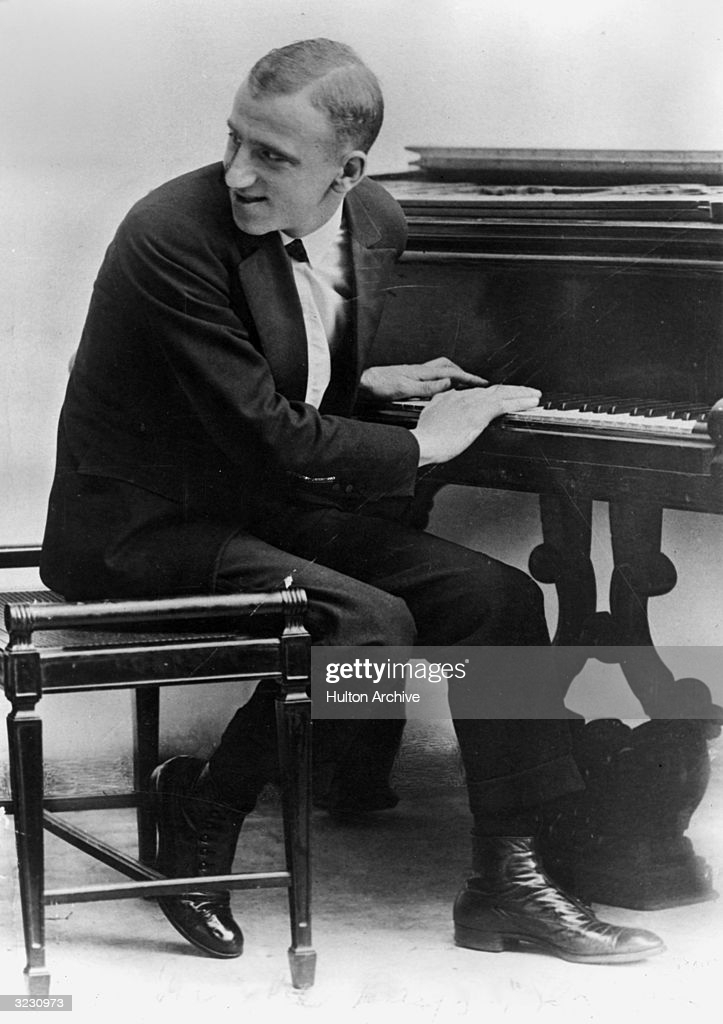
James Francis Durante (February 10, 1893 – January 29, 1980) was an American actor, comedian, singer, and pianist. His distinctive gravelly speech, Lower East Side accent, comic language-butchery, jazz-influenced songs, and prominent nose helped make him one of America's most familiar and popular personalities of the 1920s through the 1970s. He often referred to his nose as the schnozzola (Italianization of the American Yiddish slang word schnoz "big nose"), and the word became his nickname. 

Durante was born on the Lower East Side of New York City. He was the youngest of four children born to Rosa and Bartolomeo Durante, both of whom were immigrants from Salerno, Italy. Young Jimmy served as an altar boy at St. Malachy Roman Catholic Church, known as the Actor's Chapel. He dropped out of school in seventh grade to become a full-time ragtime pianist and began working the city's piano bar circuit and earned the nickname "ragtime Jimmy", before he joined one of the first recognizable jazz bands in New York, the Original New Orleans Jazz Band. Durante was the only member not from New Orleans. His routine of breaking into a song to deliver a joke, with band or orchestra chord punctuation after each line, became a Durante trademark. In 1920 the group was renamed Jimmy Durante's Jazz Band. 

By the mid-1920s, Durante had become a vaudeville star and radio personality in a trio named Clayton, Jackson and Durante. Lou Clayton and Eddie Jackson, Durante's closest friends, often reunited with Durante in subsequent years. Jackson and Durante appeared in the Cole Porter musical The New Yorkers, which opened on Broadway on December 8, 1930. Earlier the same year, the team appeared in the movie Roadhouse Nights. 


By 1934, Durante had a major record hit with his own novelty composition, "Inka Dinka Doo", with lyrics by Ben Ryan. It became his theme song for the rest of his life. A year later, Durante starred on Broadway in the Billy Rose stage musical Jumbo. Durante also appeared on Broadway in Show Girl (1929), Strike Me Pink (1934) and Red, Hot and Blue (1936). In 1934, he starred in Hollywood Party, where he dreams he is Schnarzan, a parody of Tarzan, who was popular at the time due to the Johnny Weissmuller films. 

During the early 1930s, Durante alternated between Hollywood and Broadway. His early motion pictures included an original Rodgers & Hart musical The Phantom President (1932), which featured Durante singing the self-referential Schnozzola. He initially was paired with silent film legend Buster Keaton in a series of three popular comedies for Metro-Goldwyn-Mayer. Durante went on to appear in The Wet Parade (1932), Broadway to Hollywood (1933), The Man Who Came to Dinner (1942),and  Ziegfeld Follies (1946). 

On September 10, 1933, Durante appeared on Eddie Cantor's NBC radio show, The Chase and Sanborn Hour, continuing until November 12 of that year. When Cantor left the show, Durante took over as its star from April 22 to September 30, 1934. He then moved on to The Jumbo Fire Chief Program (1935–1936).  Durante teamed with Garry Moore for The Durante-Moore Show in 1943. Durante's comic chemistry with the young, brush-cut Moore brought Durante an even larger audience. The duo was one of the nation's favourites for the rest of the decade. 

Durante would make records throughout the 1940s and 1950s for such record labels as MGM and Decca, but it was not until late in his career that his singing career really reached its peak. In 1963, Durante recorded an album of pop standards, September Song. The album became a best-seller and provided Durante's re-introduction to yet another generation, almost three decades later. 

From the Jimmy Durante's Way of Life album came the gravelly interpretations of the song "As Time Goes By", which accompanied the opening credits of the romantic comedy hit, Sleepless in Seattle, while his version of "Make Someone Happy" launched the film's closing credits. Both are included on the film's best-selling soundtrack. Durante also recorded a cover of the well known song I'll Be Seeing You, which became a trademark song on his 60's TV show. This song was also featured in the 2004 film The Notebook.

Durante with Peggy Lee

The television work also included a series of commercial spots for Kellogg's Corn Flakes cereals in the mid-1960s, which introduced Durante's gravelly growl and narrow-eyed, large-nosed countenance to millions of children. "Dis is Jimmy Durante, in puy-son!" was his introduction to some of the Kellogg's spots.  Durante continued his film appearances through It's a Mad, Mad, Mad, Mad World and television appearances through the early 1970s. He narrated the Rankin-Bass animated Christmas special Frosty the Snowman (1969), re-run for many years since. 

His last regular television appearance was co-starring with the Lennon Sisters on Jimmy Durante Presents the Lennon Sisters Hour, which lasted for one season on ABC (1969–1970). Durante retired from performing in 1972 after he became wheelchair-bound following a stroke. He died of pneumonia in Santa Monica, California on January 29, 1980, 12 days before he would have turned 87.  (Edited from Wikipedia)

Tuesday, 9 February 2021

Barry Mann born 9 February 1939


Barry Mann (born February 9, 1939) is an American songwriter and musician, and part of a successful songwriting partnership with his wife, Cynthia Weil. He has written or co-written 53 hits in the UK and 98 in the US.

Mann was born Barry Imberman, to a Jewish family in Brooklyn, New York City, two days before fellow songwriter Gerry Goffin.  When he was twelve years old he began writing songs as a hobby. He studied architecture at the Pratt Institute for a year before dropping out to write and record songs. He played piano on some demos. 

His first successful song as a writer was "She Say (Oom Dooby Doom)", a Top 20 chart-scoring song composed for the band The Diamonds in 1959. Mann co-wrote the song with Mike Anthony (Michael Logiudice). In 1961, Mann had his greatest success to that point with "I Love How You Love Me", written with Larry Kolber and a no. 5 scoring single for the band The Paris Sisters, (seven years later, Bobby Vinton's version would score in the Top 10). The same year, Mann himself reached the Top 40 as a performer with a novelty song co-written with Gerry Goffin, "Who Put the Bomp", which parodied the nonsense words of the then-popular doo-wop genre. 

Despite his success as a singer, Mann chose to channel his creativity into songwriting, forming a prolific partnership with Weil, a lyricist he met while both were staff songwriters at Don Kirshner and Al Nevin's company Aldon Music, whose offices were located in Manhattan near the famed composing-and-publishing factory the Brill Building. Mann and Weil, who married in 1961, developed some songs intended to be socially conscious, with successes such as "Uptown" by The Crystals, "We Gotta Get out of This Place" by the Animals, "Magic Town" by The Vogues, and "Kicks" by Paul Revere & the Raiders. 


They found that they could write songs independently of each other, in pairs with other songwriters or with each other. They were adept at writing pop songs of almost any type. Under contract with Aldon, they wrote songs for many pop stars in the 60's, including Eydie Gorme, Paul Peterson, Shelley Fabares, and Dickey Lee. As the decade wore on, they turned to urban protest songs, love songs, and songs that in general were in tune with the times. 

They were the only Brill team to write directly for Paul Revere and the Raiders, and their 1964 classic "You Lost That Lovin' Feeling" by the Righteous Brothers virtually redefined that scope and depth of pop songwriting,  co-written Phil Spector, was the most played song of the 20th century, with more than 14 million plays.Also with Spector they wrote some of the best Ronettes songs, like "You Baby" and "Walking In the Rain". The couple left Aldon Music and moved to Los Angeles in the late 60s, kept writing hits, mostly for country artists and began writing for Broadway. 

Barry attempted a solo career and finally got to make albums via a deal with RCA. In 1975 he had a minor hit with "The Princess and the Punk." Later hits with which Mann is associated with include "Here You Come Again" by Dolly Parton and "Sometimes When We Touch" by Dan Hill, both from 1987. Barry Mann and James Horner composed the music for the 1986 animated film An American Tail. Mann came up with songs such as Sometimes When We Touch and movie scores such as that for I Never Sang For My Father. Weil co-wrote He's So Shy with Tom Snow for The Pointer Sisters and worked on some projects with Lionel Richie. Together their ambition has always been to write a Broadway show, but so far it is unfulfilled. 

Mann has composed songs for movies, most notably "Somewhere Out There", co-written with Weil and James Horner, for the 1986 animated movie An American Tail. Linda Ronstadt and James Ingram performed the song as a duet during the movie's closing credits; their version was released as a single, which scored No. 2 on the Billboards charts and became a "gold"-scoring record. "Somewhere Out There" would win two 1987 Grammy Awards, as Song of the Year and Best Song Written for a Motion Picture or Television. Mann's other movie work includes the scores for I Never Sang for My Father and Muppet Treasure Island, and songs for National Lampoon's Christmas Vacation and Oliver & Company.

Mann co-wrote, with Dan Hill, the song "Sometimes When We Touch," which scored No. 3 on the Billboard Hot 100. In 1987, Mann and Weil were inducted into the Songwriters Hall of Fame.  As of May 2009, Mann's song catalogue lists 635 songs. He has received 56 popular music, country, and Rhythm & Blues awards from Broadcast Music Inc., and 46 Millionaire Awards for radio performances numbering more than one million plays. Mann and Weil were named among the 2010 recipients of Ahmet Ertegun Award from the Rock and Roll Hall of Fame. In 2011, they received the Johnny Mercer Award, the greatest honour from the Songwriters Hall of Fame. 

Mann and Weil now operate a publishing company named Dyad Music and reside in Beverly Hills, California.   (Edited mainly from Wikipedia)

Monday, 8 February 2021

Otis Leavill born 8 February 1943

Otis Leavill (February 8, 1937 – July 17, 2002) was an American R&B singer, songwriter and record company executive. 

Friendly, talented Otis Leavill Cobb was born February 8, 1937, in Dewey Rose, GA. The Cobb family moved to Chicago two years later and settled in the Londale area on the Westside. Leavill had four brothers and two sisters. His father pastored the First Church of Deliverance on South Wabash, one of the first to broadcast on the radio, and formed the Cobb Singers, with Otis a member. Leavill's childhood chum, Major Lance, lived in the Cabrini Green Projects near Curtis Mayfield and Jerry Butler. They slept over at each other houses and acted more like brothers than buddies. As teenagers the two pals participated in amateur boxing at St. Albees, They formed the Floats with two females: Barbara Tyson, and another that no one remembers. After eight months the Floats ended, they never released a record but recorded a demo that's floating around Chi-town. Always industrious, Leavill worked at a grocery store, and Lance at a drugstore in the Cabrini Green area. Leavill graduated from Crane High School, and attended Crane Junior College, and Chicago Junior College.

The Impressions recorded first, then Lance, and finally Leavill. His first record "Ride Sally Ride," dropped on Mercury's Limelight subsidiary, though Otis says he waxed it for St. Lawrence Records who evidently leased the master. His next release, "Gotta Right to Cry," a Mayfield song, came out on Lucky Records; Lance had already waxed and released the tune in 1963 for Okeh Records. His third release, "Let Her Love Me," in 1966, gave his career the boost it needed reaching number 31 on Billboard's R&B chart; the lilting Mayfield ballad, with the Impressions singing in the background became Blue Rock Records' first national hit. Dick Clark's Caravan of Stars provided Leavill his first touring opportunity. Initially, he went along to accompany Major Lance, but with disk jockeys spinning "Let Her Love Me," Clark gave Leavill a paid slot on the Caravan to sing two songs. 


Prior to that first hit, he befriended record producer Carl Davis who worked at Okeh Records. At Okeh he was Davis' right-hand man, helping to schedule artists, getting musicians and backing singers to the studio, etc. Leavill could spot talent, he discovered the Chi-lites, Tyrone Davis, Bohannon, and Manchild from Indianapolis, IN, whose members included Kenneth "Baby Face" Edmonds. Leavill and Davis passed on Yvette Stevens and her younger sister, Yvonne who would later on become Chaka Khan and Taka Boom. 

Blue Rock Records was Leavill's next stop. There he cut some memorable sides, including Billy Butler's "To Be or Not to Be," and "Let Me Live." When Davis formed the Dakar label, he appointed Otis as Vice-President and gave him shares in the company. Leavill also recorded for Dakar where he enjoyed his biggest hit: Eugene Record's "I Love You," a song that sounded like Leavill imitating Record, the Chi-lites' lead singer; it climbed to number ten R&B but never threatened the Pop Top 40, stalling number 64. Another Record composition "Love Uprising" nearly repeated the success of "I Love You," checking in at number 19 R&B and number72 Pop. Another single, "There's Nothing Better Than Loving You," scraped into the lower rungs of the R&B chart. Despite some success, Dakar never released an album by Leavill. Willie Henderson produced Leavill's recordings at Dakar; and Record and Barbara Acklin did the backing vocals. 

After Dakar's demise Carl Davis went to Brunswick Records, Leavill followed and had a few releases including "Can't Stop Loving You", but never again realized the success he had at Dakar. His releases after that were sporadic. "Right Back in Love" came out on Columbia Records, but after a few more droppings, Leavill's recording career ended. A songwriter also, BMI lists 41 songs by Leavill. He wrote "There's Goes the Lover" (Gene Chandler) and "Sweet Music" for Major Lance; he produced sides for Tyrone Davis, and supervised Major Lance's Motown album Now Arriving. More prominent behind the scenes than out front, his memories of music are all good. Divorced (from Minnie Cobb), his daughter Misti graduated from Miliken University in Decatur, IL. 

In 1999, he toured the European clubs with the Dells. Unknown to many, he and Carl Davis coached football at Hyde Park High for seven years. Never one to sit back and wait, Leavill also owned the '76 Car Wash and Gas Station at Washington and Pulaski, and moonlighted as a policeman in a west Chicago 'burb. He formed OK Records in 2000 after a long hiatus from the record business. Sadly, Otis Leavill passed July 17, 2002 of a heart attack; he was 65. 

(Editd from AllMusic)