Tuesday, 10 March 2020

Shelley Moore born 10 March 1932


Shelley Moore (March 10, 1932 – June 23, 2016) was an English-born American jazz singer. Her diverse repertoire ranged from traditional to offbeat jazz tunes, including her own compositions and her interpretations of Great American Songbook tunes.

She was born in Essex, England, and in the 1950s performed in nightclubs and for American troops in England. A demo recording Moore made at the age of 21 came to attention of EMI Records and the label signed her to make “covers.” But the budding songstress wasn’t happy with the kind of material she was being asked to do. So Moore jumped over to the small Esquire label, a company that recorded Annie Ross and Cleo Laine.

The result was a pair of four-song EPs released in the late ‘50s: “Portrait of Shelley” and “Kool Kanary,” with Moore covering standards including “Out of Nowhere” and “Too Marvelous.” She also appeared on British television and radio.

Then came the break that changed her life: Moore was asked to join English guitarist, singer and bandleader Vic Lewis’ orchestra, an ensemble that was modelled after Stan Kenton’s band. The group travelled to the United States, and Moore fell in love with the country. While here, she secured a work permit and joined the band of drummer-singer Ray McKinley.


                      Here's "So In Love" from above album.


She settled in Beverly Hills in 1961, and things took off. She was signed by Argo Records and recorded her first American album, “For the First Time,” a disc that included keyboardist Ramsey Lewis and saxophonists Eddie Harris and Plas Johnson. But Moore was also being pulled in another direction. She met record-industry attorney Ken Golden and the two were married in 1963 after which she retired from the music industry to raise their two children, Danny and Bryna.

After taking up singing again, she started performing throughout Los Angeles. She regularly performed with a combination of musicians at various Orange County restaurants and clubs, including Bay Colony Restaurant in Orange, Bistro 400 in Santa Ana, the Rainbow House in Fullerton, and Kikuya in Huntington Beach.

Moore recorded “You Can Count on Me,” her 1991 album of standards and her originals performed with saxophonist and fellow English-expatriate Benn Clatworthy and his quartet. The band and the vocalist were in the middle of an extended engagement at the Cattlemen’s Wharf in Anaheim when they went into the studio.


“That’s one of the things I don’t understand,” Moore said during a recent interview at her Huntington Beach residence. “Jazz is part of America’s heritage, but it is more treasured abroad than it is here. We have a lot of wonderful musicians in Europe, but everyone owes a debt to America for jazz. I’ve never figured that out.”

Her personality also shined on stage, as she would share witty remarks and tell stories of her life and music. In a review of Moore’s show at Bay Colony Restaurant on Dec. 12, 1993, former Orange County Register jazz reporter Steve Eddy wrote: “In an era when it seems as if so much singing depends on electronic gimmickry and bombast for effect, it’s reassuring to know that people like Moore are around. She offers an audience-pleasing helping of warmth and sincerity.”

She made two more albums; “Moore Moods” released on Cexton Records and an impromptu five song CD of a live performance with the talented pianist Ron Kobayashi.

A long-time Westminster, California resident, she died on June 23, 2016, aged 84. No place or cause of death was provided.

(Edited mainly from Wikipedia, All About Jazz & LA Times)

Sunday, 8 March 2020

Gloria Smyth born 8 March 1934


Gloria Smyth ( 8 March 1934 – April 2015) was an American jazz and soul singer of boundless energy, billed as “ The Princess Of Pop” with a warm and appealing feel for lyrics. She showed influences of Ella Fitzgerald, Sarah Vaughan and Billie Holiday, but was also sufficiently individual to escape most comparisons.

Gloria Smyth was born in Hackensack, New Jersey..Her first public appearance was in January 1951, when she appeared at the Apollo Theater with the Erskine Hawkins Orchestra. From there Gloria went to deejay Bill Cook’s Club Caravan in Newark, New Jersey where she sang for over a year backed by such greats as Max Roach and Calvin Jackson. The year 1956 found Gloria working in Miami at The Beachcomber along with Billy Eckstine and Sophie Tucker. While in Miami she also worked the Singapore Lounge.

In 1958 Gloria joined Steve Gibson and The Red Caps in Wildwood, New Jersey. She replaced Damita Jo who left to go out on her own. Gloria toured with Gibson most of ‘58, wound up in Las Vegas at The Sands Hotel. Frank Sennes, the owner of the Moulin Rouge and Ciro’s in Hollywood, discovered Gloria while she was appearing with Steve Gibson at The Sands.


In 1959 as Miss Gloria Smyth she recorded "Playmates" on the Siera label. This popular song was ostensibly written by Saxie Dowell. The main theme was note-for-note plagiarized from the 1904 intermezzo "Iola" by Charles L. Johnson, for which Johnson sued, settling out of court for an undisclosed sum. The tiny Sierra Records was located at the same address in Hollywood on Sierra Bonita as the address of her manager, Robert Leonard, who may have owned the label.

Sennes formed a group for Gloria and put her in The Stardust Lounge opposite Billy Daniels. After Vegas, she came to Los Angeles where she played Jack Denison’s with Pianist Eddie Cano’s group and The Jazz Seville opposite Ahmad Jamal where Richard Bock, president of World-Pacific, heard Gloria and signed her to a recording contract.

In 1960, World Pacific Records  released "Like Soul!" It was the first and only solo LP for Gloria, and once you hear it you'll wonder why she didn't cut more. Meanwhile Lenny McBrowne and the 4 Souls, hailed as "the future of West Coast jazz," released two LPs in the 1960s, with Gloria as the vocalist on several prime tracks, like her moody take on "Sometimes I Feel Like A Motherless Child," which is a heart-wrenching masterpiece.
After the Jazz Seville engagement, Gloria went back to Las Vegas; this time with Lionel Hampton to play the Riviera; then to Mr. Kelly’s in Chicago with Lenny Bruce; on to The Village Vanguard in New York City opposite Teddy Wilson; then out west again for an engagement at Fack’s No. 2 in San Francisco.  She flew to Chicago in May 1960 to play the Music Operators Convention where she was the hit of the show, followed by two months at The Embers Club in Melbourne, Australia

Under her birth name Gloria Smyth ("Little Miss Muffet"), she recorded with Count Basie, Chico Mendoza, Les McCann and Dizzy Gillespie. After a long break from music, she returned to jazz in 1988 as Rasheema Percira (Rasheema was given to her by Muhammad Ali). Sammy Davis Jr said of Rasheema "She's the total end!”

For many years, Rasheema was a frequent visitor throughout Denmark, among others. at the Copenhagen Jazz Festival. Rasheema was simply "the real thing". (quote: Hugo Rasmussen). Together with his regular partner Torben Kjær, Rasheema recorded material for 2 CDs, of which Stolen Moments was released on MusicMecca (1992). The CD For All We Know with Torben Kjær, Jesper Lundgaard, Ole Streenberg, Jens Skou Olsen and Christina von Bülow was recorded in 1998 but released posthumously in 2016.

Rasheema lived in New Jersey, where she played at the Cotton Club in Harlem, New York, among others. She has appeared in both Europe and Australia and has also had several shows on nationwide radio and TV in the United States.

She died in April 2015 in New Jersey.
 (Information edited from Freshsound records, the Cheerful Earful & Dead Wax blogs and Torben Kjær)

Saturday, 7 March 2020

Paddy Clancy born 7 March 1922


Patrick Clancy (7 March 1922 – 11 November 1998), usually called "Paddy" or "Pat" Clancy, was an Irish folk singer best known as a member of The Clancy Brothers and Tommy Makem.  He was an active member of the group from 1956 until his death in 1998 and appeared on every Clancy Brothers recording.

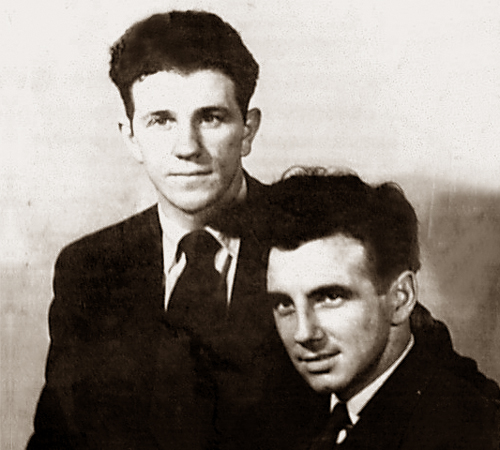
Tom & Paddy (late 40's)
Pat Clancy was one of eleven children and the eldest of four boys born to Johanna McGrath and Bob Clancy in Carrick-on-Suir, County Tipperary. During World War II he served as a flight engineer in the Royal Air Force in India. A military career neatly balanced by his active membership in the I.R.A. After his demobilization, Clancy worked as a baker in London. In 1947 he immigrated to Toronto, Canada with his brother Tom. The following year, the two brothers moved to Cleveland, Ohio to stay with relatives. Later, they attempted to move to California, but their car broke down and they relocated to New York City instead.

After moving to Greenwich Village in 1951, both Paddy and Tom Clancy devoted themselves primarily to careers in the theatre. In addition to appearing in various Off-Broadway productions and television shows, they produced and starred in plays at the Cherry Lane Theatre in Greenwich Village and at a playhouse in Martha's Vinyard. Their productions included a 22-week run of Sean O'Casey's The Plough and the Stars. After losing money on some unsuccessful plays, the brothers began singing concerts of folk songs after their evening acting jobs were over. They soon dubbed these concerts "Midnight Specials." Paddy and Tom were often joined by other prominent folk singers of the day, including Pete Seeger, Woody Guthrie, and Jean Ritchie.

In 1956 their younger brother Liam Clancy immigrated to New York, where he teamed up with Tommy Makem, whom he had met while collecting folk songs in Ireland. The two began singing together at Gerde's Folk City, a club in Greenwich Village. Pat and Tom Clancy sang with them on occasion, usually in informal folk 'sing-songs' in the Village. 

Around the same time, Pat founded Tradition Records with folk-song collector and heiress Diane Hamilton, and in 1956 the Clancy Brothers and Tommy Makem released their first album, The Rising of the Moon, with only Paddy's harmonica as musical backing.
However, the Clancys and Makem did not become a permanent singing group until 1959. In the meanwhile, Paddy signed and recorded established folk artists for Tradition, including Jean Ritchie, Alan Lomax, Odetta, and Ewan McColl. He also went as a cameraman on an expedition to Venezuela in search of alluvial diamonds, ostensibly as part of a documentary crew.

In the late 1950s, Pat Clancy with his brothers and Makem began to take singing more seriously as a permanent career, and soon they recorded their second album, Come Fill Your Glass with Us. This album proved to be more successful than their debut album, and they began receiving job offers as singers at important nightclubs, including The Gate of Horn in Chicago and The Blue Angel in New York City. The group garnered nation-wide fame in the United States after an appearance on The Ed Sullivan Show, which led to a contract with Columbia Records in 1961.

In late 1960, reports of a particularly harsh winter in New York had spread across the Atlantic, and the Clancy Brothers, a troupe of expatriate Irish folk singers in Manhattan, received a parcel from their concerned mother back home in Ireland. It contained four Aran sweaters. The brothers wore them at a Greenwich Village folk club, and it quickly became their trademark. When they played the Ed Sullivan Show in March 1961, their pristine knitwear made them the most famous Irishmen on earth.

They continued performing together to great acclaim in the United States, Ireland, the United Kingdom, Canada, and Australia until Tommy Makem left the group to pursue a solo career in 1969. The group continued first with Bobby Clancy and then with Louis Killen until Liam left in 1975 to pursue a solo career. In 1977 after a short hiatus, the group reformed with Paddy, Tom, and Bobby Clancy and their nephew Robbie O'Connell.


In a 2008 documentary, The Yellow Bittern, Liam Clancy recalled Paddy as the "alpha male" of the group, who "quietly laid down the law" that his younger brothers and Makem followed "without question." Paddy also often acted as the spokesman for the Clancy Brothers. His signature song was the classic Irish drinking song, "A Jug of Punch."

After almost two decades in North America, in 1964 Pat Clancy returned to live in Carrick-on-Suir, where he bought a dairy farm and bred exotic cattle. When not on tour or working on his farm, he spent much of his time fishing, reading, and doing crossword puzzles. In the late 1990s, he was diagnosed with a brain tumour. The tumour was successfully removed, but he was also stricken with terminal lung cancer around the same time. He continued performing until his failing health prevented him from doing so any longer.


Patrick Clancy died at home of lung cancer on November 11, 1998 at the age of 76. He was buried, wearing his trademark white cap, in the tiny village of Faugheen, near Carrick-on-Suir. (Edited mainly from Wikipedia)

Friday, 6 March 2020

Wes Montgomery born 6 March 1923


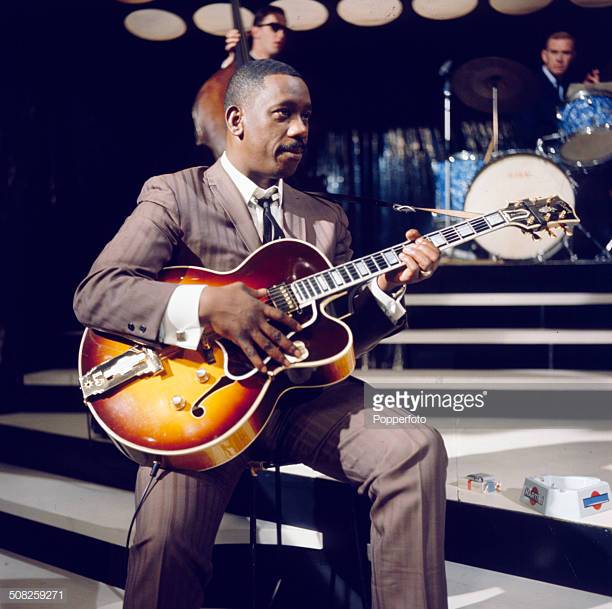
John Leslie "Wes" Montgomery (March 6, 1923 – June 15, 1968) was an American jazz guitarist. One of the most influential guitarists of the 20th century, emerging after such seminal figures as Django Reinhardt and Charlie Christian and influencing countless others, including Pat Martino, George Benson, Emily Remler, Kenny Burrell, Pat Metheny, and Jimi Hendrix.

Wes Montgomery was born in Indianapolis, Indiana. According to NPR, the nickname "Wes" was a child's abbreviation of his middle name, Leslie. The family was large, and the parents split up early in the lives of the children. Montgomery and his brothers moved to Columbus, Ohio, with their father and attended Champion High School. His older brother Monk dropped out of school to sell coal and ice, gradually saving enough money to buy his brother Wes a four-string tenor guitar from a pawn shop in 1935.

He and his brothers returned to Indianapolis. In 1943 Montgomery found work as a welder and got married. At a dance with his wife, he heard a Charlie Christian record for the first time. This motivated him to buy a six-string guitar the next day. For nearly a year, night and day, he tried to imitate Christian and teach himself the guitar. Although he hadn't intended to become a musician, he felt obligated to learn after buying the guitar.

He received no formal instruction and couldn't read music. By the age of twenty he was performing in clubs in Indianapolis at  
night copying Christian's solos, while working during the day, first at a milk company. In 1948, when Lionel Hampton was on tour in Indianapolis, he was looking for a guitarist, and after hearing Montgomery play like Christian he hired him. He went on the road with Hampton for two years. During this time he appeared on a long list of Hampton studio and broadcast recordings, among them "Lavender Coffin, and "Benson's Boogie" and "Where or When". His appearances on the studio recordings were limited to rhythm playing. But every now and then he got a short solo on some of the broadcast recordings like "Hot House".


Montgomery left The Hampton band in 1950 and returned to Indiana where he worked with his brothers and other local bands, including his own trio. He recorded his first record as a leader in 1959 when he made The Wes Montgomery Trio.  
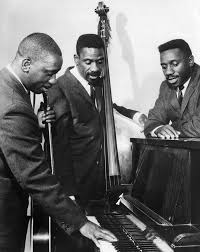
Between 1959 and 1963 a succession of important Wes Montgomery recordings appeared that still represent some of his best work. Among these recordings were The Incredible Jazz Guitar of Wes Montgomery, The Wes Montgomery Trio and Full House. During this same period he made a set of recordings with his brothers that remain jazz classics today. All the recordings from this period were made in small groups and each represented important milestones in Montgomery's evolution as a jazz guitarist.

After 1963, Montgomery began recording for Verve and A & M
Records and the recordings took on a very different production quality aimed more at the mass music markets. Orchestration was added and more pop tunes were covered. It was the recording that included the title tune Going Out Of My Head that won Montgomery a Grammy in 1965.

The recordings in this second period were more significant for their commercial success than for the music. To some extent they were over produced and did not have the same immediateness and power of the small group recordings. 
They remain somewhat unpopular with jazz guitar purists. However, they made Wes Montgomery a household name and helped elevate the guitar to a whole new level in American popular music.

For the jazz guitarist, the recordings from the first period remain the most significant. All Wes Montgomery recordings have the unmistakable Montgomery imprint, but it is the small group material that best presented the whole context of the Montgomery approach to jazz guitar. Wes Montgomery was a superb melodist who made the 

head of the most common jazz standard sound fresh. His
improvisational skills were second to none, and he was a magnificent supporting musician.

And, of course, there was that warm Wes Montgomery sound achieved by using his thumb rather than a pick. The small group material gave the listener immediate access to all this better than the later recordings. To the chagrin of jazz purists, Wes did not record another jazz album after 1965. However, in concert, as critic Gary Giddins attests, Wes continued to improvise stunning solos until his death.

At the peak of his popularity, Montgomery died of a heart attack on June 15, 1968, while at home in Indianapolis.


In a remarkably brief time frame, Wes Montgomery, a kind, modest man and a magnificent musician, left a legacy of enormous distinction to the jazz community. He most likely did not set out to do this, it just happened as a by-product of his very accessible talent.  (Edited from Wikipedia & Classic Jazz Guitar)

Tuesday, 3 March 2020

Betty Jack Davis born 4 March 1932

Betty Jack (B.J.) Davis (4 Mar 1932 – 2 Aug 1953) was the founder member of the Davis Sisters, who were an American country music duo consisting of two unrelated singers, Skeeter Davis and Betty Jack Davis. One of the original female country groups, they are 
best known for their 1953 No. 1 country hit "I Forgot More Than You'll Ever Know" and the duo's debut single "Jealous Love" on Fortune Records.

Betty Jack, for her part, was born in Corbin, Kentucky and had been intensely interested in music for all her young life. She met Mary Frances Penick at Dixie Heights High School in Edgewood, Kentucky in 1947. They formed a close relationship as friends and musicians. Also sharing a career in the music business, singing and recording, they decided to perform as The Davis Sisters, as Penick later used Skeeter Davis as her stage name.

The duo began appearing regularly on radio shows in nearby Cincinnati, Ohio and Detroit, Michigan. They first started recording in Detroit at Fortune Records in 1952.

 The pair recorded "Jealous Love," (Fortune 170) a song written by Devora Brown, co-owner of the Fortune label. Two other singles followed in 1953: "Kaw-Liga / Sorrow And Pain" (Fortune 174) and "Heartbreak Ahead / Steel Wool" (Fortune 175).


In 1953, they landed a recording contract with RCA Records. While recording for RCA, the sessions were backed up by future country star and producer Chet Atkins. That same year, they released their first single, "I Forgot More Than You'll Ever Know". 
The mournful and heartbreaking song became a No. 1 country hit, as well as a top 20 pop hit. While their vocals invoked the sound of older Appalachian harmony duos such as the Blue Sky Boys and the Delmore Brothers, the Nashville Sound backing made the overall sound more in line with their more polished contemporaries the Louvin Brothers.

During the next three months, events unfolded with dizzying speed. Penick and Davis were booked for appearances at major country music venues, including a series of appearances with Eddy Arnold on Perry Como's popular TV variety show. The Grand Ole Opry 
was about to hire them for its Prince Albert Show, and they were set for a series of fall appearances with the Opry's cast.

Shortly after the release of "I Forgot More Than You'll Ever Know", the Davis Sisters were returning home from a radio appearance when they had a car accident just outside of Cincinnati, Ohio on August 2, 1953. A soldier on leave fell asleep at the wheel of his car and crashed, head on, into their automobile. Betty Jack was killed instantly. She was only 23 years old. Skeeter suffered a concussion and various internal injuries.

A few days later, on August 6, 1953, Betty Jack was laid to rest in Highland Cemetery. At the urging of Betty Jack's family, Skeeter recorded with Georgie Davis, Betty Jack's older sister, for awhile. These two created a fine harmony sound, but the vital chemistry- the magical spontaneity and innocence- that had existed between Betty Jack and Skeeter- was no longer there. After their last RCA Victor sessions in 1957, Georgie returned to Kentucky and Skeeter- two years later- joined the Grand Ole Opry as a solo artist.

Skeeter  continued to perform frequently throughout much of the 1990s and into 2000. In 2001 she became incapacitated by the breast cancer that would claim her life. While Davis remained a member of the Grand Ole Opry until her death, she last appeared on the program in 2002. She died of breast cancer in a Nashville hospice, at the age of 72, on September 19, 2004.

(Edited from Wikipedia and article by Bob Allen)

Monday, 2 March 2020

Cherry Wainer born 2 March 1935


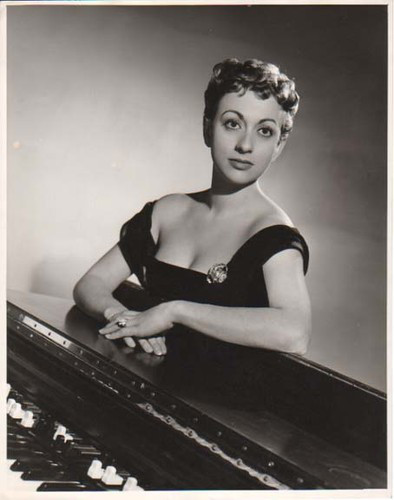
Cherry Wainer (March 2, 1935 – November 14, 2014) was a South African-born musician, best known as a member of Lord Rockingham's XI and a soloist on the Hammond organ.

Cherry Rachael Wainer was in show business almost from infancy. Her father promoted tours by nationally renowned artistes while her mother ensured that their daughter’s obvious musical talent was formalised. “I was going to be a classical pianist,” she recalled. “At the age of eight, I performed a concerto with an orchestra. I was, I suppose, considered a child prodigy – because, in my early teens, my mother took me to London to start at the Sadler’s Wells Ballet School.”

While she finished the course, she failed the audition to join the associated ballet company. However, on returning to the Transvaal, her imagination was captured by the Hammond organ, a keyboard that was becoming increasingly more prominent in jazz, notably beneath the hands of the American exponent Jimmy Smith. “I was entirely self-taught,” she confessed, “mostly by applying what I knew on piano to organ. I wanted to be the female Jimmy Smith!”

Response to her performances in regional clubs was sufficiently encouraging for Wainer to seek engagements further afield – in the first instance in Holland, but she was too young to go on her own, so her mother went along too. “I only knew six tunes, which I played over and over again while trying to learn new ones,” said Cherry Wainer in later life.

Next, she collaborated with accordionist Nico Carstens on Flying High, the first rock and roll album recorded by South Africans before entering the orbit of Don Storer, a highly paid jobbing drummer and her future husband. They first played together in 1958 at a private function for the billionaire Johnny Schlesinger. With a musical chemistry that was, reckoned Wainer, “almost telepathic”, the duo tried their luck in Britain – where Wainer’s flatmate, the singer and actress Georgia Brown, introduced them to booking agent Tito Burns, who found 

them work on the variety circuit and in US military bases. Burns also got them booked on ITV’s Lunch Box, the lightest of light entertainment shows, which was hosted by Noele Gordon.

It was through one such appearance that they came to the attention of Jack Good, who had been commissioned to produce the first series of Oh Boy! that autumn. As well as incorporating Storer and Wainer into Lord Rockingham’s XI, he also brokered a recording contract for Wainer. Her output was to include Money (1960), historically the first Tamla-Motown number to be covered in the UK (and, later, a set track for many beat groups).


While chart entries proved elusive for Wainer in her own right, a maiden Rockingham single, Fried Onions, made the US Hot 100. Hoots Mon, the follow-up, was a domestic No 1 – and was heard on a section of Oh Boy! featured in the 1959 Royal Command Performance. Wainer became the focal point of the band – publicised as “the female Liberace” – with solo spots as both a singer and instrumentalist.

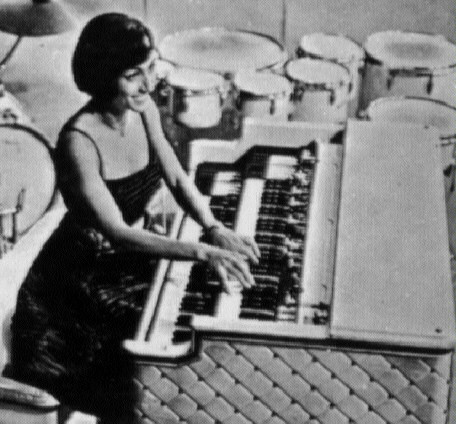
“I had my Hammond customised with quilted white-leather and diamanté studs,” she recalled. “Also, my poodle used to sit next to me. I loved every minute of it – being recognised in the street, signing autographs and when fans washed my pink saloon car when it was parked outside the hall in Islington where every Oh Boy! was rehearsed.”

During live broadcasts of Oh Boy! on ITV in the late 1950s, its procession of chiefly male idols passed so swiftly before the cameras that screaming girls scarcely had pause to draw breath. However, screams became cheers for Cherry Wainer, seated at an upholstered Hammond organ as part of the programme’s house band, Lord Rockingham’s XI. With her grinning vibrancy and ping-pong eyes, Cherry was adored more as an admired elder sister.

Along with the band, Wainer played in the 1959 Royal Variety Performance, held at the Palace Theatre, Manchester. After the final edition of Oh Boy! in 1959, Wainer went on to star in another ITV series, Boy Meets Girls, which was aimed at a wider audience. In 1960, she appeared as herself in the musical Girls of the Latin Quarter

 Wainer married drummer Don Storer with whom she appeared regularly as a duo during the 1960s. They appeared regularly in a German television series, Beat! Beat! Beat (1966-1967). Wainer released several solo albums and singles, none of which made the UK charts. Wainer and her husband moved to Las Vegas in 1968, working in cabaret. 


She later retired from music but remained in Las Vegas and worked in a gift shop. Her husband died in 2006.

Wainer died of natural causes on November 14, 2014 in Las Vegas, Nevada, aged 79.   (Edited mainly from The Telegraph)

Sunday, 1 March 2020

Connie Eaton born 1 March 1950

Connie Eaton (March 1, 1950 – September 30, 1999) was a country music singer.

Eaton was a native of Nashville, Tennessee and began her recording career as a teenager in 1968, recording for Chart Records. This record label was owned by Slim Williamson and became famous thanks to Lynn Anderson who had been churning out hits there since 1966. Prior to beginning her recording career, Eaton had been a runner up in a "Miss Nashville" beauty contest

None among Connie’s first four singles managed to dent the national Country charts but she did sufficiently well on a local/regional basis that Williamson gave her with her her first LP titled "I've Got A Life To Live" (Chart CHS-1020) which emerged in Oct 1969. Then came her cover of the Merilee Rush 1968 Pop hit, Angel Of The Morning, which reached # 34 in Feb-March as Chart 5048 b/w One Time Too Many and earned her a nomination for Billboard's Most Promising Female Vocalist Award.

After a follow-up duet with Tony Martin failed, another duet, this time with Dave Peel and doing a cover of Ray Charles' immortal Hit The Road Jack, reached # 44 in May-June 1970  followed by two more 1970 failures before another duet with Peel, a cover of the Marvin Gaye & Kim Weston 1967 hit, It Takes Two, topped out at # 56 in November.  Around this same time her 2nd album was released pairing her with Peel and titled “Hit The Road, Jack” in which they are backed by guitarists Billy Sanford, Wayne Moss and Pete Wade, steel guitarist Lloyd Green, bassist Henry Strzelecki, banjo player Bobby Thompson, pianist Hargus ‘Pig’ Robbins and drummers Buddy Harman and Jerry Carrigan.


In Feb 1971 she then had Sing A Happy Song peak at # 74, followed in Sept-Oct by the # 56 Don't Hang No Halos On Me. While this was charting her 3rd album came out titled “Something Special”. After giving birth to a daughter in 1972 (she had married Slim Williamson's son Cliff). 


She resurfaced in 1975 with Dunhill/ABC where she would have her greatest single hit when Lonely Men, Lonely Women rose to # 23 in the Jan-March stretch of 1975, followed in June by the # 93 If I Knew Enough To Come Out Of The Rain which was her last nationally charting single. In September, ABC released her last LP, the eponymous "Connie Eaton" (ABC 906).

By the end of the 1970s Connie Eaton had left the music scene and sadly, after struggling with manic depression, she passed away on September 30, 1999 following a battle with cancer at age 49. 


Connie Eaton's daughter Cortney Tidwell is a recording artist in her own right.

(Edited from various sources)