Monday, 9 September 2019

Otis Redding born 9 September 1941


Otis Ray Redding Jr. (September 9, 1941 – December 10, 1967) was an American singer, songwriter, record producer, arranger, and talent scout. He is considered one of the greatest singers in the history of American popular music and a seminal artist in soul music and rhythm and blues. Redding's style of singing gained inspiration from the gospel music that preceded the genre. His singing style influenced many other soul artists of the 1960s.

Redding was born in the small town of Dawson, Georgia. At the
age of 5 he moved with his family to Macon, Georgia. He sang in the choir of the Vineville Baptist Church, and became somewhat of a local celebrity as a teenager after winning a local Sunday night talent show 15 weeks in a row.

At age 18, Redding met 15-year-old Zelma Atwood. She gave birth to their son Dexter in the summer of 1960 and married Redding in August 1961. The story of Redding’s breakthrough is part of soul music mythology. 
In 1960 Redding joined Johnny Jenkins’s Pinetoppers, a local Georgia band, and also served as the group’s driver. When the group travelled to Memphis, Tennessee, to record at the famed Stax studios, Redding sang two songs of his own at the end of the session. One of the two, “These Arms of Mine” (1962), launched his career, attracting both a record label executive (Jim Stewart) and a manager (Phil Walden) who passionately believed in his talent.

Redding’s open-throated singing became the measure of the decade’s great soul artists. Unabashedly emotional, he sang with overwhelming power and irresistible sincerity. “Otis wore his heart on his sleeve,” said Jerry Wexler, whose Atlantic label handled Stax’s distribution, thus bringing Redding to a national market.


The hits came fast and furiously—“I’ve Been Loving You Too Long (to Stop Now)” (1965), “Respect” (1965), “Satisfaction” (1966), “Fa-Fa-Fa-Fa-Fa (Sad Song)” (1966). Otis Redding’s influence extended beyond his gritty vocals. As a composer,
especially with his frequent partner Steve Cropper, he introduced a new sort of rhythm-and-blues line—lean, clean, and steely strong. He arranged his songs as he wrote them, singing horn and rhythm parts to the musicians and, in general, sculpting his total sound. That sound, the Stax signature, would resonate for decades to come. Redding became a de facto leader presiding over a band that would prove as influential as the great rhythm-and-blues aggregations that preceded it, units associated with Ray Charles and James Brown.

The rapport between Redding and his rhythm section—Cropper on guitar, Donald (“Duck”) Dunn on bass, Al Jackson on drums, and Booker T. Jones on keyboards (known collectively as Booker T. and the MG’s)—was extraordinary. Redding proved to be an adept duet partner as well; his hits with label mate Carla Thomas (“Tramp” and “Knock on Wood,” 1967) added to his romantic aura. Later that year, Redding played at the massively influential Monterey Pop Festival, which helped him to break into the white pop music scene.

When the Stax/Volt Revue stormed Europe, Redding led the brigade and was just entering a new phase of popularity when tragedy struck. On December 10, 1967, Redding and most of his backing band, The Bar-Kays were killed when their chartered plane crashed into a Wisconsin lake. Redding was 26 years old. The two remaining members of The Bar-Kays were Ben Cauley and James Alexander. Cauley was the only person aboard Redding's plane to survive the crash; Alexander was on another plane.

Cauley reported that he had been asleep until just seconds before impact, and recalled that upon waking he saw bandmate Phalon Jones look out a window and say, "Oh, no!" Cauley said that he then unbuckled his seat belt, and that was his final recollection before finding himself in the frigid waters of the lake, grasping a seat cushion to keep himself afloat. Redding's body was recovered the next day when the lake was searched. The cause of the crash was never precisely determined.

Ironically, the across-the-board success Redding had sought was
realized only after his death. His most-haunting composition, co-written with Cropper, shot to the top of the charts and became his only number one hit: “(Sittin’ on) The Dock of the Bay” (1968), a bittersweet lament of indolence and love. The public mourned his passing by playing his records. During 1968 three other Redding songs—“The Happy Song (Dum Dum),” “Amen,” and “Papa’s Got a Brand New Bag”—hit the charts. He remains a giant of the genre, a much-revered master of straight-ahead soul singing. Redding was inducted into the Rock and Roll Hall of Fame in 1989 and into the Songwriters Hall of Fame in 1994. He also was a recipient of a Grammy Award for lifetime achievement (1999).

(Edited from Wikipedia & mainly article by David Ritz)

Sunday, 8 September 2019

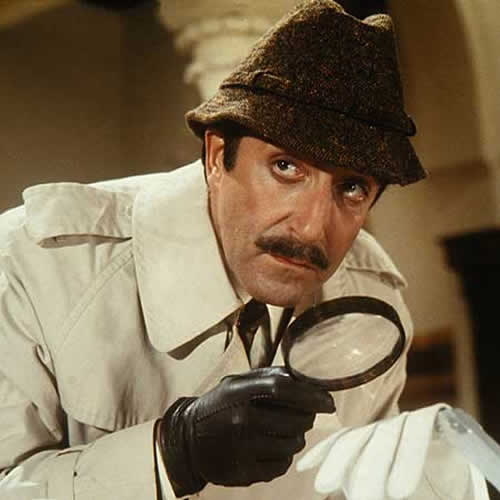
Peter Sellers born 8 September 1935


Peter Sellers, CBE (born Richard Henry Sellers; 8 September 1925 – 24 July 1980) was an English film actor, comedian and singer. He performed in the BBC Radio comedy series The Goon Show, featured on a number of hit comic songs and became known to a worldwide audience through his many film characterisations, among them Chief Inspector Clouseau in The Pink Panther series of films.

Born in Portsmouth, Sellers made his stage debut at the Kings Theatre, Southsea, when he was two weeks old. He began accompanying his parents in a variety act that toured the provincial theatres. He first worked as a drummer and toured around England as a member of the Entertainments National Service Association (ENSA). He developed his mimicry and improvisational skills during a spell in Ralph Reader's wartime Gang Show entertainment troupe, which toured Britain and the Far East. After the war, Sellers made his radio debut in ShowTime, and eventually became a regular performer on various BBC radio shows.

The Goons (Spike Milligan; Sir Harry Donald Secombe; Peter Sellers; 
Michael Bentine) with Ray Ellington and his band 1952

During the early 1950s, Sellers, along with Spike Milligan, Harry Secombe and Michael Bentine, took part in the successful radio series The Goon Show, which ended in 1960. Emerging as the star of the series with his repertoire of eccentric characters, Sellers also dominated the Goons’ film projects, including the short subject Let’s Go Crazy (1951) and the feature-length Down Among the Z Men (1952). 

On his own, he played a handful of supporting film roles before his breakthrough appearance as a doltish crook in The Ladykillers (1955). Following the advice of that film’s star, Alec Guinness, Sellers strove to avoid playing the same character twice. He especially enjoyed disappearing into characters much older than himself (The Smallest Show on Earth, 1957; Battle of the Sexes, 1959) and playing multiple roles (The Mouse That Roared, 1959).


Peter Sellers did some of his best work for the Boulting Brothers in the late 1950s and early ’60s, notably his characterization of obstreperous union shop steward Fred Kite in I’m All Right Jack (1959); it was also during this period that he made his feature directorial debut with Mr. Topaze (1961). Many British observers of the period dismissed Sellers as a glorified radio mimic, while Americans lauded him as a genius. One such American was director Stanley Kubrick, who cast Sellers as the treacherous Clare Quilty in Lolita (1962) and in three superbly defined roles in the brilliant “doomsday comedy” Dr. Strangelove (1964). The role that earned him superstar status was the magnificently inept Inspector
Clouseau in The Pink Panther and A Shot in the Dark (both 1964), both directed by Blake Edwards.

The World of Henry Orient (1964) was the first "American" movie that Sellers made and was the official U.S. entry in the Cannes Film Festival. He played a vain and lecherous pianist being chased by two teenagers. But his visit to Hollywood was cut short: he had divorced his first wife, Anne Howe, and married 19-year old Britt Ekland, a rising Swedish film star, in February 1964; and he had the first of his heart attacks in April at the age of 38. 
Upon his recovery, the quality of his films became wildly erratic, his mercurial offscreen temperament reflected by the unevenness of his cinematic output. He would not truly hit his stride again until the mid-1970s, when he repeated the role of Inspector Clouseau in three profitable Pink Panther sequels.

In 1979 he delivered what many consider his finest performance, as the simpleminded gardener Chance in Being There. This Oscar-nominated triumph was followed by one of his worst films, The Fiendish Plot of Dr. Fu Manchu (1980). Suffering a series of heart attacks his final “performance” in Trail of the Pink Panther (released posthumously in 1982) was a hodgepodge of outtakes from earlier films.

On 21 July 1980 Sellers arrived in London from Geneva. He checked into the Dorchester hotel, before visiting Golders Green Crematorium for the first time to see the location of his parents' ashes. He had plans to attend a reunion dinner with his Goon Show partners Spike Milligan and Harry Secombe, scheduled for the evening of 22 July. On the day of the dinner, Sellers took lunch in his hotel suite and shortly afterwards collapsed from a heart attack. He was taken to the Middlesex Hospital, London, and died just after midnight on 24 July 1980, aged 54. Sellers had a script for a revival, called The Romance of the Pink Panther, in his possession at the Dorchester Hotel on the day of his death.

Peter Sellers was married four times: to Anne Howe (1951-1964), an English actress with whom he had two children, Michael and Sarah; to Britt Ekland (1964-1969), a Swedish actress with whom he had a daughter, Victoria; to Miranda Quarry (1970-1974), a stepdaughter of an English peer; and to Lynne Frederick, an actress whom he married in 1977 (She turned 26 the day after Sellers died). He fell in and out of love with unexpected impetus: he surprised even himself. Sellers himself said: I seem to marry young people. I never grew up, you see—I'm still the same idiot I was at 18 or 20."

(Edited mainly from Wikipedia & Your Dictionary)

Saturday, 7 September 2019

Johnny Duncan born 7 September 1932


John Franklin Duncan (September 7, 1932 – July 15, 2000) was an American bluegrass and skiffle musician. He became popular in Britain in 1957 with "Last Train to San Fernando", which reached number two in the UK Singles Chart.

Duncan was born in the Windrock coal-mining camp overlooking the town of Oliver Springs, Tennessee. He sang with his local church choir and later with a gospel quartet, In his teens he moved to Texas where he learned guitar and mandolin, and played in a hillbilly trio. He served in the US Air Force, and in 1952 was garrisoned in Cambridgeshire, England, where he met and married Betty Gardner, a local girl. After a brief return to the US, her illness and homesickness brought them back, and he briefly worked on her father's market clothes stall in Huntingdon market while she recovered.

When performing for American servicemen at Bushey, Hertfordshire, in 1956, he was seen by Dickie Bishop, banjoist in Chris Barber's Dixieland jazz band. Barber was looking for a new vocalist to replace Lonnie Donegan, who had started a solo career, and Duncan took over the role for several months before leaving Barber's band in early 1957.

Guided by record producer Denis Preston, Duncan then formed a new band, the Blue Grass Boys, comprising of bassist Jack Fallon, drummer Lennie Hastings, and guitarist Bryan Daly, who was later replaced by top-flight jazz player Denny Wright, a veteran of Donegan's band. The group was christened the Blue Grass Boys, in "honour" of Bill Monroe's group.


Duncan soon gained a recording contract with Columbia and the band began appearing regularly on a new BBC radio show, Saturday Skiffle Club (later Saturday Club). Their first recording was a commercially unsuccessful cover version of Hank Williams' "Kaw-Liga". In 1957 their second release "Last Train To San 
Fernando" perhaps fell into the same railroad category as the earlier skiffle classics "Rock Island Line" and "Freight Train". Despite, or possibly because of, this the British public loved it and sent it almost to the top. The track was arranged by Wright and Fallon, who gave the piece a strong "country" feel in the erroneous belief that San Fernando was in Texas rather than Trinidad.

Duncan briefly became a star in Britain, touring with Wee Willie Harris, Cliff Richard, and American singer Marvin Rainwater, and appearing regularly on BBC radio and the TV show Six-Five Special, produced by Jack Good. 
Duncan had two other entries in the UK Singles Chart in 1957, with "Blue, Blue Heartaches" (#27) and "Footprints in the Snow" (#22). Unfortunately, Duncan was unable to find another substantial hit to consolidate himself as a long term recording artist. Also he never got much recognition in his native US. Despite this the group remained popular in the UK for a long time after interest in his big hit had waned.

Wee Willie Harris - Johnny Duncan - Cliff Richard
Although Duncan continued to record good singles for Columbia over the next three years, he switched recording companies as most artists did after a long absence from the chart- then unlike most other artists- he returned to his original label, Columbia.

Johnny Duncan and the Blue Grass Boys are now regularly classified as participants in the skiffle craze that hit the UK at the end of the 1950s. In fact Johnny Duncan had a much more distinctive sound than any regular skiffler and his choice of material was closer to true 'Hillbilly' country music than was being played in any of London's coffee bars of the day. 
Duncan's style may have owed a lot to the fact that he was an American and could therefore carry a country and western style with more confidence than could most of his British contemporaries.

Duncan lived in the United States in the 1960s; at which time he had separated from Betty before returning to England where he recorded two albums in the 1970s. Following his divorce he toured Australia in 1972, and subsequently emigrated to New South Wales. Later he met his new partner, Heather Walls, and slipped back contentedly into country life. In the last decade, a reassessment of skiffle renewed interest in his work. 

By this time Duncan’s health was fading. Some of his recordings were re-released, and Duncan, enthusiasm rekindled, recorded a few more sides just before he died from cancer on July 15 2000.

(Edited from Wikipedia, www.45rpm & the Guardian)

Friday, 6 September 2019

Tommy Dean born 6 September 1909


Thomas Dean (September 6, 1909 – January 1965) was a pianist and bandleader who was popular on the Chicago scene in the 1940’s.

Tommy Dean was born in Franklin, Louisiana, in 1909. His early years were spent in Beaumont, Texas and Lake Charles, Louisiana. It seems that until the late 1930's he was based in Beaumont although he travelled around Texas and the Midwest as a musician in carnivals and circuses. He joined the St. Louis based band of Eddie Randle, subsequently began to lead his own band which toured the Mid West, and made St. Louis his home base.

Though already a veteran musician, Tommy Dean did not become a factor on the Chicago scene until 1945. Under the banner "Tommy Dean and His St. Louisans," he began playing such clubs as the Hurricane Show Lounge and Blue Heaven Theatre Lounge. He then reappeared in the Windy City in 1947. However, his first recording session was back in home in St. Louis where he cut a pair of sides for the small Town & Country label in late 1947.

His band at this time included tenor sax man Gene Easton, alto sax player Chris Woods and drummer / vocalist Nathaniel "Pee Wee" Jernigan, all of whom were still present when Tommy started recording for the Chicago-based Miracle label in 1949. "Sweet And Lovely" featuring a Pee Wee Jernigan vocal. Other tracks are good late '40's jump somewhat reminiscent of sides by better known label mate Sonny Thompson.

Tommy Dean's next recording session took place in Chicago in June 1952 for the States label. The same band was featured with the addition of singer Jewel Belle on two of the tracks. A second session for States in November produced another single - a re-recording of "Scammon Boogie" and a "Pee Wee" Jernigan vocal on "How Can I Let You Go," which Dean would later re-record for Vee-Jay with Joe Buckner on vocal. There was a brief stop at Chance records in March 1953 to record a single credited to Barrel House Blott and the St. Louisians. 


Tommy's next label (and his last) was Vee-Jay for whom he recorded between December 1954 and May 1958. No material from his last two sessions (October 1956 and May 1958) for the label was issued, so his July 1955 Vee-Jay session was the last session from which tracks were released. The Vee-Jay material is excellent.
It features a new band in which Tommy plays both organ and piano and Joe Buckner provides strong vocals, particularly on the heartfelt "One More Mile." Mention should also be made of the tasteful alto sax performance of Oliver Nelson on these sides.

After his last session in 1958, Tommy Dean continued to tour with his combo. By 1962, he had to downsize; the last few advertisements found are for solo appearances, playing the organ or piano and organ in St. Louis clubs. He died suddenly, probably from a heart attack, in 1965.

(Edited mainly from an article by Boogie Woody @ Be Bop Wino)

Thursday, 5 September 2019

Ford Leary born 5 September 1908


Ford Leary (September 5, 1908 - June 4, 1949) was a gifted trombonist and singer who gained fame in the 1930s and 1940’s.

Ford was born in Lockport, New York. He was married to Bernice Harlow and had a son (Scott) and apparently left them for a musical career.*Ford was noted for having performed with the bands of Frank Trumbaur (1937) & Bunny Berigan  (1937 - 38). That association was one of the better jobs Leary found for himself while scuffling to establish himself as a freelance musician in New York City. Other bands included Larry Clinton (1938- 39), Charlie Barnet (1940 -41), and Mike Riley (1941). In 1942, trumpeter Muggsy Spanier also featured Leary in a big band.


He was just beginning a new career track as a replacement performer in the hit Broadway musical Follow the Girls in 1944 when he suffered a serious back injury from which he never fully recovered.  Leary’s short musical career ended in the late '40s at Bellevue Hospital. He is in fact the only trombonist of note to have died institutionalized on June 4, 1949. He was only 40.

(Edited from scarce sources mainly All Music. * from YouTube comment by Bill Rayney.)

Monday, 2 September 2019

Johnnie Lee Wills born 2 September 1912


Johnnie Lee Wills (September 2, 1912–October 25, 1984) was an American Western swing fiddler popular in the 1930s and 1940s.

Wills was born in Hall County, Texas. He grew up loving and playing music. As a young adult, he found himself picking cotton and driving a delivery truck for Burris Mills, supplying grocery stores with flour. At age nineteen, realizing he would rather do just about anything than remain in the cotton patch, he went to work for his brother Bob, playing tenor banjo in a small band. In 1934, this small band came to Tulsa, Oklahoma, and Johnnie Lee Wills had the unique distinction as being one of the six truly original members of the "Texas Playboys."


Bob Wills made an agreement with Mr. W.B. Way, to have a trial broadcast at midnight over Tulsa radio station powerhouse, KVOO. The agreement reached was, if the response to the band was favourable, Bob would have a job at the station. If not, no harm done, and Bob would move on. The response was not merely favourable, but positively overwhelming. The station received
cards, letters, and phone calls from as far away as California wanting to hear more of this new "western swing" brand of music. After such amazing reaction and acceptance to the Wills music, Mr. Way welcomed "Bob Wills and the Texas Playboys" on board with open arms.

Bob remained in Tulsa for only eight years and in 1942, he left Tulsa to go to California. At this time, Johnnie Lee took over the band and the live broadcast, replaced his banjo with his fiddle, and renamed the band "Johnnie Lee Wills & All The Boys." Johnnie Lee remained on the air with KVOO for 25 consecutive years. When the live broadcasts ended in 1958, Johnnie Lee had the longest running live radio broadcast in the nation. Johnnie Lee broadcasted Monday through Saturday at noon and had the opportunity to promote where his band would be performing on the weekends. "Johnnie Lee & All The Boys" played to standing room only crowds throughout the Southwest for many years.


Johnnie Lee did syndicated transcriptions for General Mills' Red Star Flour. These transcriptions were aired on radio stations all over the United States. Johnnie Lee's recording career began in the 1940's, and spanned three decades. He recorded for Bullet, Decca, Sims and Delta record companies. 


His most famous recordings were his hit songs "Rag Mop" and "Peter Cottontail." During these years, "Johnnie Lee Wills & All The Boys" travelled throughout the Southwest as one of the nation's most versatile western swing bands. They played everything from Johnnie Lee's signature song "Milk Cow Blues" to the band's pop hit, "Blub Twist" featuring the saxophone of Glenn Rhees.

The band's tight arrangements, outstanding musicians and excellent vocalists ranked it among the "elite" of the bands in the western swing field. He continued to record through the early 1960s, but his ensemble dissolved in 1964, after which he was only intermittently active in music. He opened a clothing store in Tulsa, and recorded for Flying Fish Records and Delta Records in the 1970s after Bear Family Records and Rounder Records reissued some of his old material.

In 1982, the state of Oklahoma celebrated its Diamond Jubilee
Anniversary. Dr. Guy Logsdon, former head of libraries, at the University of Tulsa, was appointed to assemble an entourage of people from Oklahoma to travel to Washington D.C. to the Smithsonian Institute. The people selected to go were to represent the most noteworthy facets of life in Oklahoma. Dr. Logsdon invited "Johnnie Lee Wills & All The Boys" to showcase Oklahoma's prominence in the development and contribution to the longevity of "Western Swing" music. The band performed twice a day for ten consecutive days to "standing room only" crowds.

Johnnie Lee's first love, was of course, his music. However, Johnnie was also a businessman. He and his family owned and operated the "Johnnie Lee Wills Western Store" for twenty-five years and also produced the "Johnnie Lee Wills Tulsa Stampede" PRCA Rodeo at the Tulsa Pavilion which ran for forty-six consecutive years. This rodeo drew the nation's top professional cowboys from the Professional Rodeo Cowboys Association.

Johnnie Lee has a display area devoted to him at the "Cowboy Hall of Fame" in Oklahoma City, Oklahoma, and has a street bearing his name directly in front of the main entrance of the Tulsa State Fairgrounds where his rodeo was held for so many years. He died from heart complications on October 25, 1984 in Tulsa.

He was inducted into The National Fiddler Hall of Fame in 2008.

(Edited from bio by John T. Wills & Wikipedia)

Sunday, 1 September 2019

Boxcar Willie born 1 September 1931


Lecil Travis Martin (September 1, 1931 – April 12, 1999), whose stage name was Boxcar Willie, was an American country music singer-songwriter and Air Force personnel sergeant, who sang in the "old-time hobo" music style.

The world’s favourite hobo, Boxcar Willie was a fine entertainer whose train whistle impressions helped him become a UK favourite before he had established any real reputation in his homeland. A dishevelled figure in his train driver’s overalls, worn out shoes and a battered badge-studded trilby and usually sporting two day’s growth of beard; designer stubble well before it became fashionable, Boxcar Willie always cut a formidable picture. He had this wonderfully infectious booming laugh, a genuine love for traditional-slanted country music and one of the friendliest personalities of any entertainer.

He was born Lecil Travis Martin in Sterrat, Texas, on September 1, 1931, into the world of trains, hobos and country music. The son of a railroad worker, the family home was just a few feet from the railroad tracks. He started to perfect his famous train whistle from the age of two. His father played fiddle and he was raised on the music of Jimmie Rodgers, Ernest Tubb, Roy Acuff and later was heavily influenced by Hank Williams.

Marty Martin & The Rangers
As a teenager he performed under the name of Marty Martin in the Dallas area, and by the time he was 16 was a regular on the Big D Jamboree radio show. Then he enlisted in the US Air Force. After 22 years of military service, he worked in many jobs while pursuing a part-time profession as an entertainer. He helped start the Cowtown Hoedown, a radio show out of Fort Worth, and had sporadic success with his music and recorded his first album, titled Marty Martin Sings Country Music and Stuff Like That for a small independent Texas label.

He adopted the Boxcar Willie look and name in the early 1970s after seeing a freight train pass him by one day whilst stationed in Lincoln, Nebraska. “There was an old boy sitting on a boxcar, dressed the way I dress today, and he looked like a buddy of mine named Willie Wilson,” he explained. “I said: ‘There’s Willie in a boxcar,’ and that’s where it came from.” In 1975, he decided to move to Nashville and try to make it in music. It was a tough time for him as his music was completely out of sync with what was happening in Nashville.

One night in 1977, he filled in for an ailing George Jones at Nashville’s Possum Hollow Club. Spotted by Scottish booking agent Drew Taylor, he was signed to play his first British tour the following year, playing in small clubs. Dealing mainly in material of a traditional nature, Boxcar Willie became one of the most popular country artist in the UK throughout the 1980s following a rousing debut at 1979’s Wembley Country Music Festival. Audiences immediately fell for his charming authenticity and he became an overnight success after pounding the roads for more than 30 years. His name and the use of train whistles in his songs led to wide recognition and more than a little ridicule, but Boxie, as he became known to friends and fans alike, took it all in his stride.

His King Of The Road album was heavily TV-advertised in 1980, reaching No.5 on the pop charts and becoming a huge seller. During the next ten years he achieved 15 gold and four platinum albums and recorded duets with Roy Acuff, Willie Nelson and Hank Williams Jr. His single Good Hearted Woman, recorded with German country singer Gunter Gabriel, was sung partly in English and partly in German. Though he remained a major crowd-puller in Europe, he failed to make much of an impact in the USA.


He made his first Grand Ole Opry appearance in 1979, winning a standing ovation and became a member in 1981. He joined the cast of the TV show Hee Haw in 1982 and portrayed a hobo in Sweet Dreams, the Patsy Cline biopic. He recorded a self-titled album for, MCA Nashville. Thereafter he recorded a series of albums for
Mainstreet. He only enjoyed scant chart success, charting ten singles in the early 1980s, the most successful being Bad News which made No. 36 in 1982. His signature Train Medley featuring seven train songs, charted in 1980 and again in 1983, but only reached a peak of No. 61.

In 1987 he settled in Branson, Missouri, with his own 900-seater theatre, making him one of the first to make that music town his regular venue. He did at least six shows a week, nine months of the year, until his health began to fail. In 1990 he opened the Boxcar Willie Railroad and Airplane Museum and the Boxcar Willie Motel next door to the theatre.

Though he was never a big star name in his homeland, his larger-than-life personality delighted the inquisitive country fan. He died on April 12, 1999 in Branson, Missouri. He was 67 and had been battling leukaemia for several years. 


The larger-than-life Boxcar Willie really was a happy-go-lucky personality, very down-to-earth and always sporting a wide, infectious smile, he counted your friendship above all else and always took the time to talk to the media, his fans, in fact anybody who would listen. His passing left a void in the country music world. (Edited mainly from an article by Alan Cackett)