Sunday, 26 January 2014

Hector Rivera born 26 January 1933


Héctor Rivera, (b 26 Jan. '33 in Manhattan, NYC, d 8 Jan. '06, NYC) was a talented and highly respected Latin pianist, composer, arranger, bandleader and producer.

Started pro career with rumba band of José Rodríguez; studied at NYC's Lecompte Academy of Music, as well as under pianist Luis Varona and Eddie Forestier '48; latter hired him to fill the piano chair with his band. Joined Elmo García's orchestra '51; departed '52 to organise his own band Los Tubos del Mambo, which debuted at Hunts Point Palace in the Bronx on same bill as Orlando Marín's recently formed group including pianist Eddie Palmieri. Drafted into the US Army '53-5, did a tour of duty in Korea; after his discharge he studied arranging and composing with Gil Fuller, played with bands of Alfredito Levy (a six month stint) and Moncho Leña.

During the cha cha chá era, Rivera secured a recording date from Fuller (in his capacity as A&R man) earmarked for an aggrieved García, whose other arranger had let him down; the outcome was Rivera's LP debut Let's Cha Cha Chá '57 on Mercury; he composed and arranged the entire album accompanied by Machito's band minus saxes. After this he led a quintet, did a one-year stint with Arsenio Rodríguez and replaced Palmieri in the Vicentico Valdés orchestra '58-64.

While still with Valdés, he made two classic early '60s LPs for Epic: Charanga & Pachanga!, including Manny Oquendo on bongo and Santos Colón, Rudy Calzado and Valdés contributing vocals, and Viva Rivera! '61. Following Valdés, he played and recorded with Johnny Pacheco's band Nuevo Tumbao '64-6. Contributed his talents to a number of Joe Cuba's key '60s albums. Had top 40 hit with the boogaloo / Latin soul single "At The Party" '67, included on the Latin soul set At The Party With Héctor Rivera '67.


Sadly, Rivera was among those bandleaders "locked-out" from NYC's monopolistically controlled salsa gig circuit during the '70s, and eventually retired from the frontline salsa scene.

In Feb. 2000, The Point Community Development Corporation, a Latino run organisation located in the Hunts Point Section of the Bronx, awarded Héctor and nine other individuals for their contributions to Latin music.


Hector contracted Parkinson's disease and reportedly died of pneumonia. (Info edited from The Penguin Encyclopedia of Popular Music )


Saturday, 25 January 2014

Etta James born 25 January 1938


Etta James (born Jamesetta Hawkins; January 25, 1938 – January 20, 2012) was an American singer-songwriter. Her style spanned a variety of music genres including blues, R&B, soul, rock and roll, jazz and gospel.

Etta James was born Jamesetta Hawkins on January 25, 1938, in Los Angeles, California, to a 14-year-old mother, Dorothy Hawkins, who encouraged her daughter's singing career. James never knew her father.

By the age of 5, James was known as a gospel prodigy, gaining fame by singing in her church choir and on the radio. At age 12, she moved north to San Francisco, where she formed a trio and was soon working for bandleader Johnny Otis. Four years later, in 1954, she moved to Los Angeles to record "The Wallflower" (a tamer title for the then-risqué "Roll with Me Henry") with the Otis band. It was that year that the young singer became Etta James (an shortened version of her first name) and her vocal group was dubbed "the Peaches" (also Etta's nickname). Soon after, James launched her solo career with such hits as "Good Rockin' Daddy" in 1955.


After signing with Chicago's Chess Records in 1960, James's career began to soar. Chart toppers included duets with then-boyfriend Harvey Fuqua, the heart-breaking ballad "All I Could Do Was Cry," "At Last" and "Trust in Me." But James's talents weren't reserved for powerful ballads. She knew how to rock a house, and did so with such gospel-charged tunes as "Something's Got a Hold On Me" in 1962, "In The Basement" in 1966 and "I'd Rather Go Blind" in 1968.

James continued to work with Chess throughout the 1960s and early '70s. Sadly, heroin addiction affected both her personal and professional life, but despite her continued drug problems she persisted in making new albums. In 1967, James recorded with the Muscle Shoals house band in the Fame studios, and the collaboration resulted in the triumphant Tell Mama album.

James's work gained positive attention from critics as well as fans, and her 1973 album Etta James earned a Grammy nomination, in part for its creative combination of rock and funk sounds. After completing her contract with Chess in 1977, James signed on with Warner Brothers Records. A renewed public profile followed her appearance at the opening ceremony of the Los Angeles Olympics in 1984. Subsequent albums, including Deep In The Night and Seven Year Itch, received high critical acclaim.

Etta James was inducted into the Rock And Roll Hall Of Fame in 1993, prior to her signing a new recording contract with Private Records.

With suggestive stage antics and a sassy attitude, James continued to perform and record well into the 1990s. Always soulful, her extraordinary voice was showcased to great effect on her recent private releases, including Blue Gardenia, which rose to the top of the Billboard jazz chart. In 2003, James underwent gastric bypass surgery and lost over 200 pounds. The dramatic weight loss had an impact on her voice, as she told Ebony magazine that year. "I can sing lower, higher and louder, " James explained.

That same year, Etta James released Let's Roll, which won the Grammy Award for best contemporary blues album. Her sons, Donto and Sametto James, served as producers on the recording, along with Josh Sklair. This team regrouped for her next effort, Blues to the Bone (2004), which brought James her third Grammy Award—this time for best traditional blues album.

In 2006, James released the album All the Way, which featured cover versions of songs by Prince, Marvin Gaye and James Brown. She participated in a tribute album the following year for jazz great Ella Fitzgerald, called We Love Ella.

As she entered her 70s, Etta James began struggling with health issues. She was hospitalized in 2010 for a blood infection, along with other ailments. It was later revealed that the legendary singer suffered from dementia, and was receiving treatment for leukemia. Her medical problems came to light in court papers filed by her husband, Artis Mills. Mills sought to gain control over $1 million of James's money, but he was challenged by James's two sons, Donto and Sametto. The two parties later worked out an agreement.

James released her latest studio album, The Dreamer, in November 2011, which received warm reviews. A few weeks later, James's doctor announced that the singer was terminally ill. "She's in the final stages of leukemia. She has also been diagnosed with dementia and Hepatitis C," Dr. Elaine James (not related to the singer) told a local newspaper. James's sons also acknowledged that Etta's health was declining and was receiving care at her Riverside, California, home.

Etta James died at her home in Riverside, California, on January 20, 2012. Today, she continues to be is considered one of music's most dynamic singers. (Info edited from biography.com)


Friday, 24 January 2014

Kip Anderson born 24 January 1938


Kip Anderson (January 24, 1938 – August 29, 2007) was an American soul blues and R&B singer and songwriter. He is best known for his 1967 single, "A Knife and a Fork." He recorded for a plethora of record labels, worked as a radio DJ, and maintained a career lasting from the late 1950s to the 1990s, despite undertaking a decade long custodial sentence. At various times Anderson worked with Sam Cooke, The Drifters, Jerry Butler and Jackie Wilson.

He was born Kiphling Taquana Anderson in Starr, Anderson County, South Carolina.
 

Anderson had his first musical exposure in church, where he both sang and played the piano. After featuring in his high school band, Anderson met his future business partner, Charles Derrick, at Columbia's radio station, WOIC. In 1959, Anderson's debut single "I Wanna Be the Only One", was eventually released by Vee-Jay Records. His follow-up release "Oh My Linda," featured guitar work from Mickey Baker. Lack of commercial gains led to Anderson working as a disc jockey.

Everlast Records released Anderson's third single "I Will Cry" (1962), and "Here I Am, Try Me," and "That's When the Crying Begins" (1964) followed; the latter reaching #79 on the Billboard Hot 100. His stock rose further with "I'll Get Along," "Woman How Do You Make Me Love You Like I Do," and "Without a Woman" (1966).


In 1967, Anderson released "A Knife and a Fork" on Checker, which had been recorded at the Fame Studios in Alabama. "A Knife and a Fork" was a mid-tempo warning concerning his girlfriend's food consumption – "girl, you gonna let a knife and a fork dig your grave". The single entered the US Billboard R&B chart. A follow-up release, "You'll Lose a Good Thing", issued on Excello, also made the Top 40 in the same chart. "I Went Off and Cried" (1968) remains alongside "A Knife and a Fork" as his most fondly remembered output. " A Knife and a Fork" was covered by Rockpile on their 1980 album, Seconds of Pleasure.

A dependency on heroin started to affect his work by 1970, and Excello cancelled his recording contract. Despite continuing to both record and perform in the 1970s, a ten year jail sentence in 1974 for possession of heroin, halted his activities. Later, Anderson opined about that time, "It probably saved my life." While inside he formed a gospel group with other inmates, who performed under surveillance at local churches and community events.


On release Anderson recorded a gospel album, before issuing more soul based material via Ichiban. His career as a DJ was also revived when he moved back to Anderson County. He also hosted a gospel show on WRIX-FM, and served as vice president of Electric City Record's gospel division. In 1996, Anderson duetted with Nappy Brown on the Best of Both Worlds joint album.


Kip Anderson died in Anderson, South Carolina, in August 2007, at the age of 69.


Wednesday, 22 January 2014

Sid Bass born 22 January 1913


Sid Bass (January 22, 1913 – June 19, 1993) was a songwriter and orchestra leader.

He was born in New York City and and majored in music at the New York University. He spent three years in the Army Air Corps where he led several musical combos from the piano, playing hospital wards, radio shows, Officers Club dances and so on. As a composer, his work includes "The old soft shoe," "Greatest feeling in the world," "Pine tree pine over me," and many others. He subsequently arranged for several orchestras and supervised and arranged for radio and night club acts.

Bass worked for Muzak before joining RCA as a staff composer. While with RCA, he recorded a number pre-stereo hi-fi showcase music albums for RCA's budget label, Vik. From Another World is the best known of these  more for its cover than its contents. Its cover features a black-and-white photo of an ecstatic spacewoman (complete with glass bubble helmet) looking at a set of orbital/sine wave designs in front of her. The music is mostly big band-style arrangements whose only "spacey-ness" is a series of electronic outer space tones that introduce and end each cut.

Bass worked as an A&R man for a small label, Jubilee Records, in the late 1950s, and spent much of the 1960s as a producer for Muzak, pumping out covers of thousands of tunes. He also produced and arranged without credit a number of albums for RCA's budget label, Camden. Percussionist Phil Kraus recalls a lightning-fast session with Bass during which they recorded an entire album--10 cuts--of covers of current rock-n-roll hits in under 90 minutes.


According to the liner notes Sid got the idea for this record while reading Edgar Allen Poe's "The Bells". Here's "The Bells Are Ringing" as a taster!

He formed Sid Bass & His Orchestra and released several albums, and also conducted and led the orchestra for several other artists on single releases such as The Four Esquires on their "Repeat After Me" in 1958, The Four Seasons on their "Sherry" in 1962 and Staff Sgt. Barry Sadler on his chart topping " Ballad of the Green Berets" in 1966. One highlight of Bass' work was his orchestration of Gale Garnett's 1964 hit album "My Kind Of Folk Songs". Working alongside producer Andy Wiswell, Bass' efforts also yielded Gale's top 5 hit "We'll Sing In The Sunshine" (which she also wrote) that same year.

Other artists he is known to have recorded albums with are Ed Ames, Paul Anka, Harry Belafonte, Connie Francis, Al Hirt , Miriam Makeba, and Frankie Valli among others, as well as the DVD Treasury of Christmas by Thomas Kinkade. 

Bass popped (credited) again late in the sixties with Moog Espana, adapting a full palette of electronic sounds to Latin standards, much as Marty Gold adapted it to Beatles tunes.
Sid Bass died June 19, 1993 at Puney, Vermont , aged 80.

 (All I could muster was a grainy photo of Sid taken from  LP liner notes.  Sparce info edited from Wikipedia,liner notes, etc.)

Tuesday, 21 January 2014

Lola Flores born 21 January 1923


María Dolores "Lola" Flores Ruiz (21 January 1923 – 16 May 1995) was was a Spanish singer, dancer, and actress. 
 
Although only part gypsy herself, Flores identified strongly with gypsy culture, married a gypsy and often played gypsy girls in her Mexican, Spanish and American films in the Fifties and Sixties. Her dark aquiline features reflected the alleged Egyptian ancestry of the race, too, which was why the Mexican Bolero writer Agustin Lara first dubbed her ''La Faraona'' (the Pharaoh), a sobriquet which was universally adopted.
 
Lola Flores was one of the most famous of the folcloricas, stars who exalted a romanticised version of Andalusian culture into a symbol of Spain as a whole. The admiration of things Andalusian, started during the republic by intellectuals like Lorca and de Falla, reached its apogee under Franco, and this, plus a strong intrinsic element of kitsch, made Flores's art unfashionable in the Seventies and Eighties. (Although the return swing of the pendulum has begun, as shown by the presence of Almodovar at her funeral and others from the new arts establishment.)

In spite of her naive nationalism - ''Lola of Spain'' was the media nickname that most delighted her - and her cordial relations with Franco, Flores was far too much of a free spirit to pay obeisance to any government and had always retained the respect of young musicians.
 
Flores was born in 1923 in Jerez de la Frontera. Her mother was a dressmaker and her father ran a bar, in which Lola soon became a precocious and determined teenage entertainer singing bulerias and dancing. In pursuit of the daughter's career the family moved to Madrid, where Lola studied under the famous copla composer Quiroga and began to flourish in cafe concerts.
 
In 1941 an impresario paired her for the first time with the older flamenco showman Manolo Caracol, and this combination of fiery young dancer and mature singing star, which soon became a romantic as well as a professional involvement, led to huge hit shows such as La Zambra which toured the bullrings and concert halls of the nation for five years.
 
In 1951 Flores was contracted for six films by the producer Cesareo Gonzalez, who operated the Spanish equivalent of a Hollywood studio system, and whose leading ladies wore mink, travelled in white Mercedes and dominated the headlines of the popular press. During the ensuing two decades, she became hugely famous throughout South America, where she met, and frequently had affairs with eminent Latin musicians and artists. Among the testimonials in the Spanish press were many from Mexico, Argentina, Miami (where she celebrated her 50th anniversary in show business), and Cuba.


          Here is "El Escandalo" from above album.
 
In 1957 Flores married the Barcelona guitarist Antonio Gonzalez "El Pescailla", who more or less invented the Catalan rumba pop style most recently made famous by the Gypsy Kings. They had three children, Dolores (singer and actress Lolita Flores); rock musician, singer and actor Antonio Flores; and singer and actress Rosario Flores.


Her later years were marred by battles with the tax authorities which resulted in heavy fines and one short suspended prison sentence; and with cancer, which she fought tenaciously for 25 years. She continued to work, and occupy the gossip columns, almost until the end. A friend remembers a night out in the bars and clubs of Madrid with Flores, her husband and some young "new flamenco" artists, finishing at 6am only last July, and Flores was rehearsing another new television special, and a part in the next Carlos Saura film, a month before she died.

Lola Flores died of breast cancer in 1995, aged 72, and was interred in the Cementerio de la Almudena in Madrid. Shortly after her death, her distraught 34-year-old son, Antonio Flores, committed suicide by overdosing with barbiturate and was buried near her.(Info edited mainly from independent.co.uk/news/obituaries)

Monday, 20 January 2014

Nancy Wilson born 20 February 1937


Nancy Sue Wilson (February 20, 1937 – December 13, 2018) was an American singer whose career spanned over five decades, from the mid-1950s until her retirement in the early 2010s with more than 70 albums, and three Grammy Awards. She has been labeled a singer of blues, jazz, cabaret and pop; a "consummate actress"; and "the complete entertainer." The title she prefers, however, is song stylist. She has received many nicknames including "Sweet Nancy", "The Baby", "Fancy Miss Nancy" and "The Girl With the Honey-Coated Voice".

Diva Nancy Wilson was among contemporary music's most stylish and sultry vocalists; while often crossing over into the pop and R&B markets -- and even hosting her own television variety program -- she remained best known as a jazz performer, renowned for her work alongside figures including Cannonball Adderley and George Shearing.

Nancy Wilson was born on February 20, 1937 in Chillicothe, Ohio to Olden Wilson, an iron foundry worker, and Lillian Ryan. Wilson attended Burnside Heights Elementary School and developed her singing skills by participating in church choirs. She attended West High School in Columbus, Ohio where she won a talent contest and was rewarded with a role as a host for a local television show. She then went on to attend Ohio's Central State University where she pursued her B.A. degree in education.

In 1956, Wilson auditioned and won a spot as a vocalist for Rusty Bryant's Carolyn Club Band. Afterwards, she moved to New York where she began working as a secretary at the New York Institute of Technology. While in New York, Wilson became friends with jazz saxophonist "Cannonball" Adderley who introduced her to her manager John Levy. She was recording regularly by the late '50s, eventually signing to Capitol and issuing LPs including 1959's Like in Love and Nancy Wilson with Billy May's Orchestra. Her dates with Shearing, including 1960's The Swingin's Mutual, solidified her standing as a talent on the rise, and her subsequent work with Adderley -- arguably her finest recordings -- further cemented her growing fame and reputation.

After touring and performing at the Coconut Grove in Los Angeles, California and the Sahara Hotel in Las Vegas, Nevada, Wilson's album Tell Me The Truth was released, and in 1964 she won a Grammy Award for her album How Glad I Am.

In the years to follow, however, Wilson often moved away from jazz, much to the chagrin of purists; she made numerous albums, many of them properly categorized as pop and R&B outings, and toured extensively, appearing with everyone from Nat King Cole and Sarah Vaughan to Ruth Brown and LaVern Baker. She even hosted her own Emmy-winning variety series for NBC, The Nancy Wilson Show, and was a frequent guest performer on other programs; hits of the period included "Tell Me the Truth," "How Glad I Am," "Peace of Mind," and "Now, I'm a Woman."


Regardless of how far afield she traveled, Wilson always maintained her connections to the jazz world, and in the 1980s, she returned to the music with a vengeance, working closely with performers including Hank Jones, Art Farmer, Ramsey Lewis, and Benny Golson. By the 1990s, she was a favorite among the "new adult contemporary" market, her style ideally suited to the format's penchant for lush, romantic ballads; she also hosted the Jazz Profiles series on National Public Radio.

In the early 2000s, Wilson returned to jazz, recording two albums with Ramsey Lewis for Narada (2002's Meant to Be and 2003's Simple Pleasures).

Her 2004 album R.S.V.P. (Rare Songs, Very Personal) was a blend of straight-ahead jazz and ballads, similar to her next record, 2006's Turned to Blue, which, like R.S.V.P., used a different instrumentalist for each track. In 2005, Capitol released a three-part series to pay tribute to Wilson's contributions to music in the '50s and '60s: Guess Who I Saw Today: Nancy Wilson Sings Songs of Lost Love, Save Your Love for Me: Nancy Wilson Sings the Great Blues Ballads, and The Great American Songbook.

Wilson married her first husband, drummer Kenny Dennis, in 1960. In 1963, their son, Kenneth (Kacy) Dennis, Jr., was born, and by 1970, they divorced. On May 22, 1973, she married Presbyterian minister Reverend Wiley Burton. She gave birth to Samantha Burton in 1975, and the couple lovingly adopted Sheryl Burton in 1976. As a result of her marriage, she abstained from performing in various venues, such as supper clubs. In this decade, she focused on her family, relocating to Pioneertown, California, to raise her children in a rural setting.

For the following two decades, she successfully juggled her personal life and her career. In November 1998, both of her parents died: she calls this year the most difficult of her life. In August 2006, Wilson was hospitalized with anemia and potassium deficiency, and was on I.V. sustenance while undergoing a complete battery of tests. She was unable to attend the UNCF Evening of Stars Tribute to Aretha Franklin and had to cancel an engagement. All of her other engagements were on hold, pending doctors’ reports for that month. In March 2008, she was hospitalized for a collapsed lung, recovered and claimed to be doing well. In the same year, her husband, Wiley Burton, died after suffering from renal cancer.


She was hospitalized for lung complications in March 2008, but recovered and was reported to be doing well.Later that year, her husband, Wiley Burton, died after suffering from renal cancer. Wilson died after a long illness at her home in Pioneertown, California on December 13, 2018. She was 81 years old.

(Info edited mainly from Wikipedia & All Music Guide)

Sunday, 19 January 2014

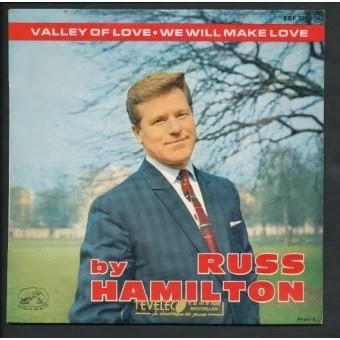
Russ Hamilton born 19 January 1932


Russ Hamilton (19 January 1932 - 11 October 2008) was an English singer and songwriter.

Born as Ronald Hulme in Everton, Liverpool, he was one of the first singer-songwriters of pop music to have come out of the city, and he was the first Liverpool artist to hit the United States music scene with his song "Rainbow" several years before The Beatles. In 1957, chart success in the U.S. was a very unusual feat for an English performer and so it made Hamilton a hot property for a while. As a result, Hamilton had to commute from one side of the Atlantic to the other to meet the demands for live performances.


A former Redcoat, Hamilton's first hit in the United Kingdom was "We Will Make Love", which he recorded in 1957 for Oriole Records. However, in the U.S., it was the B-side "Rainbow" that became the hit because, according to Hamilton himself, it was due to the U.S. mistaking "Rainbow" to be the A-side of the single. This led to the possibly unique situation of a single reaching the Top 10 in the UK while its flipside achieved the same result across the Atlantic - "Rainbow" reached #4 on Billboard 's Hot 100. The record sold over one million copies, and reached gold disc status.

Hamilton followed his first success with another self penned item, "Wedding Ring" which managed to reach the Top 20. In 1960, he was invited to Nashville, Tennessee and signed up with MGM Records. In Nashville he recorded "Gonna Find Me a Bluebird" with The Jordanaires and Chet Atkins. His success with record releases did not improve, and by the early 1960s he had dropped away from the foreground of the pop music scene.

He has written many songs which were popular, especially in Asia. "Little One" a song he wrote for his niece in Canada was his personal favorite.

Other songs such as "I Still Belong to You", "I Had a Dream", "My Mother’s Eyes" and "Reprieve of Tom Dooley" were quite popular. He performed the song "I Had A Dream" on the Six-Five Special. However, this hit faded rapidly and has received little airplay in recent years. He also toured with the Rolling Stones and appeared on "The Patti Page Show". In the 1980s, his music catalog was owned by Paul McCartney.


Hamilton passed away on 11 October 2008, at the age of 76, at his home in Buckley, North Wales surrounded by his family. (Info mainly Wikipedia)