
Ritchie Valens (Richard Steven Valenzuela; May 13, 1941 – February 3, 1959) was an American singer, songwriter and guitarist.
 A rock and roll pioneer and a forefather of the Chicano rock movement, Valens' professional career lasted only eight months. During this
time, however, he scored several hits, most notably "La Bamba", was a
Chicano rock song that became a hit, making Valens a pioneer of the
Spanish-speaking rock and roll movement.
A rock and roll pioneer and a forefather of the Chicano rock movement, Valens' professional career lasted only eight months. During this
time, however, he scored several hits, most notably "La Bamba", was a
Chicano rock song that became a hit, making Valens a pioneer of the
Spanish-speaking rock and roll movement.Rock Musician, Singer. Born Richard Steven Valenzuela in a largely Hispanic community north of Los Angeles known as the San Fernando Valley, his father was a devotee of flamenco music and blues and instilled his love of music to Ritchie. At the age of eleven he started playing guitar and took it with him everywhere.
 During lunchtime at school he would practice or entertain his friends with his music. When he entered
High School he was already an
During lunchtime at school he would practice or entertain his friends with his music. When he entered
High School he was already anaccomplished musician and played often at school assemblies and after school parties. He was in a variety of bands and in his junior year he joined a local California Rock n Roll band called the “Silhouettes” and they quickly became local stars.
At a January 1958 'rent
party' held in an American Legion Hall, the band was taped by a part time
talent scout who worked for Bob Keane, the owner of Keen Records. Keane was
looking for talent for his new label Del Fi Records and after hearing the tape,
Keane decided he wanted to hear more of Ritchie so he auditioned him in Los
Angeles. The audition went very well and shortly afterward Ritchie Valen’s
first single 'Come On Lets Go' was released in the summer of 1958.

The single
did well and he released two more singles: 'Donna' for his high school
sweetheart and 'La Bamba' which was reworking of a traditional Mexican folk
song. Both singles became enormous hits and began moving towards the top ten
and his record sold a half million copies.

A completely self-taught musician, Valens was an accomplished singer and guitarist. At his appearances he often improvised new lyrics and added new riffs to popular songs while he was playing. This is an aspect of his music that is, sadly, not heard in his commercial studio recordings. Due to his high-energy performances, Valens earned the nickname “The Little Richard of the Valley”.


A completely self-taught musician, Valens was an accomplished singer and guitarist. At his appearances he often improvised new lyrics and added new riffs to popular songs while he was playing. This is an aspect of his music that is, sadly, not heard in his commercial studio recordings. Due to his high-energy performances, Valens earned the nickname “The Little Richard of the Valley”.
 In late January 1959 Ritchie Valens joined Buddy Holly,
J.P. "The Big Bopper" Richardson and “Dion and the Belmonts” for the 'Winter Dance Party' which was a tour of the upper Midwest. On February 2, 1959 the 'Winter Dance Party' arrived in Clear Lake, Iowa to play a dance at the Surf Ball Room. Due to a broken heater on the bus that they had been travelling on Buddy Holly arranged to fly to North Dakota in a leased four seat Beechcraft Bonanza airplane for himself and the band members, Waylon Jennings and Tommy Allsup.
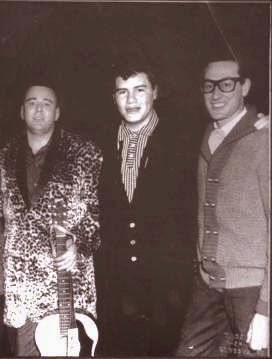 Jennings gave his seat up to Richardson, who was running a
fever and had trouble fitting his stocky frame comfortably into the bus seats.
When Ritchie heard of Buddy's intended flight, he tried to convince Allsup to
give up his seat. Tommy didn't want to but finally agreed to flip a coin to
decide who would go, provided he could use The Big Bopper's new sleeping bag if
he lost. The Big Bopper agreed. Allsup flipped the coin, and Ritchie called
"heads". "Heads" it was. Valens won the seat...and Allsup
won the rest of his life.
Jennings gave his seat up to Richardson, who was running a
fever and had trouble fitting his stocky frame comfortably into the bus seats.
When Ritchie heard of Buddy's intended flight, he tried to convince Allsup to
give up his seat. Tommy didn't want to but finally agreed to flip a coin to
decide who would go, provided he could use The Big Bopper's new sleeping bag if
he lost. The Big Bopper agreed. Allsup flipped the coin, and Ritchie called
"heads". "Heads" it was. Valens won the seat...and Allsup
won the rest of his life.  The wreckage was spotted at approximately 9:35 a.m. the next morning when a worried Dwyer decided to investigate, after not having heard
from the airport of destination. Holly and Valens lay twenty feet from the
plane while The Big Bopper was thrown forty feet away. Ritchie Valens was just
17 years old. February 3rd, 1959 would become known years later, in a song
called 'American Pie' by Don McClean as "The Day The Music Died".
The wreckage was spotted at approximately 9:35 a.m. the next morning when a worried Dwyer decided to investigate, after not having heard
from the airport of destination. Holly and Valens lay twenty feet from the
plane while The Big Bopper was thrown forty feet away. Ritchie Valens was just
17 years old. February 3rd, 1959 would become known years later, in a song
called 'American Pie' by Don McClean as "The Day The Music Died". Valens only had about two albums worth of material in the
can, as well as some lo-fi live tapes of a gig at a local junior high, before
his death; undoubtedly some or many of these were demos or unfinished tracks.
In the wake of his death, several further singles were issued, only two of
which - "That's My Little Suzie" and "Little Girl" - were
minor chart hits. Three albums - 'Ritchie Valens', 'Ritchie' and 'Ritchie
Valens In Concert At Pacoima Junior High' - were released from sessions
recorded for Del-Fi and at a performance for Valens' classmates.
Valens only had about two albums worth of material in the
can, as well as some lo-fi live tapes of a gig at a local junior high, before
his death; undoubtedly some or many of these were demos or unfinished tracks.
In the wake of his death, several further singles were issued, only two of
which - "That's My Little Suzie" and "Little Girl" - were
minor chart hits. Three albums - 'Ritchie Valens', 'Ritchie' and 'Ritchie
Valens In Concert At Pacoima Junior High' - were released from sessions
recorded for Del-Fi and at a performance for Valens' classmates.
Ritchie Valens was only seventeen when he died, his legacy
was based primarily on "Donna" and "La Bamba." popular with
teenagers. At the time of his death, his hard rocking style was being phased
out in favour of teen idols like Fabian and Frankie Avalon. Valens image as
an early Latino rocker has lasted and
inspired Los Lobos, Freddy Fender, The Midnighters, Trini Lopez and Sunny and
the Sunglows. La Bamba became the model for the Isley Brothers' 1961 hit
"Twist and Shout." Valens also inspired the Rascals, Bob Dylan and
R.E.M. His untrained voice and guitar
style was a basis for the garage band revolution of the early 1960s.

In 1987, he was the subject of the successful movie "La Bamba" and received a star on the Hollywood Walk of Fame in 1990. Ritchie Valens was inducted into the Rock and Roll Hall of Fame in 2001. (Info edited from numerous sources)

In 1987, he was the subject of the successful movie "La Bamba" and received a star on the Hollywood Walk of Fame in 1990. Ritchie Valens was inducted into the Rock and Roll Hall of Fame in 2001. (Info edited from numerous sources)


