Wednesday, 20 November 2019

Kaye Ballard born 20 November 1925


Kaye Ballard (November 20, 1925 – January 21, 2019) was an American actress, comedian and singer.

Ballard was born Catherine Gloria Balotta in Cleveland, Ohio, one of four children born to Italian immigrant parents, Lena (née Nacarato) and Vincenzo (later Vincent James) Balotta. Her parents emigrated to the United States from Calabria, a region of southern Italy. Her siblings were Orlando, Jean and Rosalie

Ballard established herself as a musical comedian in the 1940s, joining the Spike Jones touring revue of entertainers. Capable of playing broad physical comedy as well as stand-up dialogue routines, she became familiar in television and stage productions. A phrase her mother had used when Kaye was a child, "Good luck with your MOUTH!", became her catchphrase in her sketches and on television. Ballard made her television debut on Henry Morgan's Great Talent Hunt, a short-lived program hosted by Henry Morgan which first aired January 26, 1951. In 1954, she was the first person to record the song "Fly Me to the Moon".


In 1957, she and Alice Ghostley played the two wicked stepsisters in the live telecast of Rodgers and Hammerstein's Cinderella, starring Julie Andrews in the title role. During the 1961–1963 television seasons, Ballard was a regular on The Perry Como Show, as part of the Kraft Music Hall Players, along with Don Adams, Paul Lynde and Sandy Stewart. 
In 1962, she released the LP Peanuts, on which she played Lucy van Pelt from the comic strip namesake of the album (with Arthur Siegel playing Charlie Brown), and dramatizing a series of vignettes drawn from the strip's archive.

In 1964, she had a guest role on The Patty Duke Show, playing a teacher for would-be models. From 1967 to 1969, she co-starred as Kaye Buell, a woman whose son marries her next door neighbour’s daughter, in the sitcom The Mothers-in-Law, with Eve Arden playing her neighbour. From 1970 to 1972, she appeared as a regular on The Doris Day Show, playing restaurant owner Angie Pallucci . She made appearances on the game show Match Game. In 1977, she was a guest star on The Muppet Show. She also appeared on the television series Alice, in which she played a kleptomaniac and phony medium as well as 
Daddy Dearest, where she guest-starred opposite Richard Lewis and Don Rickles.
Ballard starred on Broadway as Helen in The Golden Apple (1954) introducing the song "Lazy Afternoon". She portrayed Ruth in Joseph Papp's The Pirates of Penzance, Rosalie in Carnival! and the title role in Molly, an unsuccessful musical adaptation of the popular radio serial The Goldbergs. She created the role of the Countess and closed out-of-town in Marc Blitzstein's Reuben, Reuben, and played Ruth Sherwood in Wonderful Town at New York City Center in 1963.

In Long Beach, California, she played Mama Morton in Chicago and fought with a vacuum cleaner as Pauline in No, No, Nanette. In 1998, she played Hattie Walker in the Paper Mill Playhouse's acclaimed revival of Stephen Sondheim's Follies. In 2005, she appeared in a road-company production of Nunsense, written by Dan Goggin. The following year, she completed her autobiography How I Lost 10 Pounds in 53 Years

In 1995, she was awarded a Golden Palm Star on the Palm Springs Walk of Stars. She appeared in The Super Mario Bros. Super Show! as Madam A-Go-Go, a mysterious fortune teller who appears in the episode "Fortune Teller". She also performed with The Fabulous Palm Springs Follies at the Plaza Theatre in Palm Springs, California.

In December 2010, she, Donna McKechnie and Liliane Montevecchi starred in a production of From Broadway with Love, staged at the Lensic Theatre in Santa Fe, New Mexico. Ballard was in the 2012 cabaret show Doin' It for Love, which premiered in Austin, Texas at the Paramount Theatre, starring Ballard and Montevecchi. The cast included Broadway dancer Lee Roy Reams. (The Austin performance benefited the Texas Humane Legislation Network.) The show then went on to play in Los Angeles on March 8 and 10, 2012. A survivor of breast cancer, the never-married veteran showed no signs of slowing down, but she announced her official retirement in 2015 at the age of 89.

Ballard died at her home in Rancho Mirage, California on January 21, 2019 at the age of 93. The cause was kidney cancer, according to a friend.

(Edited from Wikipedia)

Tuesday, 19 November 2019

Geoff Goddard born 19 November 1937


Geoff Goddard (19 November 1937 – 15 May 2000) was an English songwriter, singer and instrumentalist. Working for Joe Meek in the early 1960s, he wrote songs for Heinz, Mike Berry, Gerry Temple, The Tornados, Kenny Hollywood, The Outlaws, 
Freddie Starr, Screaming Lord Sutch, The Ramblers and John Leyton. His song for Leyton, "Johnny Remember Me", reached number 1 in the UK Singles Chart.

Goddard was born in Reading, Berkshire, England. He sang in choir in a local church before going on to study the viola and piano at the Royal Academy of Music in London. Following national service, he sought to move into popular music, and met Meek. He initially attempted to establish himself as a Russ Conway/Liberace styled singer-pianist under the stage-name "Anton Hollywood". Meek promoted him, but he was unable to achieve success.

Eventually he released his solo records under his real name. He recorded four singles as solo artist, produced by Meek, on which he sang with his distinctive regional accent:

"Girl Bride" / "For Eternity" HMV POP 938 October 1961
"My Little Girl's Come Home" / "Try Once More" HMV POP 1068 September 1962
"Saturday Dance" / "Come Back To Me" HMV POP 1160 May 1963
"Sky Men" / "Walk With Me My Angel" HMV POP 1213 October 1963


His best known efforts were as a songwriter. The first project he worked on for Meek was the instrumental "Lone Riders" for The Flee-Rekkers. He then penned "Johnny Remember Me" for John Leyton. 
It became a number one hit single in the UK Singles Chart. Goddard also played keyboards on various of Meek's productions, most notably another chart-topper, The Tornados', "Telstar", and wrote and performed on the hit single's flip side, "Jungle Fever."

Despite his considerable track record as a songwriter, Goddard withdrew from the music industry after falling out with Meek. He brought a breach of copyright case in 1965 against Meek concerning The Honeycombs' hit "Have I The Right?", written by Ken Howard and Alan Blaikley. Goddard claimed that it borrowed from his earlier song "Give Me The Chance". Goddard was unwilling to testify personally and lost the case.

Weary of the shabbier aspects of the music industry, his withdrawal into anonymity was of his own choosing. The artistic motivation seemed to have gone out of his life. The most notable post-Meek ripple he made was in writing My Head Goes Round for Cliff Richard's Tracks And Grooves album (1969).

Subsequently, Goddard returned to his home town and worked for many years in the catering department of the University of Reading. In 1985, the royalties and the platinum disc from the Marc Almond/Bronski Beat cover version of "Johnny Remember Me", having sold over 300,000 copies, came as a complete surprise to him. Goddard, completely out of touch with the modern music business, had never heard it. 
However, its success prompted him to resume song-writing. He met with his old friend John Leyton to discuss making an album together, although the project never surfaced.

In the 1990s Goddard was heard on piano at various university functions, notably at end-of-term Christmas celebrations where students could wonder why the clearer-up inserted ancient pop songs like Johnny Remember Me and Just Like Eddie in among the carols.  Goddard was found dead of a heart attack at home in Reading in May 2000,by colleagues from the University, who had called round after becoming alarmed that he had not turned up at work for some days. He was 62 years old.


In the 2009 film, Telstar: The Joe Meek Story, Goddard was portrayed by Tom Burke. In 2013, a plaque was unveiled by John Leyton on the wall of Reading university’s catering department where Goddard worked for two decades prior to his death.

(Edited from Wikipedia & The Guardian)

Monday, 18 November 2019

Jimmy Swan born 18 November 1912


Jimmy Swan (November 18, 1912 – 1995) was an American country musician and singer whose brand of raw and rural honky tonk was heavily influenced by Hank Williams.

James Eden Schwann was born into a farm family, but his father abandoned them before he was old enough to walk, and he was raised in Birmingham, AL, where he sold newspapers and shone shoes on the street to help make ends meet, living at near-starvation level after the death of his mother in the late '20s. Among his 
clientele during the shoe-shining phase of his life was Jimmie Rodgers, the Singing Brakeman, whom the young Swan encountered in a pool hall, and who also influenced Swan as an aspiring singer. By 1928, when the 15 year old won a singing contest at a local radio station, he began thinking that he might have a future in music.

Swan ended up living the life of a hobo when things got really bad, riding the rails and ending up in Mississippi just about the time that the stock market crash of 1929 ushered in the Great Depression. By then he was 17, married, and working on various farms -- this and the birth of several children was to keep him out of music professionally until early in the 1940s, when he formed his own band. By that time he was living near Mobile, and the guitarist he chose for that first band in 1944 was another Alabama shipyard worker named Hank Locklin. 
Swan also occasionally availed himself of the services of another guitarist with a future as a singer, Hank Williams, who was knocking around Mobile at the time.

After World War II, living in Hattiesburg, MS, Swan got regular radio gigs on several stations, weeknight shows at various honky tonks, and Saturday night shows at the Hattiesburg Civic Centre. By 1948, however, he'd given up music because he didn't like playing the honky-tonks and witnessing their drunkenness and violence, and instead became a radio disc jockey. Apart from his Saturday night shows at the Civic Centre, he left music and didn't return full-time until 1952, when Swan become one of a tiny handful of white artists signed to Lillian McMurry's Trumpet Records label.


Swan's first record, the hillbilly ballad "I Had a Dream," was a reasonable success nationally, eliciting covers by several other singers. He also saw some sales in early 1953 with "The Last Letter," a Williams tribute song issued in the wake of the country legend's death that New Year's Day. Suddenly, Swan was in 
demand over at MGM as a potential successor to Williams, but his contract at Trumpet prevented this hookup with the late singer's label from happening for several years. In the interim, he kept making records for McMurry and even managed an appearance in a low-budget 1954 color Western Jesse James' Women, starring (and directed by) Don Barry and Peggy Castle, which was shot on location in Mississippi.

By the mid-'50s, when he was finally in the hands of MGM, however, Swan found that the label was looking for a sound different from the one that he was interested in making. The public had started abandoning the hard-country, hillbilly sound that he favoured and was buying more lushly produced pop-oriented records. Locklin, who'd begun a recording career of his own in 1948, was to find success with this softer sound. Swan, however, wanted no part of anything that didn't sound like he did when he played on stage, and he was enough his own man to reject this for himself. He was still doing hillbilly-type music late in the 1950s, and even into the mid-'60s, he was making records that could have come out of the 1940s.

By then, Swan had various business ventures working for him, including part-ownership of a radio station, and was becoming concerned with matters beyond music. As a white Southerner born early in the 20th century, he'd never accepted the notion of big government as espoused by the Democratic Party, at least in the absence of a crisis on the scale of the Great Depression, or the liberal social policies that increasingly drove the National Party. Swan had already run for sheriff locally in Hattiesburg in the mid-'60s. In 1966, seeking to emulate country 
singer-turned-Louisiana governor Jimmie Davis, and anticipating a similar effort by Tex Ritter, Swan entered state-wide politics, standing for governor of Mississippi as an opponent of President Lyndon Johnson's Great Society program. He lost, coming in third in the primary, and failed in his subsequent bids for elective office.

By that time, he was retired permanently from music as well, having recorded two abortive sides for a small Mississippi-based label. His music was largely forgotten by then, being hopelessly out of style in the slick, Nashville-dominated world of modern country music. In 1993, nearly 25 years after Swan's retirement from music, Bear Family issued the first comprehensive collection of his music.

(Edited mainly from Bruce Elder bio @ AllMusic)

Saturday, 16 November 2019

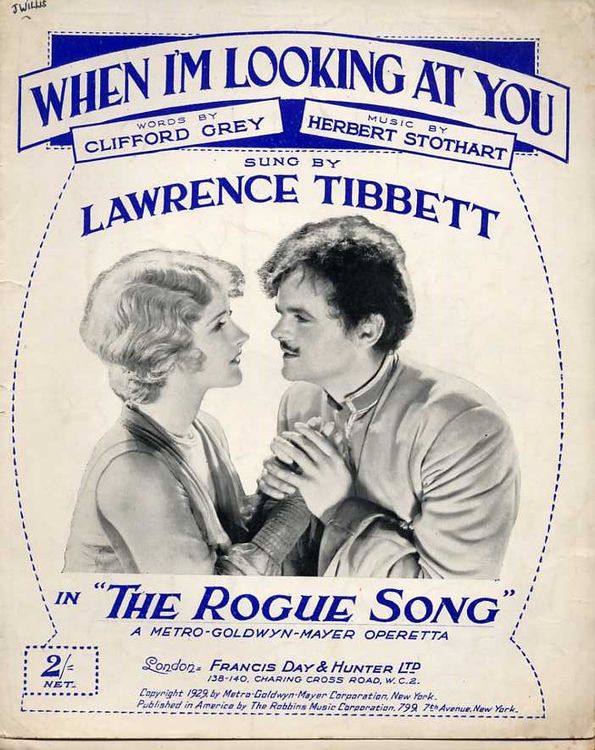
Lawrence Tibbett born 16 November 1896


Lawrence Mervil Tibbett (November 16, 1896 – July 15, 1960) was a famous American opera singer and recording artist who also performed as a film actor and radio personality. A baritone, he sang leading roles with the Metropolitan Opera in New York more than 600 times from 1923 to 1950. He performed diverse musical 
theatre roles, including Captain Hook in Peter Pan in a touring show. He was among the first operatic personalities to perform "popular" music.

Born Lawrence Mervil Tibbet (the extra "t" was added when he signed his first Metropolitan contract), he was raised in Los Angeles and started singing for money at an early age in church choirs and at funerals. Following his 1915 high school graduation he served in the US Merchant Marine during World War I, then returned home where he sang at silent movie theatres.

After a period of study in New York, he gave the first of his roughly 600 Metropolitan Opera performances in 1923 as the Herald in Richard Wagner's "Lohengrin". Tibbett saw his big break in 1925 when he was Ford in Giuseppe Verdi's "Falstaff" opposite Antonio Scotti; he was to assume continually larger roles over the years, among them the title leads of Verdi's "Rigoletto", "Simon Boccanegra", and "Falstaff", the bullfighter Escamillo from Georges Bizet's "Carmen", the evil police chief Scarpia of Puccini's "Tosca", both Silvio and Tonio in Leoncavallo's "I Pagliacci", the elder Germont from Verdi's "La Traviata", and the villain Iago of the same composer's "Otello".


Tibbett made his first recordings for the Victor Talking Machine Company in 1926. In the early 1930s, Tibbett also appeared in movies. His Hollywood sojourn proved brief, although he was nominated for the Academy Award for Best Actor for his first film, 
The Rogue Song, a 1930 Metro-Goldwyn-Mayer production with Laurel & Hardy, shot in two-color Technicolor (only a few minutes of footage of the film, as well as the complete soundtrack, is known to survive today).

He was also seen in "New Moon" (1930) with Grace Moore and 1935's "Metropolitan" while becoming a regular on the concert stage and on the radio with Packard automobile commercials and frequent appearances on "Your Hit Parade".

During the 1930s, Tibbett sang throughout the United States and Europe and was to achieve note in some more modern operas, giving the 1933 world premiere, in blackface, of Louis Gruenberg's "The Emperor Jones" and having success in Deems Taylor's "The King's Henchman" and Howard Hanson's "Merry Mount". The title lead of George Gershwin's "Porgy and Bess" was essentially written for his voice as the composer's specification for the role was a "coloured Lawrence Tibbett". Indeed, when RCA made the first recordings of the piece under Gershwin's supervision they featured Tibbett and Helen Jepson, not Todd Duncan and Anne Brown.

Apparently a rather rude and unpleasant man, this quality was only exacerbated by his steadily worsening fondness for drink, with multiple tales told of him onstage intoxicated, the entire stage reeking on the occasions when he was partnered with the alcoholic Swedish tenor Jussi Bjorling; in one such incident the Bulgarian soprano Ljuba Welitsch grew tired of his ways and repeatedly kicked him after "killing" him at the end of Act II of "Tosca", while another time he refused to allow a young Leonard Warren to sing Ford opposite his Falstaff, saying "I didn't want him doing to me what I did to Scotti".

Tibbett saw his voice damaged by alcohol and over-use and left the Metropolitan in 1950, though he was to have some later success as Captain Hook in "Peter Pan" and on Broadway in "Fanny". In later years Tibbett served as host of a radio show featuring recordings of operatic singers. He leavened matters with reminiscences of his own stage experiences.

Plagued by severe arthritis and years of drinking problems, he aged prematurely as his health worsened. He died on July 15, 1960, after hitting his head on a table during a fall in his apartment. 


The Time obituary said of him: "Tibbett had a big, bronze-like, dramatically eloquent voice that combined ringing power with remarkable agility ... he left behind not only the echoes of a great voice but the memory of a performer who could feel equally at home with high art and popular entertainment, suggesting that there is a magical link between the two." He is interred at Forest Lawn Memorial Park in Glendale, California.

(Edited from Wikipedia and Bob Hufford bio)

This clip is from "Metropolitan," the year 1935. It starred Mr. Tibbett, Virginia Bruce, Alice Brady and Cesar Romero. It was very well received, and apparently the 1st production by Daryl F. Zanuck for Twentieth Century Fox. It opened at Radio City Music Hall! 

Thursday, 14 November 2019

Al Morgan born 14 November 1915


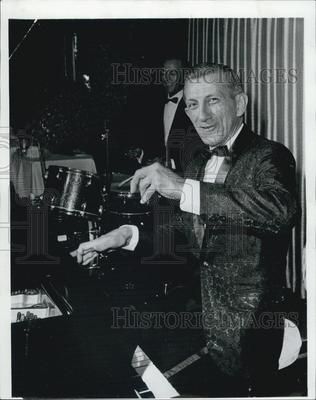
Al "Flying Fingers" Morgan (November 14, 1915 – November 18, 1989) was a popular nightclub singer, pianist and composer who is known for his hit recordings "Jealous Heart", "I'll Take Care Of Your Cares," and "The Place Where I Worship."

Albert Louis Morgan was born in Cincinnati and raised in nearby Ft. Thomas, Kentucky. Morgan's musical foundation started at the Ninth Street Baptist Church in his hometown. Morgan's mother’s plan was for him to be a preacher. His church sent him to Dennison University on a scholarship, but Morgan soon discovered that he was "put on this earth to play and sing, not to preach." As the back cover of his religious album, The Place Where I Worship states: "…until he was twenty-one, practically all of his musical experience was in the sacred field of music.

He then studied violin and voice at the Cincinnati Conservatory and received his master's degree from Eastman School of Music in Rochester, New York. His piano playing was self-taught. Some of his first shows were as a piano sideman in the big band years playing with Glen Miller and Harry James among others. After the Pearl Harbour attack, he served as a rear gunner on B-17s in the US Army Air Force during WWII. He spent considerable time in Europe putting on shows at American installations and base hospitals.

After his discharge he returned to Cincinnati. He conducted the staff band at WKRC and had several weekly radio shows. Morgan got his start in show business by playing on the boats that travel up and down the Ohio River near his home-town of Cincinnati. Morgan also bought his own night spot in Cincinnati, the Club Carasal. While working at the Club Carasal, Morgan decided that he would join the entertainment. He became so popular that he decided that he should go on the road.

In November 1946, he gave up his radio job, sold the Club Carasal, and headed for New York. He did a long stretch at Rogers Corner Theatre Lounge, a spot across the street from Madison Square Garden. Then he traveled to Chicago. He was booked in Chicago at Helsing's Vodvil Lounge at Sheridan and Montrose on the city’s north side. The manager booked him, sight-unseen, thinking he was a comedian. He didn’t laugh, however, when Morgan sat down at 

the piano and started playing. That led to The Al Morgan Show, Morgan's half-hour television show, backed by the Billy Chandler Trio, broadcasting from Helsing's. The show was on the DuMonte Television Network, from 1949 to 1951; one of the first shows to be syndicated. In 1952, Morgan was back in Cincinnati, broadcasting his show from WLW Television.

While playing in Wisconsin Morgan had the idea to make a big band arrangement of the Jenny Lou Carson song, "Jealous Heart". Rumour has it that Morgan first sang "Jealous Heart" as a part of a medley in his act. That song, recorded in Chicago and released on Universal in 1949, became a local hit. Decca Records in England was starting a new label called London Records and deal was struck to release "Jealous Heart" on London.


"Jealous Heart" (a cover of the Jenny Lou Carson country song) was released in 1949 and was his biggest hit, said to have sold in excess of 12 million copies. Morgan performed at various theatres, churches, supper clubs and Las Vegas concert halls for over 40 years, and continued to perform until his death in 1989. 
He was one of the first musicians to have his own syndicated television show. He is best known for his flamboyant style of piano playing where he would raise his hands over his shoulders and flop them down on the keys, hitting all the correct notes, earning him the title, "Flying Fingers.

Morgan continued to record for the length of his career. Morgan recorded over 50 songs for London Records and recorded for most of the major labels including Columbia, Mercury, Decca and RCA subsidiary "X". Morgan's recordings for London were pressed internationally including England, Canada, Germany, Australia and South Africa. Later in his career Morgan recorded for smaller independent labels such as Crystal, and Jewel. In 1961 he had a nightly live radio show performing from 11:30 PM to 12, on WTAQ, broadcasting from LaGrange, Illinois.

In 1989, Morgan performed at the Olympic Theater in Cicero, Illinois for his video, In Concert at the Olympic Theatre on Memorial Day, May 28, 1989. The show ended with 3 songs all containing the word "jealous" and ending with "Jealous Heart." This could have been the medley that started his career, and the last recording that Morgan made. Morgan was performing at Noodles Restaurant when he died on Saturday, November 18, 1989 in Loyola’s McGaw Hospital in Maywood, Illinois. 

(Edited from Wikipedia)

Al continued to find an audience throughout his lengthy career, as this performance of Daddy's Little Girl, at age 76, proves.  Al achieved immediate fame with his massive hit Jealous Heart in 1949.  He went on to record an impressive number of singles and albums for various labels, and had his own television show.  Although usually associated with The Mills Brothers, Al's audiences expected to hear this favourite at his concerts.  Al recorded Daddy's Little Girl for RCA's label X.

Wednesday, 13 November 2019

Jimmy Fontana born 13 November 1934


Jimmy Fontana (13 November 1934 – 11 September 2013) was an Italian actor, composer and singer-songwriter.Two of his most famous songs are "Che sarà", performed also by José Feliciano with Ricchi e Poveri and "Il Mondo".

Born Enrico Sbriccoli in Camerino, Italy, after graduating from high school, he moved to Rome to study Economics. In his spare time, Fontana taught himself bass and attend local jazz venues. Eventually, he dedicated himself completely to music and adopted the stage name Jimmy Fontana. His surname was selected from a telephone directory, the name Jimmy, meanwhile, is not a coincidence. It is taken from the name of the saxophonist Jimmy Giuffre. Thus was born Jimmy Fontana.

In the early 1950s Jimmy Fontana became familiar with jazz standards as a singer in the group Flaminia Street Jazz Band, later forming his own jazz band, Fontana and his Trio, with piano, bass and drums. Around that time he met Leda, who would become his wife and with whom they would have four children, Luigi, Roberto, Andrea and Paola.

Although already having his own band, Jimmy Fontana wanted a solo career. To do this, he opted for Italian pop music popular in the early 1960s and managed to land a contract with Hollywood. His composition "Diavolo" (Devil) had a pretty good success, which, translated into Spanish and became "Diablo" reached third place at the Festival of Barcelona. With his song "Bevo" ("Drink"), in 1960, he won the Burlamacco Gold, a music competition in Viareggio. His first participation in the Festival of Sanremo came in 1961 with "Lady luna" ("Lady
moon"), written by Armando Trovajoli and Dino Verde.

Subsequently changing record label, Jimmy Fontana signed with RCA Italy and worked on the first 45 released on the label "Non te ne andare" ("Don't go") was released in 1963 and written by Gianni Meccia and Lilli Greek. Collaborating with Meccia both in singing and in writing, Jimmy Fontana soon found himself at the gates of success.  His early hits were soon to come including the title "Non Te Ne Andare" published in 1963. 


In 1965, Fontana had his major success with "Il mondo" ("The world"), a song composed by Fontana and Carlo Pes, and arranged by Ennio Morricone, with lyrics by Gianni Meccia, which reached the top of the charts in Italy and other countries in Europe and charted in Latin America as well. 
The same year, he made his debut as an actor, appearing in two musicarelli, which are movies heavily featuring musical numbers, titled Viale della canzone ("Avenue of song") and 008 Operazione ritmo ("008 Operation rhythm").

In 1967 the song "La mia serenata" won the Disco per l'Estatewhich confirmed the talent and public popularity of the singer.  At the 1968 Cantagiro summer festival, Fontana sang a cover version of the Tom Jones hit "Delilah", titled "La nostra favola." The song reached 2nd place in the Italian hit parade.

In 1971, the song "Che sarà", composed by Fontana with lyrics by Franco Migliacci, was performed by José Feliciano with the Ricchi e Poveri group at that year's Sanremo Music Festival, winning 2nd prize. It eventually became one of the biggest pop music hits of the era in Italy and abroad. Somewhat disillusioned by the problems generated by "Che sarà" Jimmy Fontana decided to withdraw for a time from the music industry and moved to Macerata. Years passed and in 1979, he made a brilliant comeback with the song "Identikit". Encouraged by this success, Jimmy Fontana was again present at the Sanremo Festival, singing "Beguine".


A few years later he formed a new group called Superquattro. He continued appearing on TV shows and touring around Italy and abroad until his old age. He died peacefully at his home on September 11, 2013 in Rome, Lazio, Italy, a few months before his 79th birthday, while still planning concert tours.

Jimmy has released over 100 albums and has acted in several films and won best actor award at the Festival Of Barcelona.

(Info translated from Wikipedia & NRJ Paris)

Tuesday, 12 November 2019

Mort Shuman born 12 November 1936


Mort Shuman (12 November 1938 – 2 November 1991) was an American singer, pianist and songwriter, best known as co-writer of many 1960s rock and roll hits, including "Viva Las Vegas" He also wrote and sang many songs in French, such as "Le Lac Majeur", "Allo Papa Tango Charlie", "Sha Mi Sha", "Un Eté de Porcelaine", and "Brooklyn by the Sea" which became hits in France.

Brooklyn-born Mort Shuman inherited from his parents a passion for art and music. He studied philosophy at school, but despite being accepted at City College of New York, Shuman opted for a career in music and began writing songs. When he was barely 16, he met 31-year-old Doc Pomus, a singer of some repute around the spots on Bleecker Street in Greenwich Village. Pomus was also a songwriter, and in him, Shuman found a soulmate. Pomus became a friend and mentor and the two began writing songs together despite the 15-year age differential between them.

Thanks to a series of chance encounters with a number of music professionals, the pair signed up with Hill and Range Songs, a music publisher that had already established a working relationship with Elvis Presley. From 1958 through the mid-'60s, Pomus and Shuman authored a great body of pop song hits including, "A Mess of Blues," "Little Sister," "Surrender," "Viva Las Vegas" and "His Latest Flame" for Presley; "You Are My Baby" for Ray Charles; "A Teenager in Love" for Dion; "Can't Get Used to Losing You" for Andy Williams; and "This Magic Moment," "Sweets for My Sweet" and perhaps the most memorable of them all, "Save the Last Dance for Me," for The Drifters.

Together, these songs sold more than 30 million records. Despite this success, Shuman left New York in the mid-'60s to enjoy a life of travel. Stopping for a time in London, he managed to write a series of hits for some of the top British acts, including "Little Children" for Billy J. Kramer, "She La La La Lee" for the Small Faces and "Here I Go Again" for The Hollies.

During a visit to Paris, he discovered one of France's great treasures, the poet-singer, Jacques Brel. Returning to America, Shuman brought a bundle of Brel's records with him, translated 30 of them into English and created the off-Broadway musical, "Jacques Brel Is Alive and Well and Living in Paris." 
Some of the songs from the show were subsequently recorded by Scott Walker, including "Jackie" and "Mathilde". Shuman appeared in both the stage revue and the 1975 film adaptation. Ultimately, the show became one of the three longest-running off-Broadway musicals in history.

The show was also presented in major cities in the United States, Canada and throughout the world. The score of the show using the Shuman lyrics spawned recordings by several important name artists. David Bowie performed on the song "Amsterdam" and both Dion and Dionne Warwick recorded "If We Only Have Love," perhaps the best-known song from the show.


Having fallen in love with Paris, Shuman later returned there to live and to embark on a new career, that of recording artist. Eventually, he became one of France's most popular personalities, both as performer and as songwriter. He has six gold albums and countless
hits to his credit, including "Le Lac Majeure", which became one of the most successful singles ever to be issued in France. He also did many collaborations with the Israeli singer Mike Brant, and composed film scores, often French movies, including A Day at the Beach (1970), Romance of a Horsethief (1971), Black Thursday (1974), À nous les petites Anglaises (1976), Monsieur Papa (1977) and The More It Goes, the Less It Goes (1977).

After 15 years of unbroken success in France, Shuman moved to London to pursue his English language songwriting and recording career. Shortly before his death, Atlantic Records released "Distant Drum," his debut album for the label. Almost until his death, Shuman was writing songs, including hits for Johnny Hallyday in France. He also was adding the finishing touches to the score for a stage musical, "Save the Last Dance for Me," which was to be launched on London's West End.


Shuman died November 2, 1991 after a courageous fight against cancer, leaving his wife, Maria-Pia and their four daughters, Maria-Cella, Barbara, Maria-Pia and Eva-Maria. Doc Pomus had died in March of the same year.

Shuman was named one of the 2010 recipients of the Ahmet Ertegun Award from the Rock and Roll Hall of Fame. He joined his early collaborator Doc Pomus, who was inducted in 1992. 

(Edited from Songwriters Hall Of Fame & Wikipedia)